Thousands Gather in Geneva and Lausanne to Demand Faster Climate Action
Calls for stronger action on climate change echoed through the streets of western Switzerland as demonstrators gathered in Geneva and Lausanne, urging political leaders to accelerate efforts to address rising environmental risks and reduce greenhouse-gas emissions.
The coordinated demonstrations brought together climate activists, environmental organizations, students, and residents concerned about what they view as an insufficient response to the climate challenge. Organizers said the events were intended to maintain pressure on decision-makers at a time when climate policy remains a subject of intense public debate in Switzerland and across Europe.
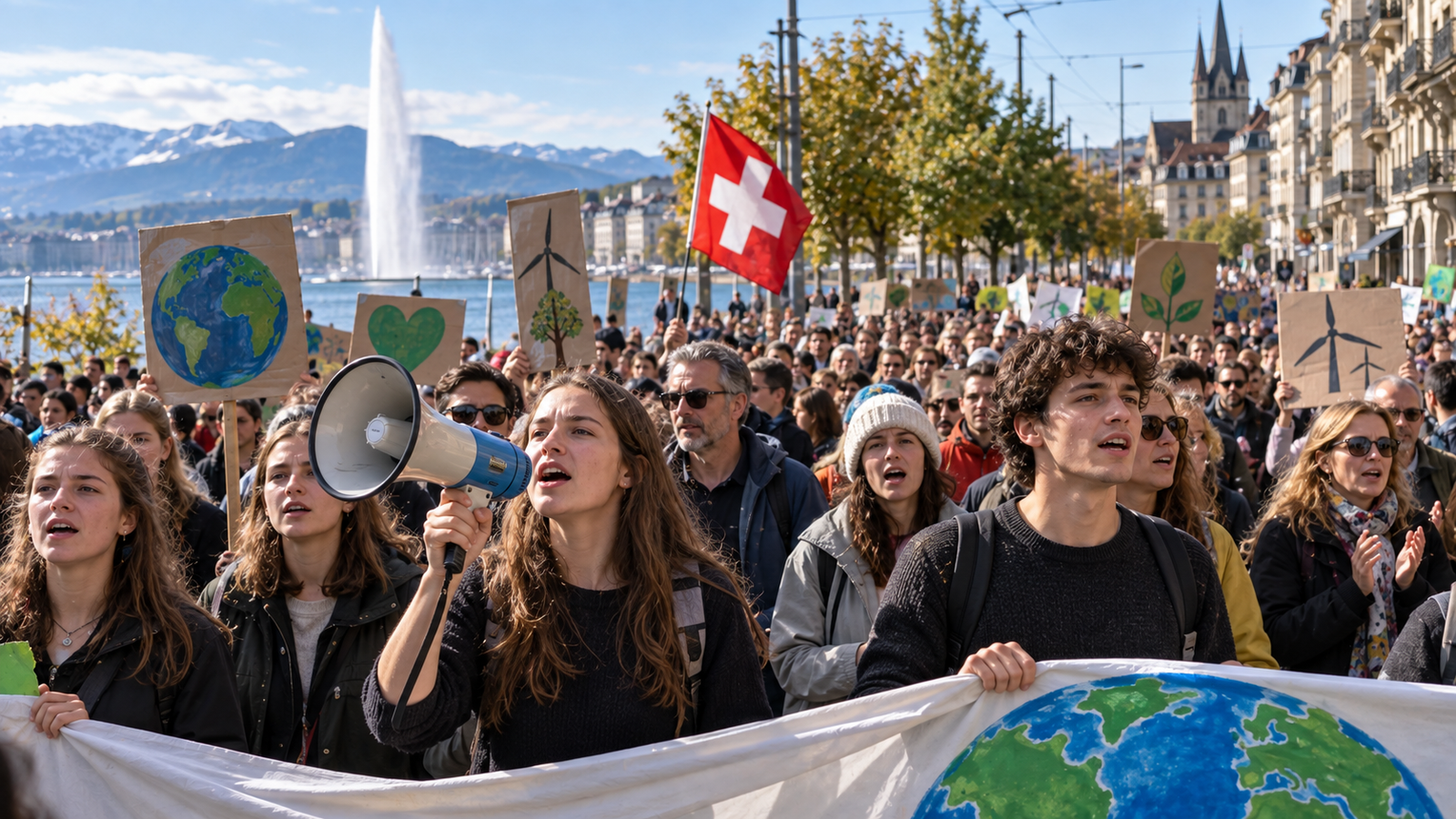
Participants marched through city centers carrying banners, placards, and messages calling for stronger measures to curb emissions, expand renewable energy, and prepare communities for the effects of a warming climate. Demonstrators argued that recent extreme weather events, including periods of intense heat affecting parts of Europe, highlight the urgency of implementing both mitigation and adaptation strategies.
The protests took place in two of Switzerland’s largest urban areas. Geneva, an international diplomatic hub, and Lausanne, a major center for education, innovation, and international organizations, have both been focal points for environmental activism in recent years. Climate demonstrations have frequently attracted large crowds in these cities, reflecting strong public engagement with environmental issues.
Organizers said the latest demonstrations were designed not only to highlight concerns about global warming but also to emphasize the social and economic consequences of delayed action. Speakers pointed to risks associated with heatwaves, infrastructure stress, biodiversity loss, and the long-term costs that governments and communities may face if emissions reductions are postponed. Research organizations and climate-focused institutions have repeatedly warned that the costs of inaction can increase significantly over time.
Switzerland has committed to achieving net-zero greenhouse-gas emissions by 2050 and has introduced a range of climate measures in recent years. However, disagreements remain over the speed, scale, and financing of the transition. Political debates have intensified around energy policy, transportation emissions, building standards, and the balance between environmental goals and economic considerations.
Many protesters argued that existing policies do not match the scale of the challenge. Demonstrators called for faster deployment of renewable energy infrastructure, stronger emissions targets, and increased investment in public transportation and climate-resilient infrastructure. Others emphasized the importance of international cooperation, noting that climate change crosses national borders and requires coordinated responses among governments.
The demonstrations also reflected broader trends within European climate activism. Across the continent, environmental groups have sought to maintain public attention on climate issues amid competing political priorities, including economic concerns, international conflicts, and energy security challenges. Recent campaigns have increasingly linked climate policy to public health, economic stability, and long-term security rather than presenting it solely as an environmental issue.
Climate activism has a significant history in Switzerland. Large-scale demonstrations have taken place periodically over the past several years, particularly during periods of heightened public discussion about environmental policy. Previous climate strikes and rallies attracted participants from a wide range of age groups and political backgrounds, helping place environmental issues near the center of public debate.
Supporters of stronger climate measures argue that scientific evidence increasingly points to the need for rapid reductions in emissions to limit future warming and reduce risks associated with extreme weather. They contend that investments made today can reduce future costs while improving energy security and supporting innovation. Critics of some proposed measures, however, have raised concerns about economic impacts, affordability, and the practical challenges of implementing large-scale transitions within short timeframes.
The demonstrations remained focused on peaceful public expression, with participants emphasizing civic engagement and democratic participation. Organizers encouraged residents to remain active in public discussions surrounding environmental policy and to support initiatives they believe can contribute to long-term sustainability goals.
The rallies come as climate policy continues to evolve both nationally and internationally. Governments, businesses, and civil society groups face increasing pressure to balance economic growth, energy reliability, and environmental protection while adapting to changing climate conditions. Switzerland’s ongoing discussions over energy strategy, emissions reduction, and environmental investments are likely to remain central political issues in the years ahead.
For demonstrators in Geneva and Lausanne, the message was clear: they believe climate change requires faster and more ambitious action. Whether that message translates into future policy changes will ultimately be determined through Switzerland’s democratic institutions, where environmental questions increasingly intersect with debates over energy, infrastructure, and economic development.