Swiss Upper House Opens Lengthy Debate on Landmark EU Relations Package
Switzerland’s upper chamber of parliament has launched what is expected to be one of the most significant policy debates in recent years, beginning detailed discussions on a broad package of agreements designed to redefine the country’s relationship with the European Union.
The debate marks a major milestone in a process that has been years in the making. Lawmakers are examining a complex framework negotiated between Bern and Brussels that aims to stabilize existing bilateral arrangements while establishing new rules for cooperation in several areas considered critical to Switzerland’s economy and international competitiveness.
The package comes at a crucial moment for Switzerland’s ties with its largest trading partner. Although Switzerland is not a member of the European Union, it participates in numerous agreements that provide access to parts of the EU single market. Maintaining those arrangements has become increasingly important as economic and regulatory links between the two sides continue to deepen.
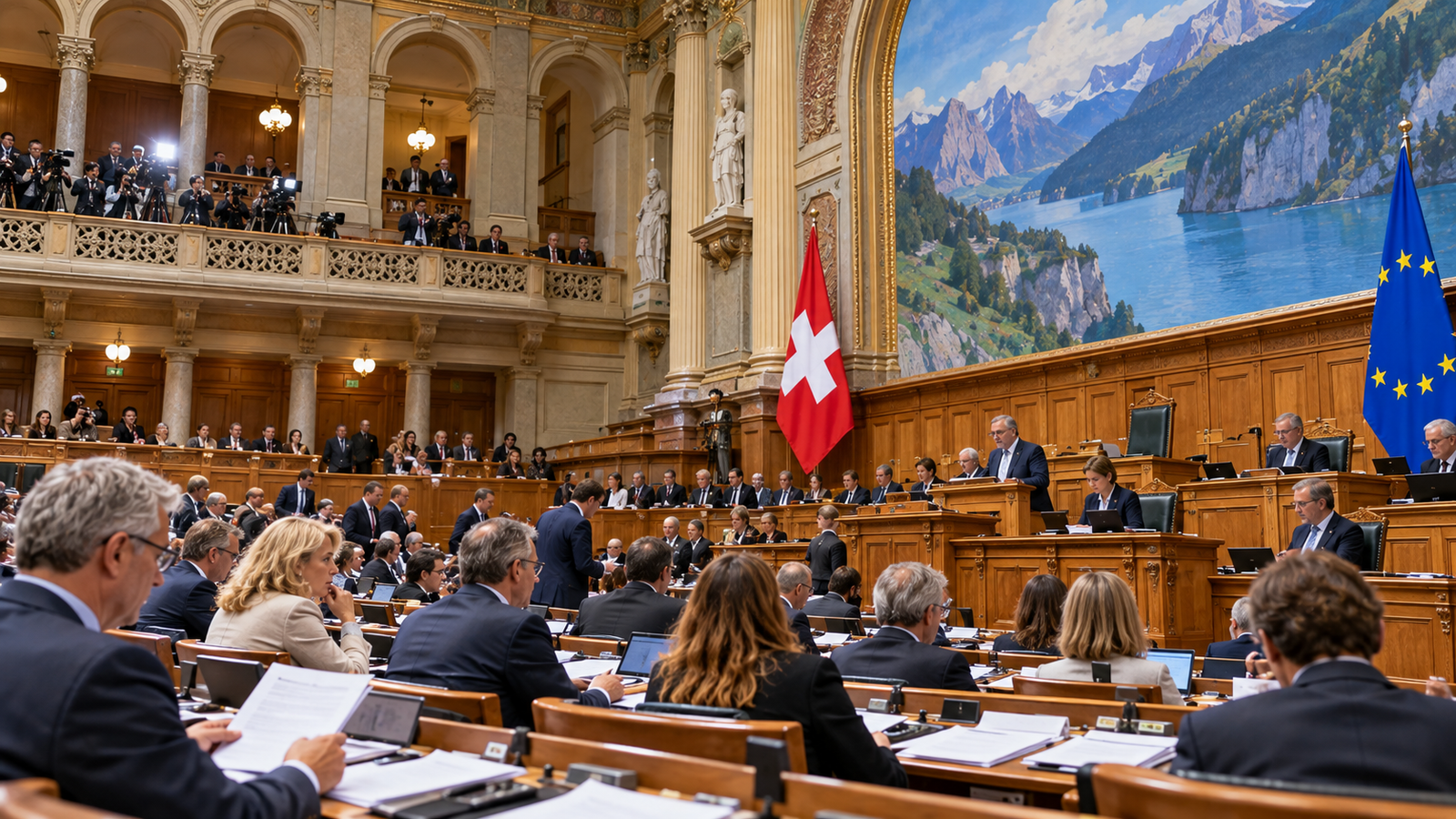
Members of the Council of States, the smaller chamber of the Swiss parliament, began reviewing the extensive treaty package after months of committee work and political consultations. The discussion is expected to span multiple sessions because of the scope of the agreements and their potential impact on Swiss law, trade, labor markets, and future cooperation with the bloc.
At the center of the debate is a proposal intended to provide greater long-term stability for Switzerland’s network of agreements with the EU. Supporters argue that the package offers legal certainty and preserves market access for Swiss businesses, researchers, and institutions. They contend that the agreements would reduce the risk of regulatory divergence that could create barriers to trade and cross-border cooperation.
The European Union remains Switzerland’s most important economic partner. A substantial share of Swiss exports is directed to EU member states, and thousands of businesses depend on smooth access to European markets. Industry groups have repeatedly warned that prolonged uncertainty surrounding bilateral relations could weaken Switzerland’s competitive position in key sectors including pharmaceuticals, manufacturing, research, and advanced technology.
Despite those arguments, the treaty package faces significant political scrutiny. Critics from several political camps have expressed concerns about national sovereignty, democratic oversight, and the extent to which Swiss regulations may need to align with evolving EU rules. Some opponents argue that closer institutional links could reduce Switzerland’s ability to make independent policy decisions in the future.
One of the most contentious issues involves the concept of dynamic regulatory alignment. Under elements of the proposed framework, Switzerland would update certain rules in areas covered by bilateral agreements when corresponding European legislation changes. Supporters view this mechanism as necessary to keep market-access agreements functioning effectively, while critics see it as a transfer of influence to institutions outside Switzerland.
The debate is also unfolding against the backdrop of Switzerland’s unique system of direct democracy. Even if parliament ultimately approves the package, voters are expected to have a final say through a referendum process. Political groups on both sides of the issue are already preparing for what could become one of the country’s most closely watched public votes in the coming years.
The parliamentary discussion follows years of uncertainty in Swiss-EU relations. Earlier efforts to establish a broader institutional framework agreement collapsed, prompting both sides to seek an alternative path forward. The current package emerged from renewed negotiations aimed at finding a more politically acceptable solution while preserving economic cooperation.
Observers note that the outcome could influence Switzerland’s position in Europe for decades. Beyond trade, the agreements affect cooperation in areas such as research, transport, labor mobility, and regulatory coordination. Business organizations, academic institutions, and many regional authorities have closely monitored the negotiations because of their potential long-term consequences.
The political environment surrounding the debate remains highly charged. Recent national discussions on neutrality, international cooperation, and Switzerland’s role in Europe have highlighted broader questions about how the country balances independence with participation in international frameworks. Those themes are expected to shape parliamentary speeches and public campaigning as the treaty package moves through the legislative process.
After the upper house completes its review, the package will continue through the remaining stages of the parliamentary process before potentially being submitted to voters. Given the scale of the agreements and the importance of the issues involved, final decisions are unlikely to come quickly.
For now, the opening of the Senate debate represents the beginning of a new phase in Switzerland’s long-running effort to define its relationship with the European Union. The discussions taking place in Bern are expected to help determine how the country manages economic integration, political autonomy, and international cooperation in the years ahead.