
Medieval Heating Discovery in Basel Offers Rare Glimpse Into Early Swiss Engineering
A remarkable archaeological discovery in Basel is shedding new light on how medieval communities in Switzerland managed indoor comfort centuries before modern heating technologies emerged.
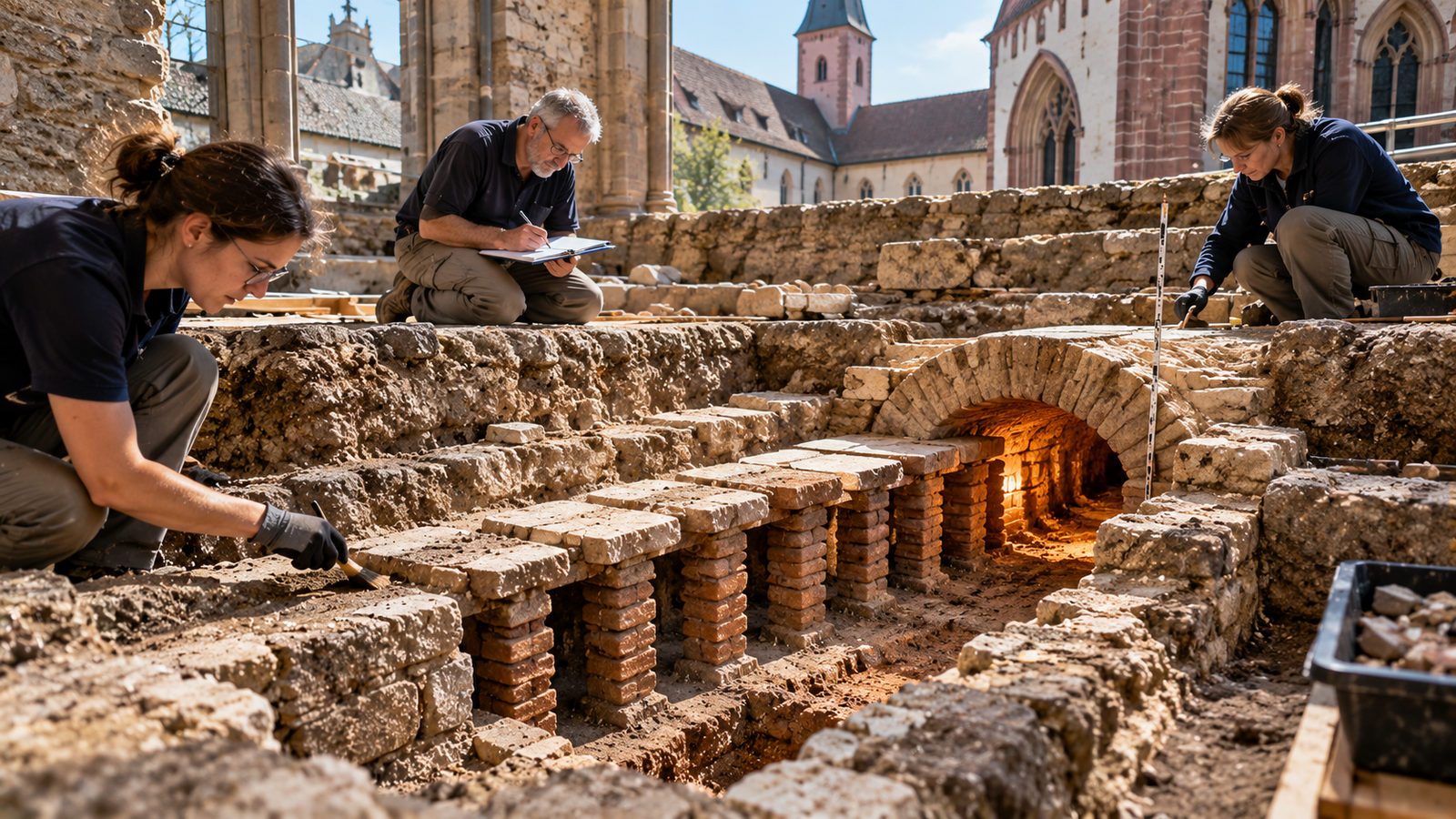
Researchers working at a redevelopment site in the historic center of Basel have uncovered an exceptionally well-preserved hot-air heating system dating back to the Middle Ages. Archaeologists describe the find as one of the most significant examples of its kind ever documented in Switzerland and among the best-preserved installations discovered in Europe.
The discovery was made during construction and renovation work at Petersgraben 52, a property located near the University of Basel. Beneath layers of masonry and flooring associated with the former Gnadental monastery complex, archaeologists identified the remains of a sophisticated heating structure believed to have warmed part of the religious community more than 700 years ago.
Experts investigating the site estimate that the installation dates from the 13th or 14th century. Historical and architectural evidence indicates that the system likely served the monastery’s dining hall, providing a controlled source of warmth during colder months. The find offers valuable insight into daily life within medieval religious institutions and demonstrates a level of technical understanding that may surprise modern observers.
According to information released by archaeological authorities in Basel, the heating mechanism consisted of a subterranean stone chamber designed to store heat. Beneath this chamber was a fire channel that generated hot air. Warm air then moved upward through a series of openings into the room above, allowing heat to circulate through occupied spaces. Researchers identified eight closable vents that likely enabled residents to regulate airflow and temperature.
While forms of underfloor and hot-air heating existed in various parts of Europe during the medieval period, surviving examples are uncommon. What makes the Basel discovery especially notable is its nearly complete condition. Archaeologists say comparable finds in Switzerland are extremely rare, and the level of preservation provides an unusual opportunity to study construction methods, heating efficiency, and architectural design from the era.
The discovery has also renewed interest in the history of the Gnadental monastery, a religious institution with roots stretching back to the early 13th century. Historical records indicate the complex was initially established around 1231 outside Basel’s medieval city walls. Over time, the site housed different religious communities, including Cistercian nuns and members of the Order of Saint Clare. The monastery remained active until religious and political changes associated with the Reformation transformed its role.
Many visible traces of the monastery disappeared over the centuries. Following the Reformation, portions of the complex were repurposed, and some building materials were reused in later structures. A granary constructed in the sixteenth century incorporated material from former monastery buildings, including elements of the church. By the late nineteenth century, subsequent redevelopment had removed most visible evidence of the original complex. Recent archaeological work has therefore become an important tool for reconstructing the site’s forgotten history.
For historians, the heating system provides more than a technical curiosity. It offers a direct connection to everyday life in medieval Switzerland. Monastic communities required functional buildings that could support religious activities, education, food preparation, and communal living throughout harsh winters. The presence of an advanced heating installation suggests that comfort, health, and practical building management were important considerations for the residents who occupied the site centuries ago.
The find also highlights Basel’s importance as an archaeological center. Situated along major historical trade and cultural routes, the city has repeatedly yielded discoveries spanning Roman, medieval, and early modern periods. Urban redevelopment projects frequently reveal hidden layers of the city’s past, contributing to a more detailed understanding of regional history. Archaeologists increasingly rely on these opportunities to document heritage before construction work permanently alters historic ground layers.
Across Europe, researchers have devoted growing attention to historical technologies that demonstrate how earlier societies adapted to environmental challenges. Medieval heating systems, water management infrastructure, and building techniques are now being studied not only as historical artifacts but also as examples of engineering innovation. Discoveries such as the Basel installation help scholars understand how knowledge moved between regions and how practical solutions evolved long before industrialization transformed construction methods.
Officials in Basel have indicated that the newly uncovered heating system will be incorporated into the ongoing redevelopment project rather than removed from the site. Preserving the structure will allow future generations to view an important piece of the city’s heritage while enabling researchers to continue studying its design and operation.
As excavation and documentation efforts continue, archaeologists hope the discovery will reveal additional details about the monastery and the people who lived there. Even after centuries underground, the remarkably intact heating system has become a rare window into medieval craftsmanship, demonstrating that sophisticated engineering solutions were already being employed in Switzerland long before the modern age.