
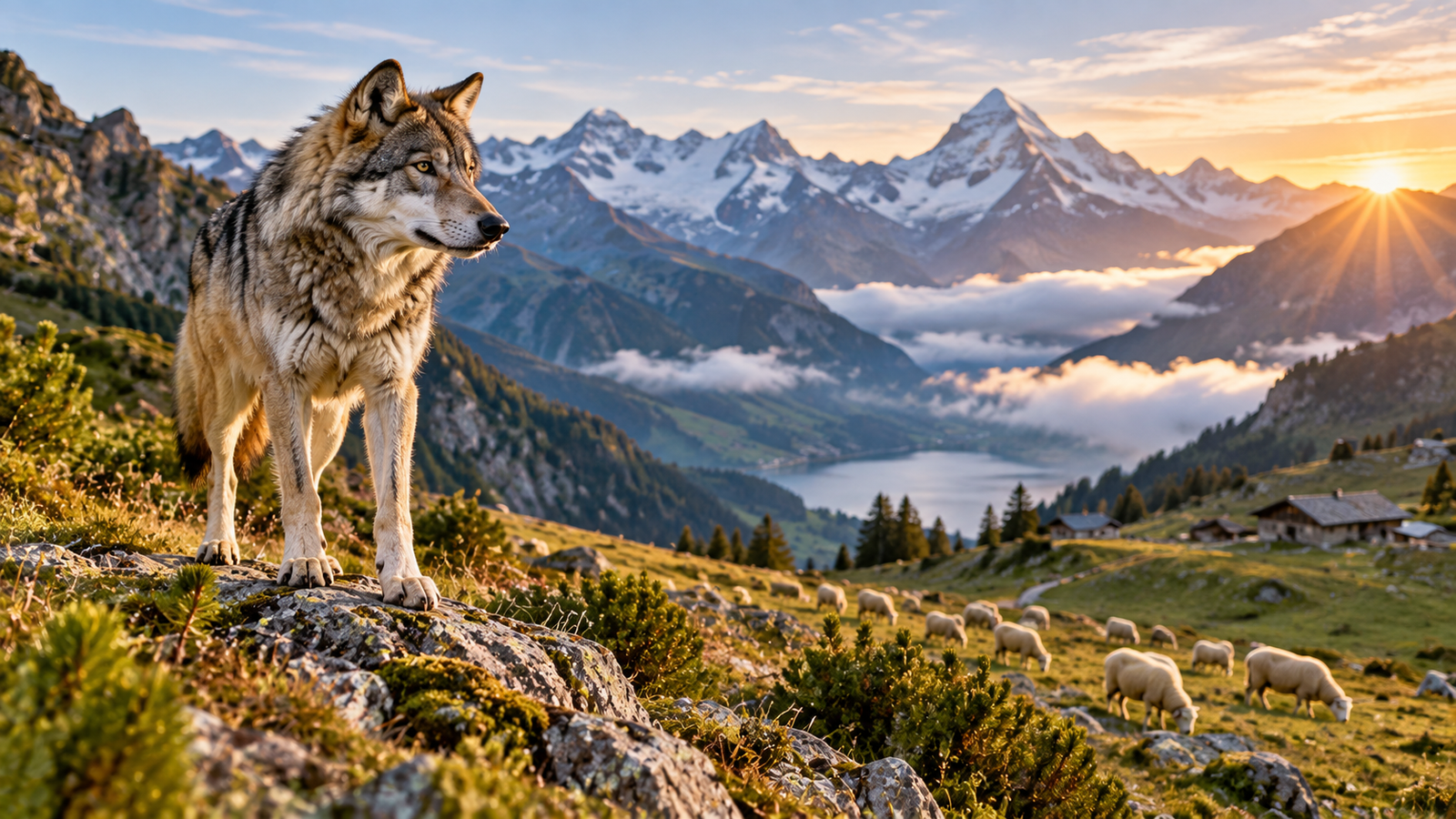
Swiss Lawmakers Push for National Cap on Wolf Numbers Amid Growing Rural Concerns
Switzerland’s parliament is moving closer to establishing formal limits on the country’s wolf population, reflecting growing political pressure from farming communities and regional authorities concerned about the increasing presence of large predators in Alpine areas.
The proposal, which gained support among lawmakers this week, would allow authorities to define population thresholds for wolves at either a national or regional level. If those limits are exceeded, cantonal authorities could be granted greater flexibility to reduce wolf numbers through regulated culling programs.
The debate highlights a broader challenge facing Switzerland and several European countries: balancing the recovery of once-endangered wildlife species with the practical realities of livestock farming and rural life.
Wolves disappeared from Switzerland during the 19th century after extensive hunting eliminated the species from much of the country. Their return began in the 1990s as animals migrated naturally from neighboring populations in Italy and the Alps. Over the past three decades, wolf numbers have steadily increased, leading to the formation of multiple packs across several cantons.
Supporters of the proposed cap argue that current regulations have not adequately addressed concerns from livestock owners. Farmers in mountain regions have reported repeated attacks on sheep, goats, and other grazing animals despite investments in protective measures such as guard dogs, fencing, and monitored pastures.
Many rural politicians contend that wolf management should focus not only on conservation goals but also on maintaining traditional agricultural activities in Alpine regions. They argue that growing predator populations are placing additional pressure on farmers already facing economic and environmental challenges.
The latest parliamentary initiative seeks to create a more predictable management framework. Rather than authorizing reductions only after repeated livestock attacks, authorities would be able to act once predetermined population levels are exceeded. Proponents say such an approach would help prevent conflicts before they escalate and provide greater certainty for affected communities.
Opponents, however, warn that numerical limits could undermine conservation efforts and weaken protections that helped the species recover after decades of absence. Environmental organizations have consistently argued that management decisions should be based on scientific assessments of ecological conditions rather than fixed political targets.
Conservation groups note that wolves play an important role in natural ecosystems by influencing prey populations and contributing to biodiversity. They also point out that Switzerland remains part of international conservation agreements that protect large carnivores and require member states to maintain viable populations.
The controversy is not new. Wolf management has become one of Switzerland’s most contentious environmental issues during the past decade. Previous legislative changes expanded the circumstances under which wolves could be culled, while several court challenges and political disputes emerged over how those rules should be implemented.
In recent years, federal authorities have already granted cantons broader powers to conduct preventive reductions of wolf packs under certain conditions. These measures were introduced after concerns that existing regulations were insufficient to address the rapid growth of wolf numbers in some regions. Critics argued the changes weakened protections, while supporters described them as necessary adjustments to changing realities on the ground.
The issue has attracted significant public attention because it touches on competing visions for Switzerland’s rural landscapes. For some residents, the return of wolves represents a conservation success and evidence of healthier ecosystems. For others, it symbolizes increasing challenges for mountain farming communities that have coexisted with livestock-based agriculture for generations.
The political debate also reflects broader trends across Europe. Wolf populations have expanded in several countries during recent decades, prompting governments to reconsider wildlife management strategies. Similar discussions have taken place in France, Italy, Germany, Austria, and other nations where wolf numbers have increased following years of conservation efforts.
While lawmakers broadly agree that wolf populations should be managed, disagreement remains over how far those controls should go. Questions remain regarding the specific thresholds that would be used, how regional differences would be considered, and what scientific criteria would guide future decisions.
Environmental organizations are expected to scrutinize any final legislation closely, particularly if it significantly expands culling authority. Farming groups, meanwhile, continue to press for measures they believe will reduce economic losses and improve safety for livestock producers.
The parliamentary proposal still faces additional legislative steps before becoming law. Switzerland’s bicameral legislative system requires approval from both chambers before federal measures can take effect. Depending on the final wording, legal challenges or political opposition could also influence implementation.
For now, the initiative signals a clear shift in the political conversation surrounding large carnivores. Rather than debating whether wolf numbers should be regulated, lawmakers are increasingly focused on determining what level of population growth Switzerland is prepared to accept.
As wolf populations continue to expand across parts of the country, the discussion is likely to remain a prominent issue at the intersection of conservation policy, agriculture, and regional development. The outcome could help shape Switzerland’s approach to wildlife management for years to come, influencing both rural communities and the future of one of Europe’s most closely watched conservation stories.