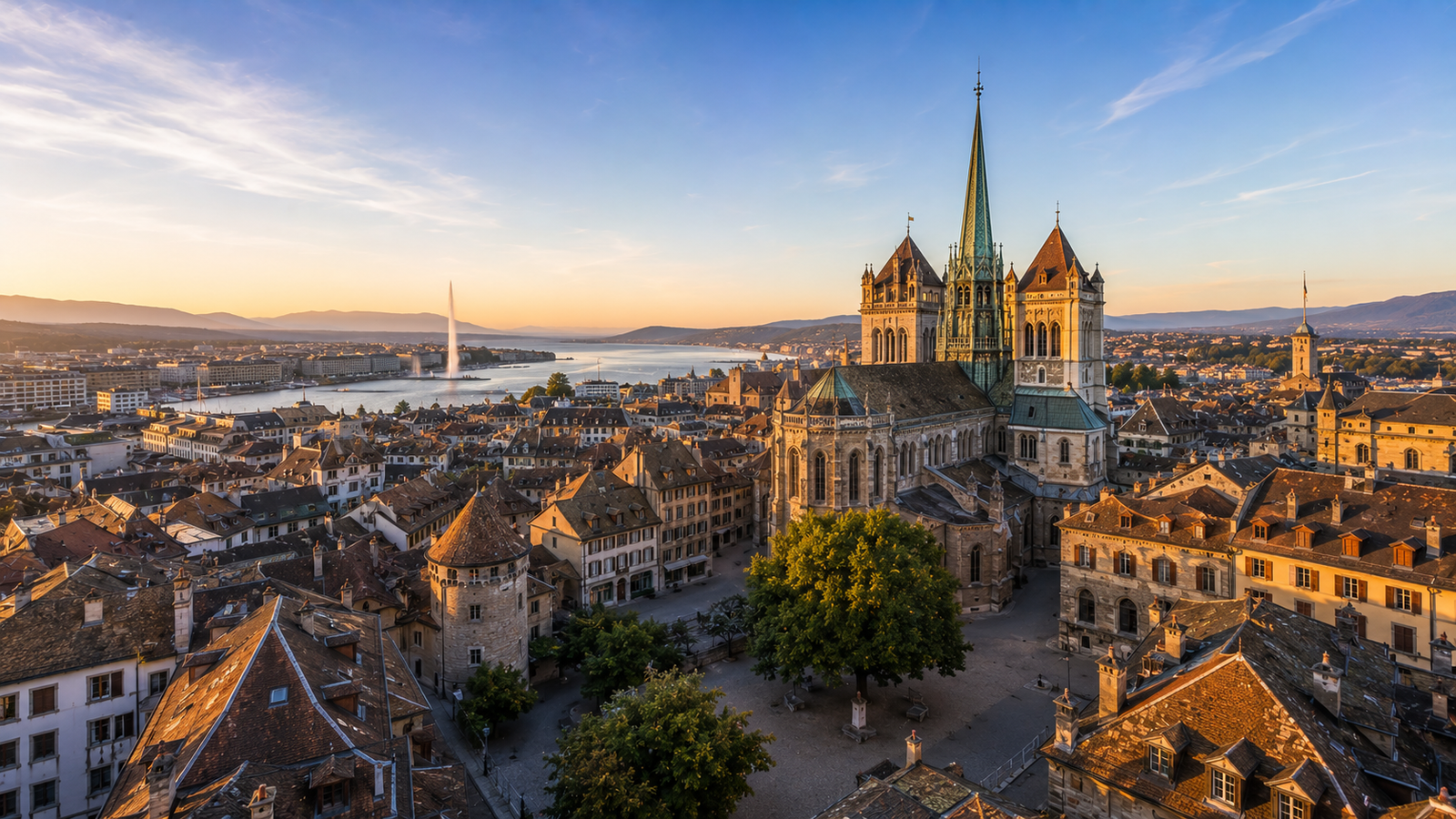
Geneva Old Town, Geneva, Switzerland
Geneva Old Town: Exploring the Historic Heart of Switzerland’s International City
Perched above the Rhône River and overlooking the western end of Lake Geneva, Geneva Old Town offers a striking contrast to the city’s reputation as a global center of diplomacy and finance. While modern Geneva is known for international organizations, luxury watchmaking, and lakeside promenades, its historic core reveals a much older story shaped by medieval merchants, religious reformers, political struggles, and centuries of urban life.
Known locally as the Vieille Ville, Geneva Old Town is considered the largest historic city center in Switzerland. Its maze of cobbled streets, hidden courtyards, stone stairways, and historic squares preserves layers of history that stretch back many centuries. For visitors seeking to understand Geneva beyond its modern image, this neighborhood remains the city’s most rewarding place to explore on foot.
A Hilltop District That Shaped Geneva
The location of Geneva Old Town was no accident. Built on elevated ground overlooking key trade routes and waterways, the district became the natural center of political, religious, and civic life.
Walking through the neighborhood today, visitors encounter narrow lanes lined with centuries-old buildings that reflect Geneva’s evolution from a fortified medieval settlement into one of Europe’s most influential cities. Unlike many historic districts that have become purely tourist attractions, the Old Town remains an active part of daily life, where residents, students, government offices, cultural institutions, and visitors share the same historic streets.
The district’s compact layout makes it ideal for exploration without a strict itinerary. Around nearly every corner, another piece of Geneva’s past emerges.
St. Peter’s Cathedral: The Symbol of Geneva
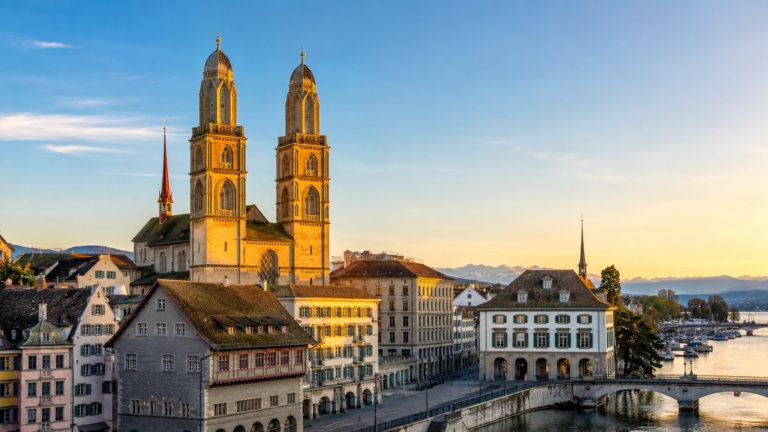
No landmark defines Geneva Old Town more than St. Peter’s Cathedral. Rising above the city skyline, the cathedral has dominated the hilltop district for centuries and remains one of Switzerland’s most significant religious and historical monuments.
Construction began during the 12th century and continued for generations, resulting in a building that combines Romanesque, Gothic, and later architectural influences. Its appearance changed over time through expansions, renovations, and restoration projects, creating the unique structure visible today.
The cathedral became internationally significant during the Protestant Reformation. In the 16th century, Geneva emerged as one of the movement’s most important centers, and the church became closely associated with reformer John Calvin. The transformation of Geneva into a leading Protestant city shaped not only local history but also religious developments across Europe.
Visitors can enter the cathedral to admire its architecture, explore the archaeological site beneath the building, and climb the tower for sweeping views across Geneva, Lake Geneva, and, on clear days, the distant Alps.
Place du Bourg-de-Four: Geneva’s Oldest Square
Among the most atmospheric locations in the Old Town is Place du Bourg-de-Four, widely recognized as Geneva’s oldest public square.
For centuries, the square served as a marketplace and gathering place. Merchants, travelers, religious pilgrims, and local residents all passed through this important urban space. Today, cafés and restaurants occupy the edges of the square, creating one of the most inviting places in Geneva to pause during a walking tour.
Historic buildings surrounding the square provide insight into the city’s architectural evolution. Some structures reveal how Geneva adapted to population growth during periods of religious migration, when refugees arriving from elsewhere in Europe contributed to the city’s expanding influence.
Despite its popularity, Place du Bourg-de-Four retains a distinctly local atmosphere that reflects the everyday rhythm of Geneva.
Walking Through Living History
The greatest attraction of Geneva Old Town may be the experience of simply wandering its streets.
Unlike districts built around a single monument, the Old Town functions as an open-air historical landscape. Stone passageways connect hidden courtyards. Medieval houses stand beside elegant town residences. Small fountains, plaques, and architectural details reveal stories that many visitors might otherwise overlook.
Several streets preserve the character of earlier centuries, allowing travelers to imagine what life may have been like when Geneva was enclosed within defensive walls and governed by religious and civic authorities.
Exploring without a map often leads to unexpected discoveries, whether a quiet square, a historic doorway, or a panoramic viewpoint overlooking the modern city below.
Museums That Tell Geneva’s Story
Geneva Old Town is also home to some of the city’s most important museums.
Maison Tavel, considered Geneva’s oldest surviving private house, offers a fascinating introduction to local history. The building itself is a historical artifact, while its exhibitions illustrate how Geneva developed over the centuries.
Nearby, the International Museum of the Reformation explores the religious movement that transformed Geneva into a center of Protestant thought. Through documents, artifacts, and historical interpretation, the museum helps visitors understand why the city became so influential during a pivotal period in European history.
Together, these institutions provide valuable context for the monuments and streets surrounding them.
Beyond the Cathedral and Squares
Many visitors arrive expecting only a cathedral and a few historic streets. The Old Town offers considerably more.
The Promenade de la Treille, located along the edge of the historic district, provides pleasant views over parts of Geneva and serves as a peaceful walking route. Nearby, Parc des Bastions forms an important cultural and historical extension of the Old Town.
The park is best known for the Reformation Wall, a monumental tribute to leading figures of the Protestant Reformation. The monument reinforces Geneva’s role in shaping religious history and remains one of the city’s most photographed landmarks.
Historic government buildings, including the Town Hall, also contribute to the district’s significance. Their architecture reflects Geneva’s long tradition of civic governance and political independence.
Experiencing Geneva Old Town Through the Seasons
One reason Geneva Old Town remains appealing throughout the year is its changing atmosphere with the seasons.
Spring brings outdoor café culture and flowering public spaces. Summer fills the streets with visitors enjoying long daylight hours and walking tours. Autumn introduces quieter conditions and softer light that enhances the district’s historic character.
Winter offers a particularly memorable experience. During the annual Fête de l’Escalade, Geneva celebrates a defining event from its history when the city successfully defended itself against an attempted attack by the Duke of Savoy in 1602. Historical costumes, parades, cultural events, and community celebrations transform the Old Town into a living stage for one of Geneva’s most cherished traditions.
The festival highlights how history remains deeply connected to local identity.
Planning a Visit
Geneva Old Town is easily accessible from other parts of the city and can be explored comfortably on foot. Public transportation connections throughout Geneva make reaching the historic district straightforward.
Visitors should allow enough time not only for major landmarks but also for unplanned exploration. The neighborhood rewards curiosity, and some of its most memorable moments occur away from the busiest attractions.
Comfortable walking shoes are recommended because many streets remain paved with traditional cobblestones and include gradual climbs.
Whether visiting for a few hours or spending an entire day, Geneva Old Town provides an experience that reveals the foundations of one of Europe’s most internationally connected cities. Beneath the modern skyline and diplomatic institutions lies a remarkably preserved historic center where medieval streets, Reformation history, cultural landmarks, and everyday Swiss life continue to coexist.