
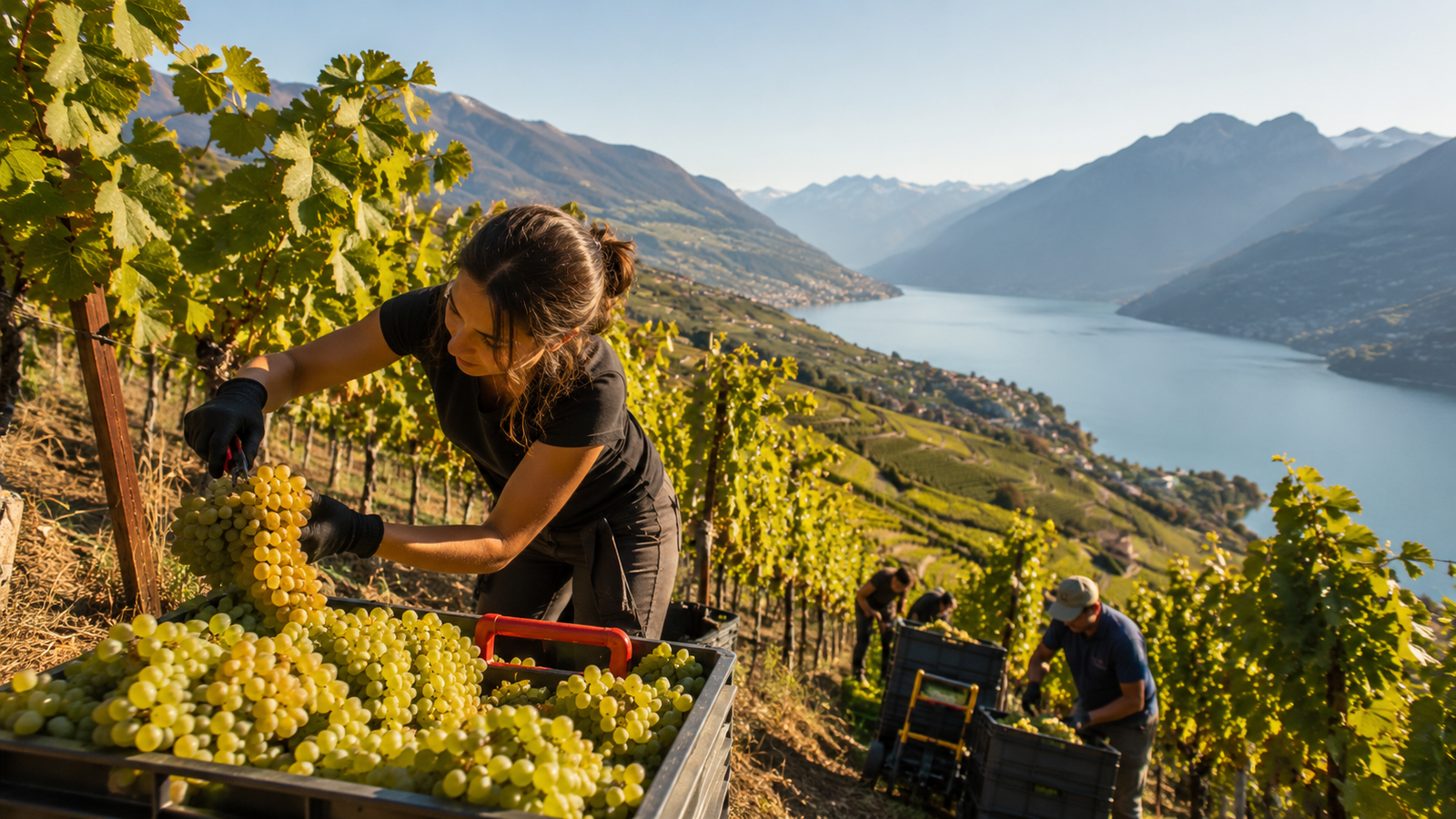
Swiss Vineyards Begin One of Earliest Harvests in Decades Amid Heat and Drought
Switzerland’s wine industry is entering the 2026 harvest season significantly earlier than usual, with vineyard operators across multiple regions reporting accelerated grape ripening after a summer marked by persistent heat and limited rainfall.
Winegrowers in several cantons have already begun harvesting grapes in August, a development that would have been considered highly unusual only a few decades ago. Industry officials and vineyard managers say the combination of prolonged warm temperatures and drought conditions has pushed vines through their growth cycle at an exceptional pace, bringing the harvest forward by roughly three weeks in many areas.
The early start is being observed across a broad range of Swiss wine-producing regions, including parts of Graubünden, Valais, Jura, Neuchâtel, Vaud, Fribourg, and Ticino. In some locations, grape picking began in mid-August, making this one of the earliest harvest periods recorded in recent years.
Growers say the accelerated schedule reflects conditions that have been building throughout the growing season. A warm spring advanced flowering, while sustained summer heat allowed grapes to mature faster than normal. As sugar levels rose and acidity evolved, vineyard managers faced decisions about harvesting earlier to preserve balance and maintain wine quality.
Despite concerns about drought, many producers are expressing cautious optimism regarding the quality of the 2026 vintage. Smaller berries resulting from water stress can sometimes lead to greater concentration of flavors and sugars, characteristics often associated with high-quality wines. However, vineyard specialists stress that final assessments will depend on conditions during the remaining harvest period and subsequent winemaking processes.
The season has not been without challenges. Water shortages have affected vineyards differently depending on soil composition, vine age, irrigation access, and regional geography. Vineyards with rocky soils and limited moisture reserves have experienced greater stress, while deeper-rooted vines in certain locations have shown greater resilience. Some producers have relied on targeted irrigation to help maintain vine health during the driest periods.
Agricultural experts note that grapevines generally tolerate drought better than many other crops because their root systems can access moisture deep underground. Nevertheless, prolonged dry conditions can reduce yields by limiting berry size and overall fruit production. Early estimates from several wine regions suggest that harvest volumes may be lower than in recent years, even if grape quality remains strong.
The unusually early harvest has also renewed discussion about the long-term effects of climate change on Swiss viticulture. Scientists and industry observers have increasingly documented shifts in growing seasons across Europe, with warmer temperatures affecting planting schedules, flowering periods, and harvest dates. Switzerland’s vineyards have not been immune to those trends.
Many producers have already begun adapting their operations. Some are experimenting with drought-resistant rootstocks and grape varieties better suited to warmer conditions. Others are adjusting vineyard management practices to improve water retention and reduce stress during extreme weather events. These strategies are becoming increasingly important as growers seek to maintain both quality and economic viability.
The changes are occurring against a broader backdrop of climate-related challenges affecting Swiss agriculture. Heatwaves and water shortages have impacted crop production, livestock operations, and food supply chains in various parts of the country. In the wine sector, however, the effects are complex. While extreme heat can create risks such as sunburned grapes and reduced yields, warmer conditions can also improve ripening for certain varieties that previously struggled to mature consistently in cooler regions.
Some vineyard owners point out that areas once considered marginal for wine production are now becoming increasingly viable. Higher-elevation vineyards that were once viewed as risky investments are producing mature fruit more reliably than in the past, illustrating how changing climate patterns are reshaping the geography of wine production.
For consumers, the early harvest is unlikely to have an immediate effect on wine availability. The winemaking process will continue over the coming months before most 2026 vintages reach the market. Nevertheless, industry participants will be watching closely to see how the season develops and whether the early start translates into wines that meet the high expectations currently being expressed by many growers.
The 2026 harvest may ultimately be remembered not only for its timing but also as another sign of how rapidly environmental conditions are reshaping one of Switzerland’s most traditional agricultural industries. As vineyards adapt to warmer and drier growing seasons, the country’s wine sector is increasingly becoming a visible example of both the challenges and opportunities created by a changing climate.