Switzerland Pushes for Stronger Investment Safeguards as Trade Ties With India Expand
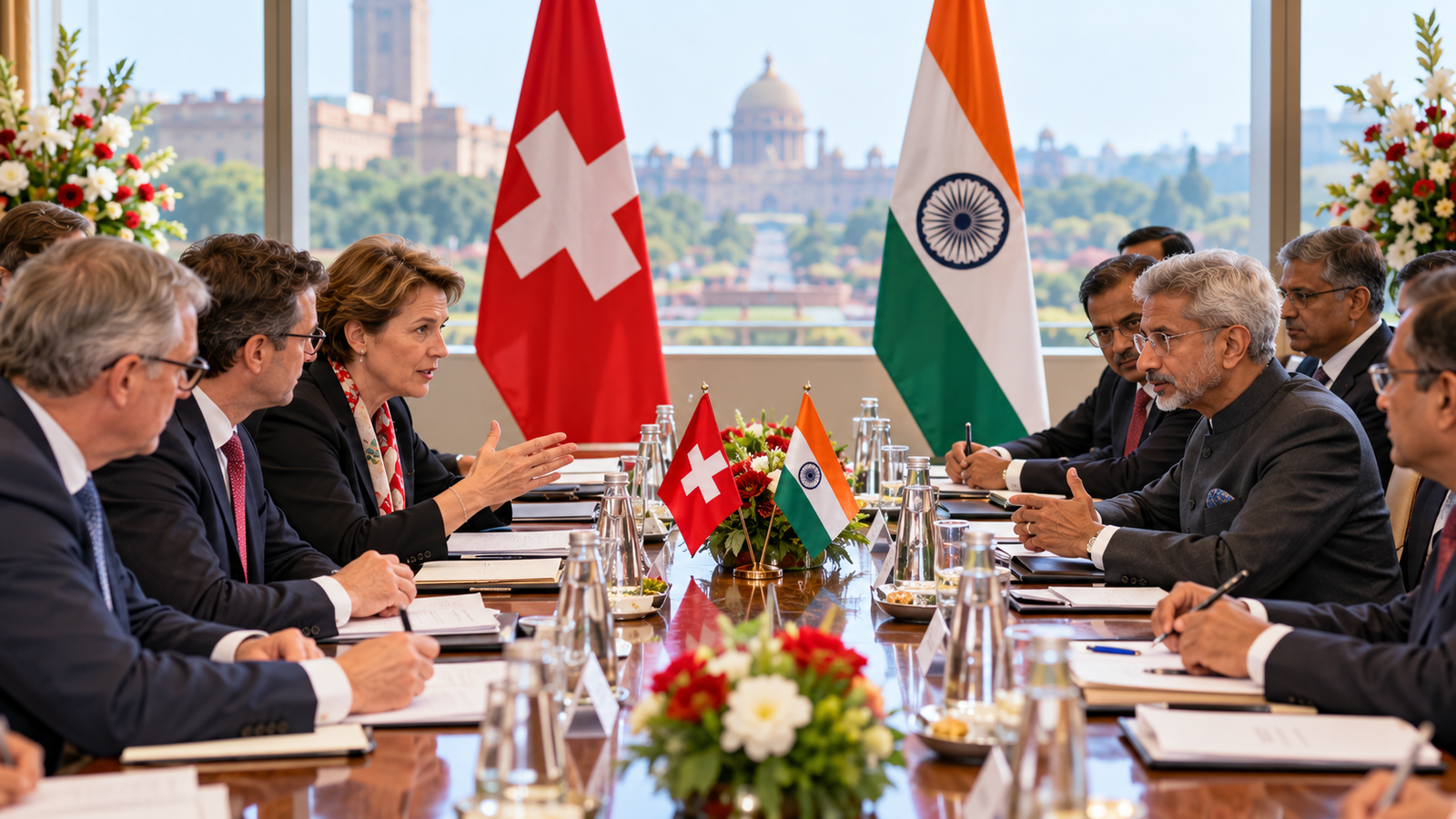
Switzerland is intensifying efforts to strengthen investment security for its businesses operating in India, with Swiss President and Economy Minister Guy Parmelin using a high-level visit to New Delhi to advocate for a dedicated investment protection framework between the two countries.
The initiative comes as economic relations between Switzerland and India enter a new phase following the implementation of the Trade and Economic Partnership Agreement (TEPA) between India and the European Free Trade Association (EFTA), a bloc that includes Switzerland, Norway, Iceland and Liechtenstein. The agreement, which took effect in 2025 after years of negotiations, is designed to expand trade, encourage investment and deepen economic cooperation between the partners.
During discussions with Indian officials and business leaders, Parmelin emphasized the importance of creating a stable and predictable environment for investors. Swiss authorities believe stronger legal protections would provide additional confidence for companies seeking to expand their presence in one of the world’s fastest-growing major economies. The issue has become increasingly important as Swiss businesses look to diversify global operations and capture opportunities in sectors ranging from advanced manufacturing and pharmaceuticals to technology and infrastructure.
Investment protection agreements are commonly used around the world to establish legal safeguards for foreign investors. Such treaties typically address issues including dispute resolution, protection against discriminatory treatment and guarantees regarding investment conditions. Supporters argue that these frameworks help reduce uncertainty and encourage long-term capital commitments.
The push for stronger investment protections reflects the growing scale of economic engagement between the two countries. Switzerland has long been one of India’s most significant economic partners in Europe, with hundreds of Swiss companies maintaining operations in the Indian market. Bilateral trade has expanded steadily in recent years, supported by cooperation in pharmaceuticals, engineering, chemicals, financial services and technology.
Parmelin’s visit also highlights the broader ambitions behind the EFTA-India trade agreement. Under the pact, EFTA countries committed to facilitating investments worth up to $100 billion in India over a 15-year period, with the objective of supporting economic development and job creation. The agreement is widely regarded as one of the most significant trade arrangements concluded by India with a European economic bloc in recent years.
Indian officials have welcomed greater engagement from Swiss businesses, viewing foreign investment as an important contributor to industrial growth, technology transfer and employment. New Delhi has increasingly sought to attract international capital into manufacturing, infrastructure, clean energy, innovation and high-value industrial sectors as part of its long-term economic development strategy.
For Switzerland, India represents both a rapidly expanding consumer market and a strategic production base. As global supply chains continue to evolve, Swiss companies are examining opportunities beyond traditional markets. Business leaders frequently cite India’s economic growth, demographic profile and industrial expansion as factors supporting long-term investment decisions.
The discussions surrounding investment protection also come at a time when India is actively reviewing and expanding its network of bilateral investment agreements. Finance Minister Nirmala Sitharaman recently indicated that India is pursuing additional investment protection arrangements with several countries as part of a broader effort to strengthen investor confidence while balancing national regulatory priorities.
Beyond trade and investment, the latest round of bilateral talks covered a wider range of strategic issues. Leaders from both countries discussed cooperation in infrastructure, technology, defense-related industries, mobility programs, research partnerships and emerging sectors such as clean energy and innovation. Several agreements aimed at promoting professional exchanges and mobility were also highlighted during the visit.
Economic analysts note that investment protection discussions often become increasingly important as trade relationships mature. While tariff reductions and market access measures can encourage commerce, investors frequently seek additional legal certainty before committing substantial capital to long-term projects. Establishing clearer investment rules can therefore complement broader trade agreements and strengthen commercial ties.
The timing of the initiative is particularly notable because it coincides with the first anniversary of the implementation of the India-EFTA trade agreement. Swiss officials have described the pact as a foundation for deeper economic integration and have pointed to early progress in expanding commercial engagement between businesses on both sides.
Although negotiations over investment protections may require further discussions, the issue has become a prominent element of the broader Swiss-Indian economic agenda. Business organizations in both countries are expected to monitor developments closely, especially as investment commitments associated with the trade agreement begin to materialize over the coming years.
For Switzerland, securing stronger protections would help reinforce confidence among companies looking to increase their exposure to one of Asia’s largest economies. For India, such measures could further support efforts to attract high-quality international investment and strengthen its position as a global manufacturing and innovation hub.
As trade volumes rise and cooperation expands into new sectors, both governments appear determined to translate political goodwill into long-term economic partnerships. The renewed focus on investment security suggests that the next phase of Swiss-Indian relations will be shaped not only by trade flows but also by the confidence investors have in the rules governing their investments.