
Swiss Culinary Guide Names Vegetarian Chef of the Year in Historic First
Switzerland’s culinary landscape reached a significant milestone this week as the country’s influential GaultMillau restaurant guide awarded its highest annual distinction to a vegetarian chef for the first time, marking a notable shift in the recognition of plant-based fine dining.
The decision reflects broader changes taking place across the restaurant industry, where sustainability, ingredient-focused cooking and evolving consumer preferences are increasingly shaping the direction of high-end gastronomy. For decades, elite culinary honors have largely been associated with menus centered on meat, seafood and traditional luxury ingredients. The latest recognition suggests that vegetarian cuisine has firmly established itself within the upper ranks of European fine dining.
GaultMillau’s annual rankings are closely watched throughout Switzerland and beyond, influencing restaurant reputations, tourism flows and dining trends. The guide’s selection of a vegetarian chef as its Chef of the Year signals growing acceptance of plant-based cuisine not merely as an alternative dietary choice but as a leading force in culinary innovation.
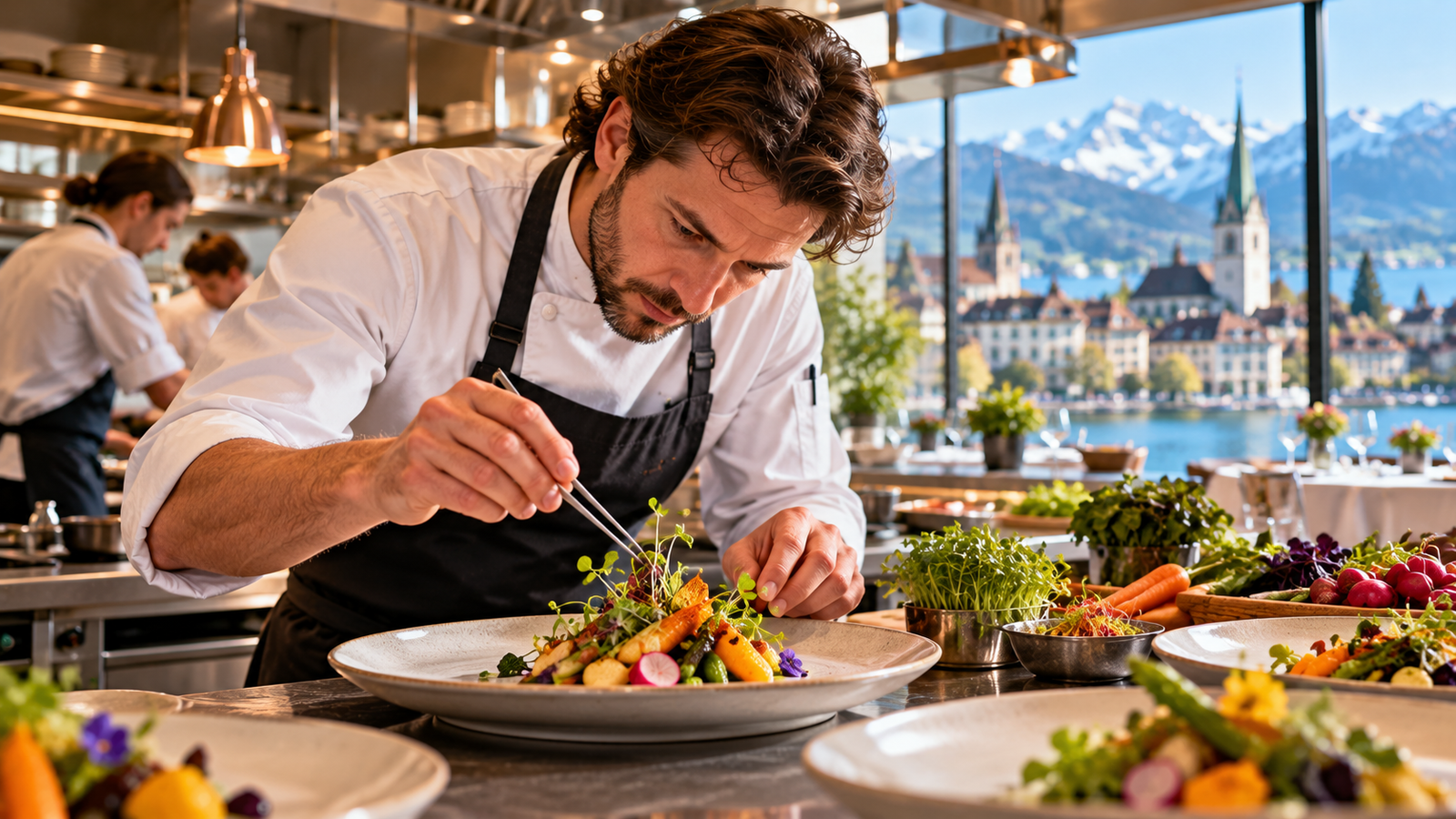
The award recipient, known for developing sophisticated vegetable-centered tasting menus, has built a reputation for transforming locally sourced ingredients into refined dining experiences. Rather than relying on meat substitutes or imitations, the chef’s approach focuses on highlighting the natural flavors, textures and seasonal characteristics of vegetables, herbs and other agricultural products.
Industry observers say the recognition represents years of gradual change within professional kitchens. While vegetarian restaurants were once viewed as a niche segment, many have evolved into destinations capable of competing with the country’s most acclaimed establishments.
Across Switzerland, chefs have increasingly embraced regional produce and sustainable sourcing practices. This trend has been supported by consumers who are showing greater interest in food production methods, environmental impacts and healthier eating habits. As a result, plant-based offerings have become more prominent on menus ranging from casual eateries to Michelin-starred restaurants.
The timing of the award is particularly noteworthy because it comes amid growing international attention on sustainable gastronomy. Restaurants around the world are facing pressure to reduce food waste, lower environmental footprints and support local agricultural networks. Many culinary institutions now regard vegetables as central ingredients rather than secondary accompaniments.
Switzerland has been no exception. The country’s restaurant sector has witnessed increasing experimentation with plant-focused cuisine, supported by a strong agricultural tradition and access to high-quality regional produce. Chefs have found new opportunities to showcase local ingredients while responding to changing consumer expectations.
The rise of vegetarian fine dining has also been fueled by technological and culinary innovation. Modern cooking techniques allow chefs to create complex flavors and textures from ingredients that were once overlooked in traditional gourmet settings. Fermentation, smoking, aging and precision cooking methods have expanded the possibilities available to plant-based kitchens.
At the same time, younger diners have demonstrated growing interest in sustainability and ethical food choices. Market studies across Europe have consistently shown rising demand for meals that reduce reliance on animal products while maintaining quality and creativity. Restaurants have responded by investing more heavily in vegetable-driven menus and seasonal offerings.
Industry experts note that the latest award does not signal the decline of traditional cuisine. Instead, it highlights a diversification of culinary excellence. Many of Switzerland’s top restaurants continue to feature meat and seafood prominently, but the standards used to evaluate exceptional cooking are evolving. Creativity, sustainability, sourcing and ingredient quality are increasingly important alongside classical culinary techniques.
The recognition may also have economic implications for the hospitality sector. Culinary tourism plays an important role in Switzerland’s visitor economy, with travelers frequently seeking out award-winning restaurants. A high-profile honor for a vegetarian chef could further strengthen interest in plant-based dining experiences and encourage more establishments to invest in similar concepts.
Restaurant guides have historically played a powerful role in shaping industry trends. Recognition from organizations such as GaultMillau can influence reservations, media attention and investment decisions. As a result, the award is likely to be viewed by many restaurateurs as evidence that vegetarian cuisine has become a serious competitive category within fine dining.
The decision also reflects changing perceptions among culinary professionals themselves. Many leading chefs now describe vegetables as among the most challenging ingredients to master because they require precision, creativity and deep understanding of seasonality. Unlike traditional luxury products that often carry inherent prestige, vegetable-focused cuisine relies heavily on technique and imagination to achieve distinction.
Beyond the restaurant industry, the award contributes to a broader cultural conversation about food and sustainability. Governments, businesses and consumers throughout Europe continue to explore ways of balancing environmental objectives with economic growth and culinary traditions. The growing prominence of plant-based gastronomy has become one visible expression of that discussion.
For Switzerland, a country known internationally for its hospitality sector and culinary standards, the recognition demonstrates how food culture continues to evolve while maintaining a commitment to quality. It also highlights the increasing diversity of approaches that can earn acclaim within one of Europe’s most respected restaurant markets.
As chefs prepare for another year of competition and innovation, the historic selection may be remembered as a turning point. By honoring a vegetarian chef with one of the industry’s most prestigious distinctions, GaultMillau has signaled that excellence in modern gastronomy is no longer defined by tradition alone but also by creativity, sustainability and the ability to reimagine what fine dining can be.