Swiss Court Hears Case Against Belarusian Businessman Linked to Lukashenko’s Inner Circle
A court in eastern Switzerland has opened proceedings in a closely watched case involving a businessman alleged to have maintained close ties to the political leadership of Belarus, bringing renewed attention to the international scrutiny surrounding individuals linked to President Alexander Lukashenko’s government.
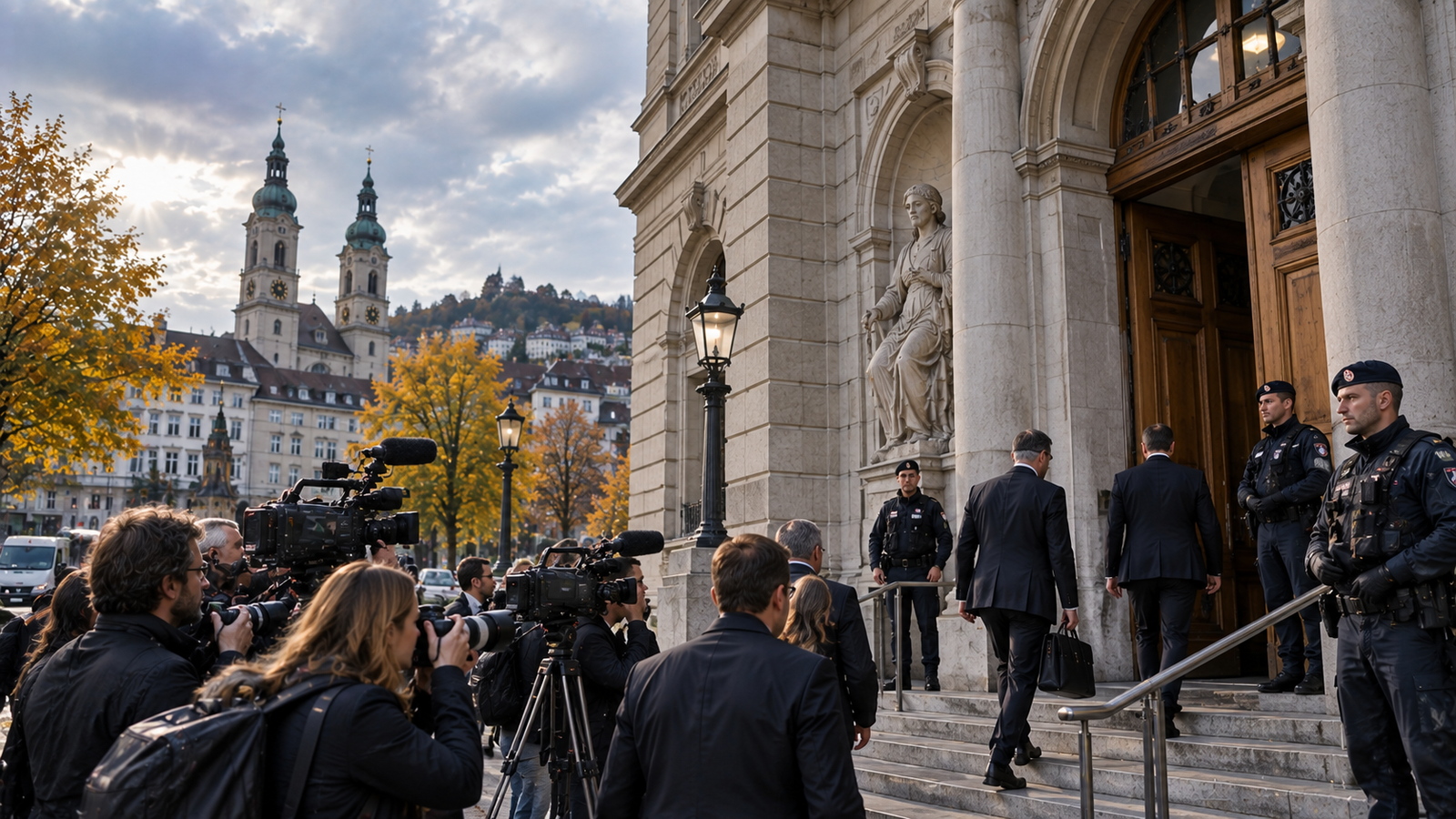
The case, being heard in St. Gallen, centers on allegations that the defendant played a role in activities connected to Belarus’s political and economic power structure. Prosecutors and legal representatives are expected to present evidence over the course of the proceedings, while the defendant disputes the allegations.
The trial has attracted interest beyond Switzerland because it touches on broader questions about accountability, international sanctions, cross-border financial activity, and the reach of European legal systems when dealing with individuals connected to foreign governments.
Focus on Alleged Links to Belarusian Leadership
Belarus has remained under intense international attention for years due to disputes over elections, political freedoms, and the treatment of opposition figures. President Alexander Lukashenko has led the country since 1994 and remains one of Europe’s longest-serving national leaders.
Western governments have imposed various sanctions on Belarusian officials, businesses, and individuals over the years, particularly following political crackdowns and concerns raised by international organizations regarding human rights and democratic governance.
Against that backdrop, authorities in several European countries have increased scrutiny of financial transactions, business relationships, and ownership structures that may involve politically connected figures from Belarus and other sanctioned jurisdictions.
Swiss prosecutors have not publicly framed the St. Gallen proceedings as a political case. However, the alleged connections between the defendant and individuals within Belarus’s ruling establishment have drawn considerable public attention.
Switzerland’s Role in International Financial Oversight
Switzerland occupies a unique position in international finance and regularly handles legal matters involving foreign individuals, multinational companies, and cross-border business operations.
Swiss authorities have strengthened anti-money-laundering measures and compliance requirements over the past decade, responding to growing international expectations regarding transparency and financial oversight.
Legal experts note that cases involving foreign politically exposed persons often receive heightened scrutiny because of concerns about corruption risks, sanctions compliance, and the movement of assets across jurisdictions.
While the current proceedings are focused on the specific allegations before the court, the outcome could contribute to broader discussions about how European legal systems address cases involving influential figures connected to foreign governments.
Broader Context of Belarus Relations
The trial unfolds at a time when Belarus remains at the center of diplomatic debates between East and West.
Recent negotiations involving the release of detainees have highlighted continuing tensions between Belarus and Western governments. In September, Belarus released a group of prisoners following talks with U.S. representatives, illustrating ongoing diplomatic engagement despite years of strained relations.
Human rights organizations and opposition figures continue to argue that political repression remains a major issue inside Belarus, while Belarusian authorities reject many of those accusations. The differing interpretations have contributed to persistent disagreements between Minsk and Western governments.
Because of these wider geopolitical tensions, legal proceedings involving individuals alleged to be close to the Belarusian leadership often attract attention far beyond the courtroom.
A History of International Cases Involving Belarus
Swiss courts have previously examined cases connected to Belarusian political figures and former officials.
One of the most notable examples involved former Belarusian security operative Yuri Harauski, who stood trial in Switzerland over the disappearances of opposition figures in the late 1990s. The proceedings drew international attention because they were conducted under principles allowing serious alleged crimes committed abroad to be examined by foreign courts. Although Harauski was ultimately acquitted, the case highlighted Switzerland’s willingness to hear matters involving Belarusian political controversies.
The St. Gallen proceedings are different in nature, but they similarly demonstrate how Swiss courts can become venues for cases involving individuals connected to foreign political systems.
Legal Process Underway
As the trial continues, judges will evaluate evidence presented by prosecutors and defense lawyers before reaching a decision based on Swiss law.
The presumption of innocence remains in effect throughout the proceedings, and no final determination has yet been made regarding the allegations.
Court observers say the legal process could take time, depending on the complexity of the evidence and the number of witnesses or documents presented during hearings.
The defendant’s legal team is expected to challenge the accusations and argue that the evidence does not support the claims made by prosecutors.
International Attention Likely to Continue
Regardless of the eventual verdict, the case is likely to remain under close observation from policymakers, legal experts, human rights organizations, and Belarus-focused advocacy groups.
For Switzerland, the proceedings underscore the country’s role as both a major financial center and a jurisdiction where internationally significant legal disputes can be examined.
For Belarus, the case serves as another reminder that alleged activities involving politically connected individuals may face scrutiny beyond the country’s borders.
As hearings continue in St. Gallen, attention will remain focused on the evidence presented in court and on what the case may reveal about the complex intersection of politics, business, and international law in Europe.