Swiss Population
A Nation of Nine Million People
Switzerland may be known worldwide for its mountains, lakes, and precision engineering, but the story of modern Switzerland is also a story of people. Over the past century, the country has transformed from a largely rural society into one of Europe’s most urbanized and internationally connected nations.
Today, Switzerland is home to more than nine million residents, making it one of the most densely populated countries in the Alpine region. Population growth has been steady for decades, driven by a combination of natural growth and immigration. While the country’s spectacular landscapes often capture global attention, its population trends reveal how Switzerland has evolved into a modern multicultural society.
From Rural Villages to Urban Switzerland
At the beginning of the twentieth century, Switzerland’s population was only a fraction of its current size. Industrialization, economic development, and improved living standards gradually reshaped the country. As industries expanded and cities offered new opportunities, people increasingly moved from rural communities into urban centers.
Today, the vast majority of residents live in cities and surrounding metropolitan areas. Zurich, Geneva, Basel, Lausanne, and Bern serve as major population hubs, attracting both Swiss citizens and international residents. This shift has fundamentally changed the country’s social and economic landscape while maintaining strong regional identities across its cantons.
A Country Shaped by Immigration
One of the defining characteristics of the Switzerland population is its international makeup. Switzerland has one of the highest proportions of foreign residents in Europe. By the end of 2025, approximately 2.5 million foreign nationals lived in the country, representing about 28 percent of the total population. Swiss citizens accounted for roughly 72 percent.
Immigration has played a major role in Switzerland’s development. Workers, professionals, researchers, entrepreneurs, and students from around the world have contributed to the country’s economy and cultural life.
Many of the largest foreign communities originate from neighboring European countries. Italian, German, Portuguese, and French nationals form some of the most significant international groups living in Switzerland today. Their presence reflects Switzerland’s position at the crossroads of Europe and its strong economic ties with surrounding countries.
Languages, Cultures and Everyday Diversity
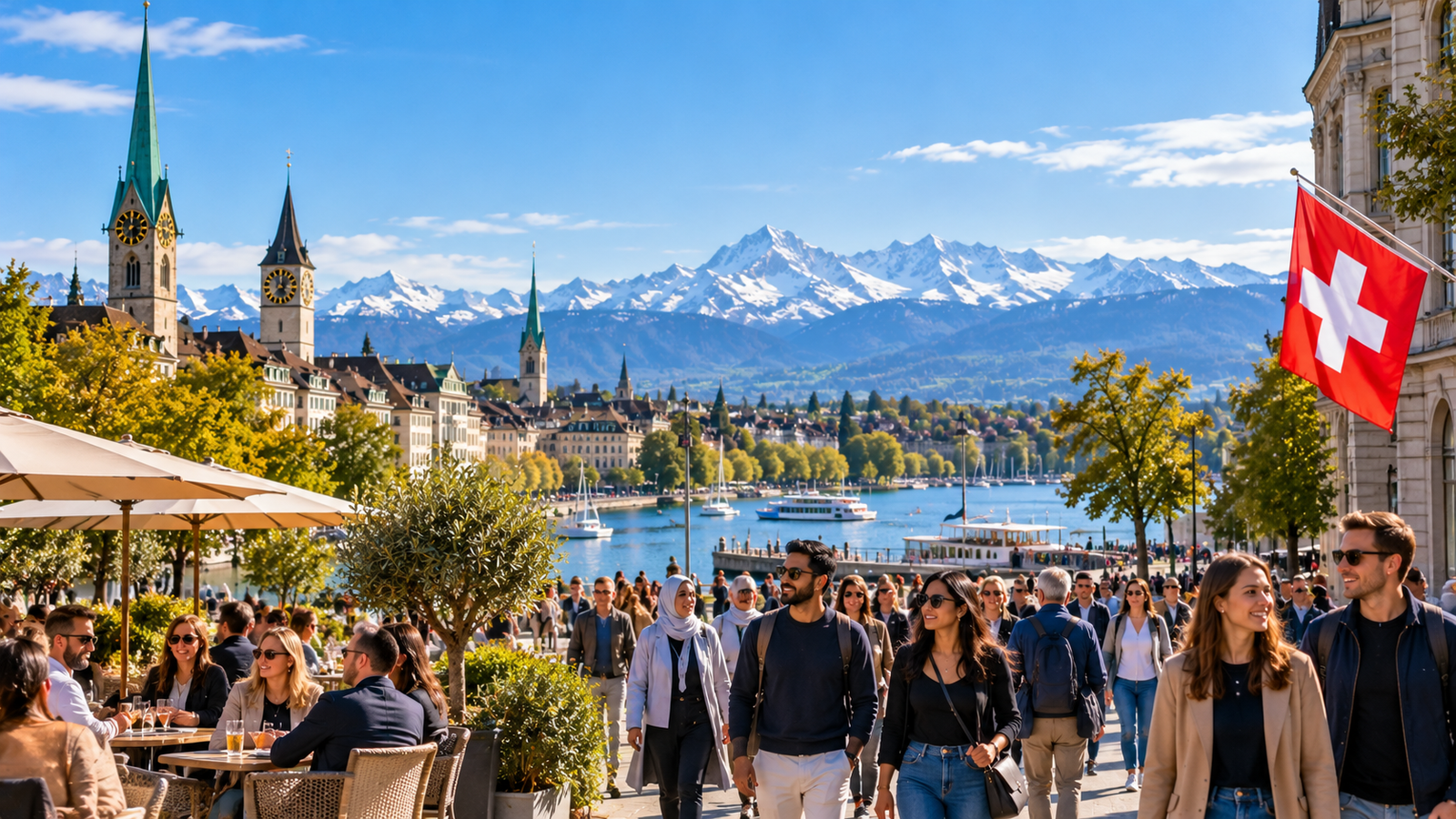
The cultural diversity of Switzerland extends beyond nationality. The country recognizes four national languages: German, French, Italian, and Romansh. These linguistic regions have shaped local traditions, architecture, cuisine, and cultural identities for generations.
In everyday life, it is common to encounter multiple languages within a single city. International migration has further enriched the country’s cultural landscape, introducing additional languages, traditions, and perspectives.
This diversity contributes to Switzerland’s reputation as an open and globally connected society while preserving the unique characteristics of its historic regions. The result is a country where local traditions and international influences exist side by side.
An Aging Population Brings New Challenges
Like many developed countries, Switzerland is experiencing demographic aging. Improvements in healthcare, nutrition, and living conditions have helped create one of the highest life expectancies in the world.
Recent demographic data show that the number of residents aged 65 and older now exceeds the number of people under the age of 20. This marks a significant milestone in the country’s demographic history and reflects broader trends seen across Europe.
At the same time, birth rates remain relatively low compared with previous generations. These developments influence public policy, healthcare planning, pension systems, and workforce strategies throughout the country.
The Swiss Abroad
The story of Switzerland’s population is not limited to those living within its borders. Hundreds of thousands of Swiss citizens live abroad, creating a global Swiss community that maintains ties with the homeland.
Swiss citizens can be found across Europe, North America, Asia, Oceania, Africa, and Latin America. Neighboring countries remain the most popular destinations for Swiss nationals living overseas, reflecting long-standing economic and cultural connections across the continent.
Why Population Trends Matter
Population trends influence nearly every aspect of life in Switzerland. Housing demand, transportation networks, education systems, healthcare services, and economic growth are all shaped by demographic change.
Urban expansion continues to transform metropolitan areas, while migration helps address labor shortages in key sectors. Meanwhile, an aging population creates new opportunities and challenges for policymakers and communities alike.
Understanding the Switzerland population offers valuable insight into the country’s past, present, and future. Behind the famous mountains and picturesque landscapes lies a dynamic society that continues to evolve through migration, innovation, and cultural exchange.
As Switzerland moves further into the twenty-first century, its population remains one of the most important factors shaping the nation’s identity, prosperity, and place within Europe and the wider world.