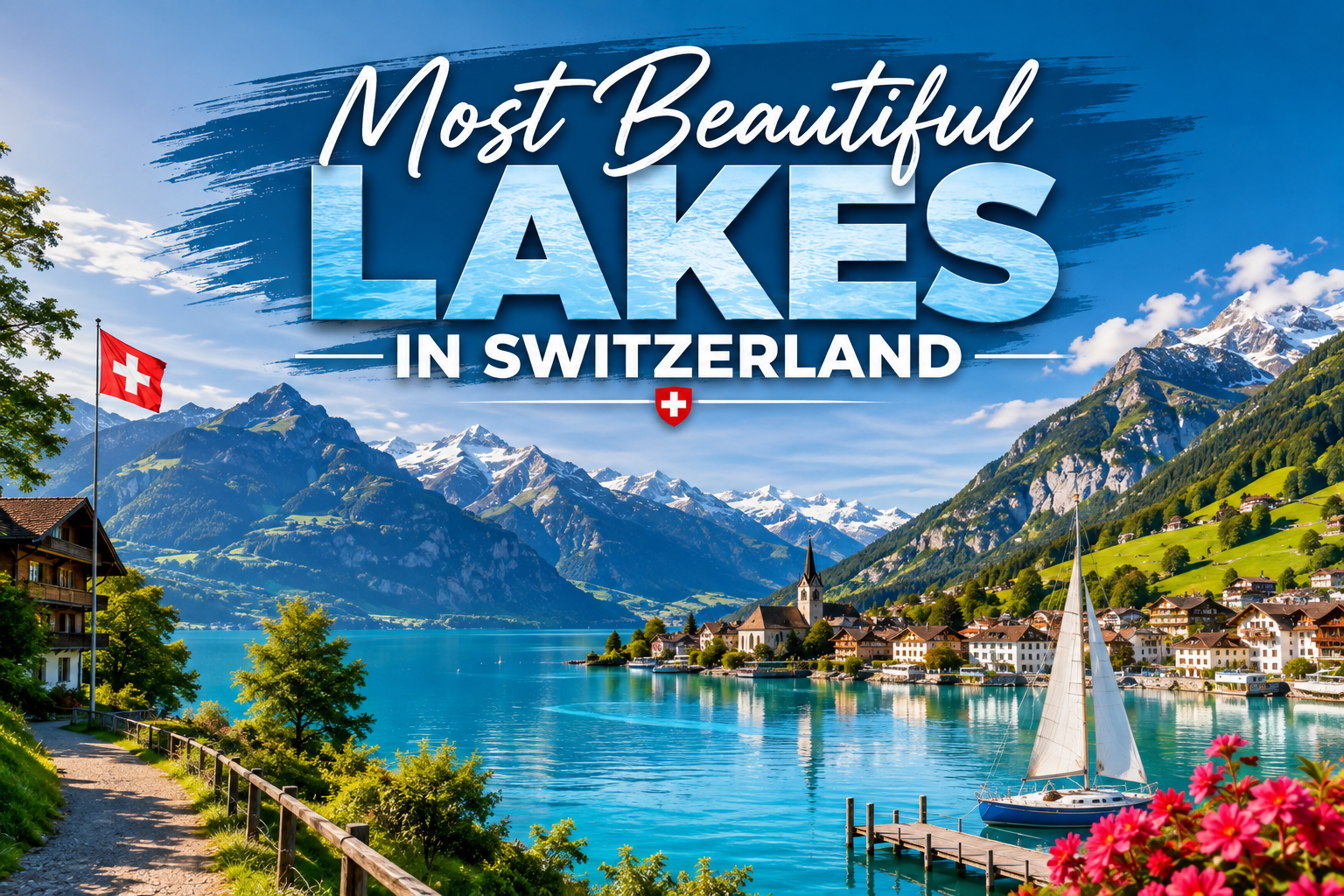
Most Beautiful Lakes in Switzerland: A Journey Through the Waters That Define the Nation
Switzerland is often described as Europe’s water tower. Snowfields, glaciers, rivers, and rainfall have shaped a landscape containing more than a thousand lakes, each reflecting a different side of the country. Some are vast inland seas bordered by vineyards and historic cities. Others lie hidden beneath towering rock walls deep within the Alps. Together, they form one of the most diverse lake landscapes anywhere in the world.
Rather than ranking lakes solely by size, this editorial selection focuses on scenic character, geographic significance, cultural setting, and the distinct experiences each lake offers. The result is not a list of the biggest lakes, but a portrait of the waters that best capture Switzerland’s extraordinary diversity.
The Lakes That Shaped Switzerland’s Identity
Lake Geneva


7
The largest lake in Switzerland is also one of its most influential landscapes. Known locally as Lac Léman, Lake Geneva stretches along the country’s French-speaking heartland, bordered by vineyard terraces, elegant lakeside towns, and Alpine summits. The lake has inspired writers, artists, musicians, and travelers for centuries. Its shoreline includes Lausanne, Montreux, Vevey, and numerous historic communities that have developed around the water. The UNESCO-listed Lavaux vineyard terraces rising above the northern shore add one of Switzerland’s most celebrated cultural landscapes.
What makes Lake Geneva exceptional is its scale. The water appears almost oceanic in places, yet remains framed by mountains and vineyards, creating scenery that changes dramatically with weather and season.
Lake Lucerne


6
If one lake best combines Swiss history and mountain scenery, it is Lake Lucerne. Its unusual shape twists through valleys and beneath towering peaks, creating a landscape often compared to a Norwegian fjord. The lake occupies a central place in Swiss national history because it borders regions associated with the origins of the Swiss Confederation. Surrounded by mountains such as Pilatus and Rigi, it offers some of the country’s most dramatic water-and-mountain views.
Historic paddle steamers continue to cross its waters, preserving a tradition that dates back to the golden age of Alpine tourism.
The Turquoise Lakes of the Bernese Oberland
The Bernese Oberland contains Switzerland’s most famous collection of glacier-fed lakes. Their distinctive colors result from suspended rock particles carried by glacial meltwater, producing shades of turquoise rarely seen elsewhere in Europe.
Lake Brienz


7
Few lakes in Switzerland create a stronger first impression than Lake Brienz. The water often appears almost unreal, glowing in shades of turquoise beneath steep mountain slopes. Located east of Interlaken, the lake is fed by glaciers of the Bernese Alps, giving it its remarkable color.
Unlike some heavily developed lakes, Lake Brienz retains a relatively wild character. Forested mountains plunge toward the shoreline, and many viewpoints reveal little evidence of modern development.
Lake Thun
West of Interlaken lies Lake Thun, a lake with a distinctly different personality. While neighboring Lake Brienz is known for dramatic color, Lake Thun is celebrated for its cultural landscapes. Castles, historic villages, vineyards, and mountain backdrops combine to create one of Switzerland’s most elegant lakeside environments.
The contrast between the two lakes is one of the Bernese Oberland’s greatest strengths. Visitors can experience both within a single day while discovering two entirely different interpretations of Alpine beauty.
Lake Oeschinen


5
Some lakes impress because of their size. Lake Oeschinen captivates because of its setting.
Situated above Kandersteg and surrounded by steep mountain walls, the lake is widely regarded as one of Switzerland’s most beautiful Alpine lakes. It lies within the Swiss Alps Jungfrau-Aletsch UNESCO World Heritage region and is known for its turquoise water, waterfalls, and dramatic mountain scenery.
Unlike the larger lakes that serve cities and transportation corridors, Lake Oeschinen feels almost untouched. The journey itself—ascending into the mountains before reaching the shoreline—is part of the experience.
Where Switzerland Meets the Mediterranean
Lake Lugano


7
Cross the Alps into Ticino and Switzerland’s lake scenery changes dramatically.
Lake Lugano combines mountain landscapes with a distinctly Mediterranean atmosphere. Palm trees, colorful lakeside promenades, and Italian architectural influences create a mood unlike anywhere else in the country.
The lake winds through valleys and around forested peaks, producing ever-changing views. Places such as Lugano and Morcote have become synonymous with the relaxed lifestyle that characterizes Switzerland’s Italian-speaking region.
What makes Lake Lugano remarkable is not simply its beauty but its contrast with the rest of Switzerland. Within a few hours, travelers can move from glacier-fed Alpine waters to lakes lined with subtropical vegetation.
Lakes That Balance Nature and City Life
Lake Zurich


8
Many urban lakes lose their natural appeal as cities expand around them. Lake Zurich remains an exception.
Switzerland’s fifth-largest lake serves as both a recreational landscape and a defining feature of the country’s largest city. Forested hills frame the water, while ferries, sailboats, and lakeside promenades create a lively atmosphere throughout the year.
The lake demonstrates how closely Swiss cities remain connected to nature. Residents can swim, sail, picnic, or take cruises while remaining within one of Europe’s most important economic centers.
Lake Neuchâtel
Lake Neuchâtel offers a quieter experience than many of Switzerland’s better-known lakes. As the country’s largest lake located entirely within Swiss territory, it combines wetlands, vineyards, historic towns, and broad open horizons.
The lake’s northern and southern shores reveal distinct landscapes, from wine-producing regions to internationally significant bird habitats. Its character feels less Alpine than Lake Lucerne or Lake Oeschinen, yet equally representative of Switzerland’s geographic diversity.
Small Lakes With Outsized Beauty
Not every unforgettable Swiss lake is large.
Blausee
The name means “Blue Lake,” and few places live up to their name more convincingly. Located in the Bernese Oberland, Blausee is famous for its extraordinary clarity and deep blue color. Fed by underground springs, the lake appears almost luminous beneath surrounding forests.
Lake Cauma
Hidden among forests near Flims in Graubünden, Lake Cauma surprises visitors with emerald-green water and a setting that feels more like a secret woodland retreat than a traditional Alpine lake. Its color shifts throughout the day depending on sunlight and season.
The High Lakes of the Engadin
Lake Sils
At high elevation in the Engadin Valley, Lake Sils offers a different vision of Switzerland. Windswept landscapes, open skies, and granite peaks create a sense of space rarely found elsewhere in the Alps. The lake has long attracted artists and writers seeking solitude and inspiration.
Lake Silvaplana
Neighboring Lake Silvaplana is renowned for its dynamic weather and strong winds. While summer visitors often associate it with sailing and wind sports, its real attraction lies in the dramatic interaction between water, light, and mountain scenery.
Together, the Engadin lakes present Switzerland at its most elemental—vast skies, clear air, and landscapes shaped by ice and altitude.
Following the Water Across Switzerland
The beauty of Swiss lakes lies not in a single destination but in the remarkable variety found within a relatively small country. A traveler can stand beside the vineyard-framed shores of Lake Geneva in the morning, cruise beneath historic peaks on Lake Lucerne in the afternoon, and watch the turquoise glow of Lake Brienz by evening. Each lake reflects a different chapter of Switzerland’s geography, culture, and history.
Viewed together, they reveal why water has always been central to the Swiss story. Mountains may dominate the skyline, but it is the lakes that give many of Switzerland’s most memorable landscapes their character, color, and sense of place.