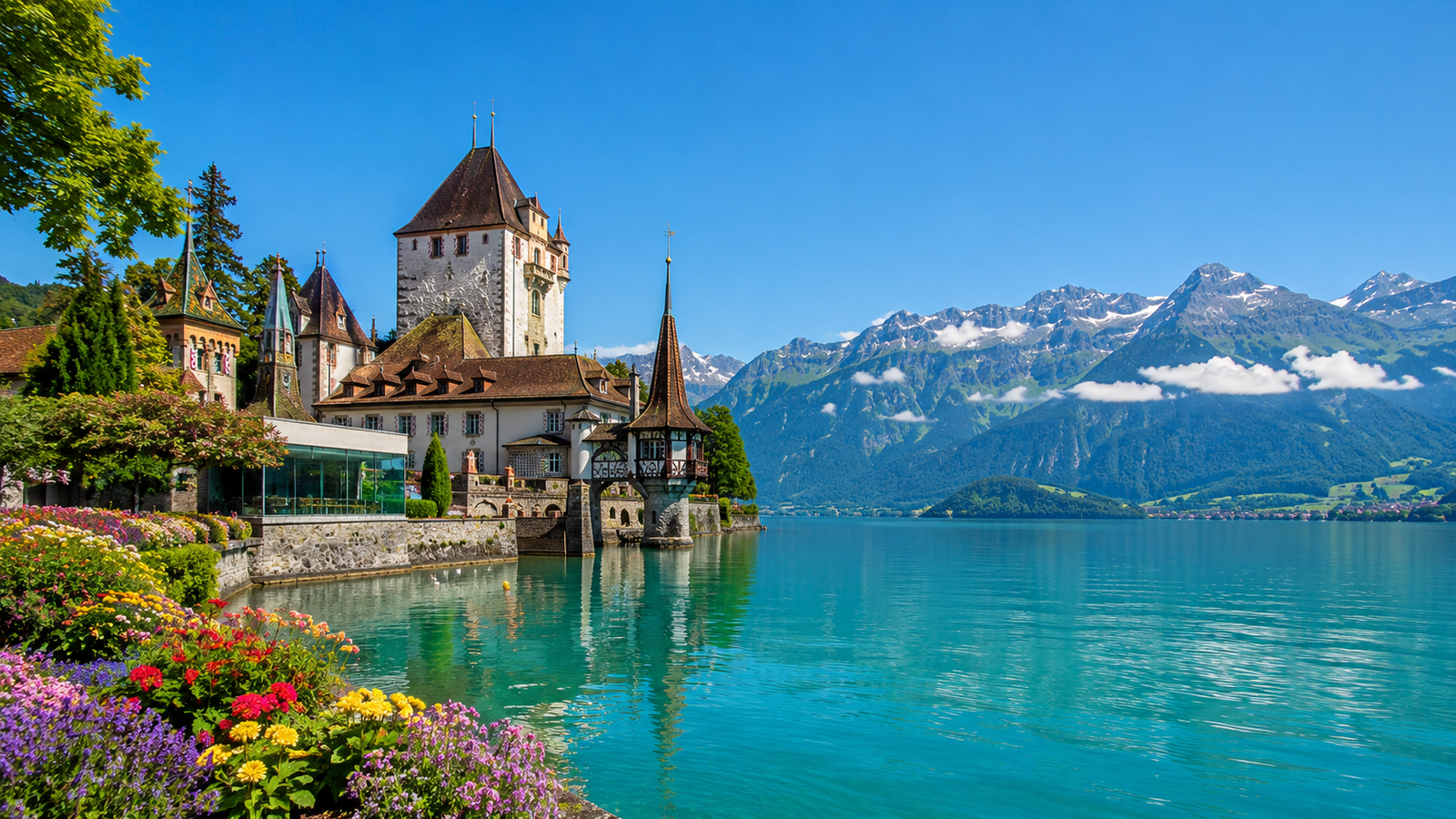
Oberhofen Castle, Oberhofen am Thunersee, Switzerland
Oberhofen Castle: The Fairytale Landmark Overlooking Lake Thun
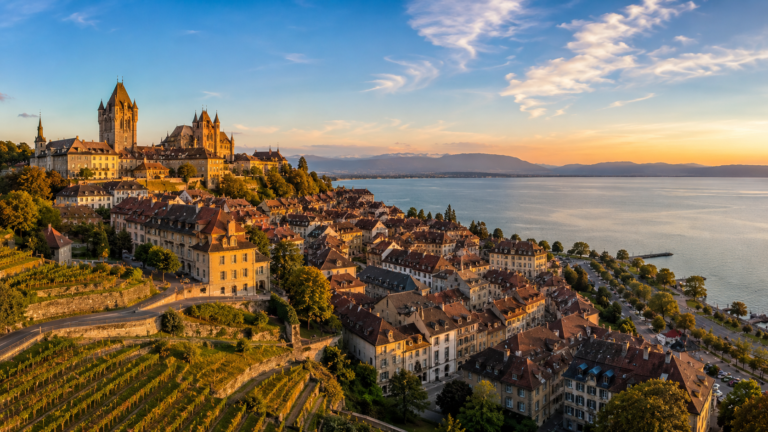
Along the northern shore of Lake Thun, where the turquoise waters of one of Switzerland’s most beautiful lakes meet the dramatic backdrop of the Bernese Alps, a distinctive tower rises directly from the water’s edge. For many travelers exploring the Bernese Oberland, this image has become one of the most recognizable scenes in the country.
Oberhofen Castle is more than a picturesque landmark. Behind its romantic appearance lies a history spanning centuries of political change, noble families, architectural transformation, and cultural preservation. Today, the castle offers visitors a unique combination of medieval heritage, lakeside scenery, historic interiors, and landscaped gardens that collectively tell the story of life on Lake Thun from the Middle Ages to modern Switzerland.
Unlike many fortresses built purely for defense, Oberhofen Castle evolved into a residence that reflects changing tastes, lifestyles, and social structures across generations. Exploring its halls is less like visiting a military stronghold and more like stepping through a living timeline of Swiss history.
A Strategic Beginning on the Shores of Lake Thun
The origins of Oberhofen Castle date to the early thirteenth century. Historical evidence indicates that construction began around 1200 under the authority of the Barons of Oberhofen, whose lands occupied an important position along the lake and regional trade routes.
Its location was no accident. During the medieval period, control of transportation corridors and waterways carried significant political and economic value. Positioned directly beside Lake Thun, the castle allowed local rulers to oversee movement through the region while reinforcing their influence within the surrounding territory.
Over subsequent centuries, ownership changed multiple times as noble families, regional powers, and political developments reshaped the area. These transitions left visible marks on the structure, contributing to the architectural diversity visitors see today.
Rather than remaining frozen in one historical era, Oberhofen Castle continuously adapted to changing needs and fashions.
The Tower That Defines the Castle
Among the castle’s many features, none is more famous than its lakeside tower.
Extending directly over the water, this distinctive structure has become one of the most photographed landmarks in Switzerland. Reflections of the tower in Lake Thun, framed by alpine peaks in the distance, create a scene that attracts photographers throughout the year.
Although visitors often associate the tower with romantic imagery, it originally served practical defensive purposes. Medieval castles frequently incorporated towers for surveillance and protection, and Oberhofen was no exception.
Today, however, the tower contributes primarily to the site’s visual identity. It transforms the castle from a historic building into one of the most iconic landscapes in the Bernese Oberland.
Its enduring popularity demonstrates how architecture and setting can combine to create a destination that resonates across generations.
A Castle That Evolved Through the Centuries
One of the most fascinating aspects of Oberhofen Castle is its architectural evolution.
Unlike castles that were rebuilt entirely after destruction or conflict, Oberhofen developed gradually. Medieval foundations coexist alongside later additions, reflecting changing artistic styles and residential preferences.
During the nineteenth century, the castle underwent significant restoration and remodeling under the ownership of the noble Prussian family von Pourtalès. These changes transformed portions of the property into a more comfortable residence while preserving much of its historic character.
The result is an architectural blend that includes medieval elements, Gothic influences, Renaissance details, and nineteenth-century romantic design. Visitors moving from room to room can trace centuries of European architectural history within a single complex.
This layered development contributes greatly to the castle’s authenticity and educational value.
Inside the Museum of Bernese Residential Culture
Today, Oberhofen Castle serves as a branch of the Bern Historical Museum and offers insight into aristocratic and upper-class life in the region.
The castle museum focuses on domestic culture and historical living environments. Rather than displaying isolated artifacts behind glass, many rooms have been preserved and furnished to illustrate how residents lived during different periods.
Visitors encounter dining rooms, salons, private chambers, and decorative interiors that reveal changing lifestyles from the sixteenth through nineteenth centuries. Furniture, artworks, textiles, and household objects help create a vivid picture of daily life among wealthy families who once occupied the castle.
One of the highlights is the Oriental Smoking Room, added during the nineteenth century. Inspired by contemporary fascination with the Middle East, the room features decorative elements that contrast dramatically with the castle’s medieval architecture.
The unusual space reflects broader European cultural trends of the era and remains one of the most memorable rooms in the complex.
Gardens Designed for Lake Views
Many visitors arrive expecting to explore a castle and leave equally impressed by the surrounding grounds.
The castle park stretches along the lakeshore and contains landscaped gardens featuring ornamental plantings, pathways, historic trees, and carefully maintained green spaces. Designed to complement rather than compete with the natural scenery, the gardens provide uninterrupted views across Lake Thun toward the Bernese Alps.
The park is particularly attractive during spring and summer when flowering plants add color to the lakeside setting.
Unlike formal palace gardens designed to demonstrate power and wealth through strict symmetry, Oberhofen’s gardens feel integrated with the landscape. The experience emphasizes tranquility and appreciation of nature rather than grand spectacle.
Many visitors choose to spend as much time outdoors as they do inside the castle itself.
Lake Thun as Part of the Experience
Oberhofen Castle cannot be fully understood apart from its surroundings.
Lake Thun is among Switzerland’s most celebrated lakes, known for its clear water, mountain scenery, and historic settlements. The castle occupies one of the lake’s most scenic positions, making the broader landscape an essential component of the visitor experience.
From the castle grounds, views extend across the water toward peaks in the Bernese Alps. Depending on weather and season, visitors may see dramatic cloud formations, snow-covered summits, or golden evening light reflecting across the lake.
The relationship between architecture and landscape is what makes Oberhofen particularly memorable. Many castles possess impressive interiors, but relatively few enjoy such an extraordinary natural setting.
The combination of cultural heritage and alpine scenery distinguishes Oberhofen from many historic sites elsewhere in Europe.
Exploring the Castle Throughout the Seasons
Each season brings a different atmosphere to the property.
Spring introduces blooming gardens and fresh greenery along the lakeshore. Summer provides ideal conditions for combining a castle visit with boat excursions on Lake Thun. Autumn often delivers clear mountain views and colorful foliage surrounding the grounds. During winter, the castle’s silhouette against snowy alpine scenery creates a quieter and more contemplative experience.
The changing seasons reinforce the castle’s connection to its environment. Rather than functioning as a self-contained museum, Oberhofen remains deeply linked to the rhythms of the landscape around it.
A Cultural Landmark of the Bernese Oberland
For travelers exploring central Switzerland, Oberhofen Castle offers far more than postcard scenery. It provides a rare opportunity to experience centuries of regional history within an exceptionally beautiful setting.
The castle reveals how architecture evolves, how noble residences adapt over time, and how cultural heritage can be preserved without losing its connection to the surrounding landscape. Its lakeside tower, historic rooms, museum collections, and gardens each contribute to a richer understanding of Switzerland’s past.
Standing on the shore of Lake Thun, with alpine peaks rising beyond the water, visitors encounter a destination where history and scenery appear inseparable. Oberhofen Castle is not merely a monument to earlier centuries—it remains one of Switzerland’s most elegant examples of how cultural heritage can continue to inspire in the present day.