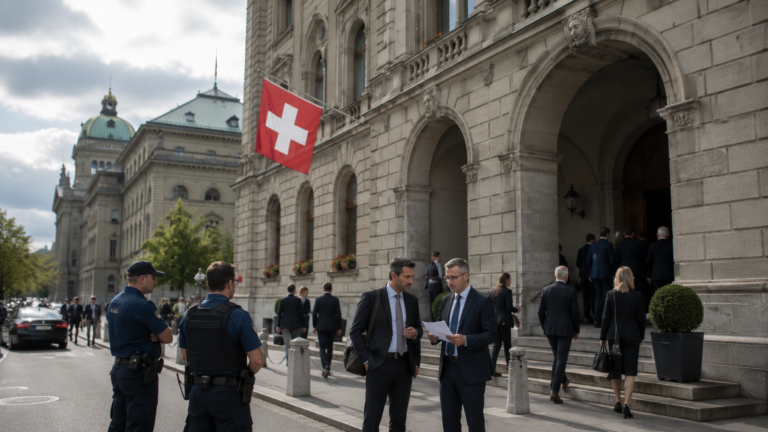

Swiss Government Moves to Rein In Streaming Price Hikes and Strengthen Consumer Rights
Switzerland’s federal government has signaled support for stronger consumer protections in the rapidly expanding subscription economy, backing efforts to curb unilateral price increases by digital streaming providers and other subscription-based services. The move comes amid growing concern over repeated price hikes affecting consumers across Europe and beyond.
The issue has gained attention as streaming platforms increasingly adjust subscription fees while relying on contractual terms that allow companies significant flexibility to change prices after customers have signed up. Swiss policymakers argue that consumers should have clearer protections when businesses modify pricing structures during the life of a contract.
The Federal Council has accepted a parliamentary proposal seeking tighter rules governing how subscription-based digital services implement price increases. The proposal focuses on ensuring that consumers receive transparent information about future pricing changes and are given meaningful options if they disagree with revised terms.
Supporters of the initiative contend that a functioning market economy depends on predictable and understandable contractual relationships. They argue that consumers often commit to streaming subscriptions expecting stability, only to face repeated increases that may not have been clearly foreseeable when the contract was first accepted.
The proposal reflects broader trends across the streaming industry. Major platforms have introduced multiple rounds of price increases in recent years as they seek to balance content investment, profitability and competitive pressures. Industry analysts note that subscription video services have gradually shifted from a growth-focused strategy toward one centered on revenue optimization and long-term sustainability.
In Switzerland, Netflix currently offers subscription plans ranging from CHF 14.90 to CHF 29.90 per month, illustrating the significant variation in pricing tiers available to consumers. Similar pricing adjustments have occurred across the wider streaming market as companies experiment with premium plans, advertising-supported tiers and additional fees for certain features.
Consumer advocates argue that the challenge is not necessarily the existence of price increases themselves but the manner in which they are implemented. The parliamentary proposal seeks to establish a framework under which future increases would need to be based on objective and transparent criteria specified in advance. Terms allowing vaguely defined or unlimited future increases could face greater scrutiny under such a system.
Another key aspect of the proposal involves strengthening cancellation rights. Under the suggested approach, customers facing significant unilateral changes to subscription costs would have access to a simple and cost-free option to terminate their contracts. Supporters say such measures would help restore balance between consumers and large digital service providers.
The debate unfolding in Switzerland mirrors developments elsewhere in Europe. Several countries have examined whether existing consumer protection frameworks remain adequate for the digital subscription era. Policymakers have increasingly questioned whether traditional contract rules are sufficient when services can alter pricing structures remotely and at scale.
Recent research suggests that consumers in Western Europe have experienced some of the largest streaming subscription price increases globally. Analysts attribute these increases to evolving business models, higher content production costs and efforts by streaming companies to improve profitability after years of rapid expansion.
Market data indicate that streaming companies are becoming more sophisticated in how they generate revenue. Many platforms now offer lower-priced advertising-supported plans while charging higher fees for premium ad-free experiences. This strategy allows companies to target different customer segments while creating additional revenue streams.
Despite ongoing increases, industry observers note signs that consumer resistance may be influencing pricing decisions. Research published this year found that the scale of subscription price increases has moderated compared with earlier years as companies become more cautious about customer cancellations and competitive pressures.
The Swiss initiative is therefore emerging at a time when regulators and lawmakers across multiple jurisdictions are reassessing the relationship between consumers and digital platforms. The discussion extends beyond streaming services alone and touches on broader questions about subscription-based business models that have become increasingly common across software, entertainment, media and online services.
If ultimately translated into legislation, the proposed measures could require companies operating in Switzerland to provide clearer contractual language, more detailed explanations for price adjustments and enhanced rights for customers affected by significant changes. Specific legislative details would still need to pass through the normal parliamentary process before becoming law.
For consumers, the debate highlights growing concern about transparency in the digital marketplace. For streaming providers and other subscription businesses, it signals the possibility of tighter oversight in one of Europe’s most affluent markets.
As subscription services continue to play a larger role in everyday life, Switzerland’s efforts may become part of a wider international conversation about how governments should balance consumer protection with the commercial flexibility sought by digital platforms. The outcome could influence future regulatory discussions well beyond the country’s borders.