Bettmerhorn, Bettmeralp, Valais, Switzerland
Bettmerhorn Reveals a Stunning New Perspective on the Great Aletsch Glacier
Among the celebrated mountain viewpoints of the Swiss Alps, Bettmerhorn occupies a distinctive position. Perched above the car-free resort village of Bettmeralp in the canton of Valais, this mountain lookout offers one of the most intimate and revealing encounters with the Great Aletsch Glacier, the largest glacier in the Alps. Unlike some panoramic summits that emphasize distant horizons, Bettmerhorn places visitors face-to-face with the immense river of ice that has shaped this landscape for thousands of years.
Part of the Aletsch Arena and the Swiss Alps Jungfrau-Aletsch UNESCO World Heritage Site, Bettmerhorn combines remarkable scenery, accessible mountain transport, and a network of hiking routes that make it one of Switzerland’s most rewarding alpine destinations.
A Mountain Shaped by Ice and Elevation
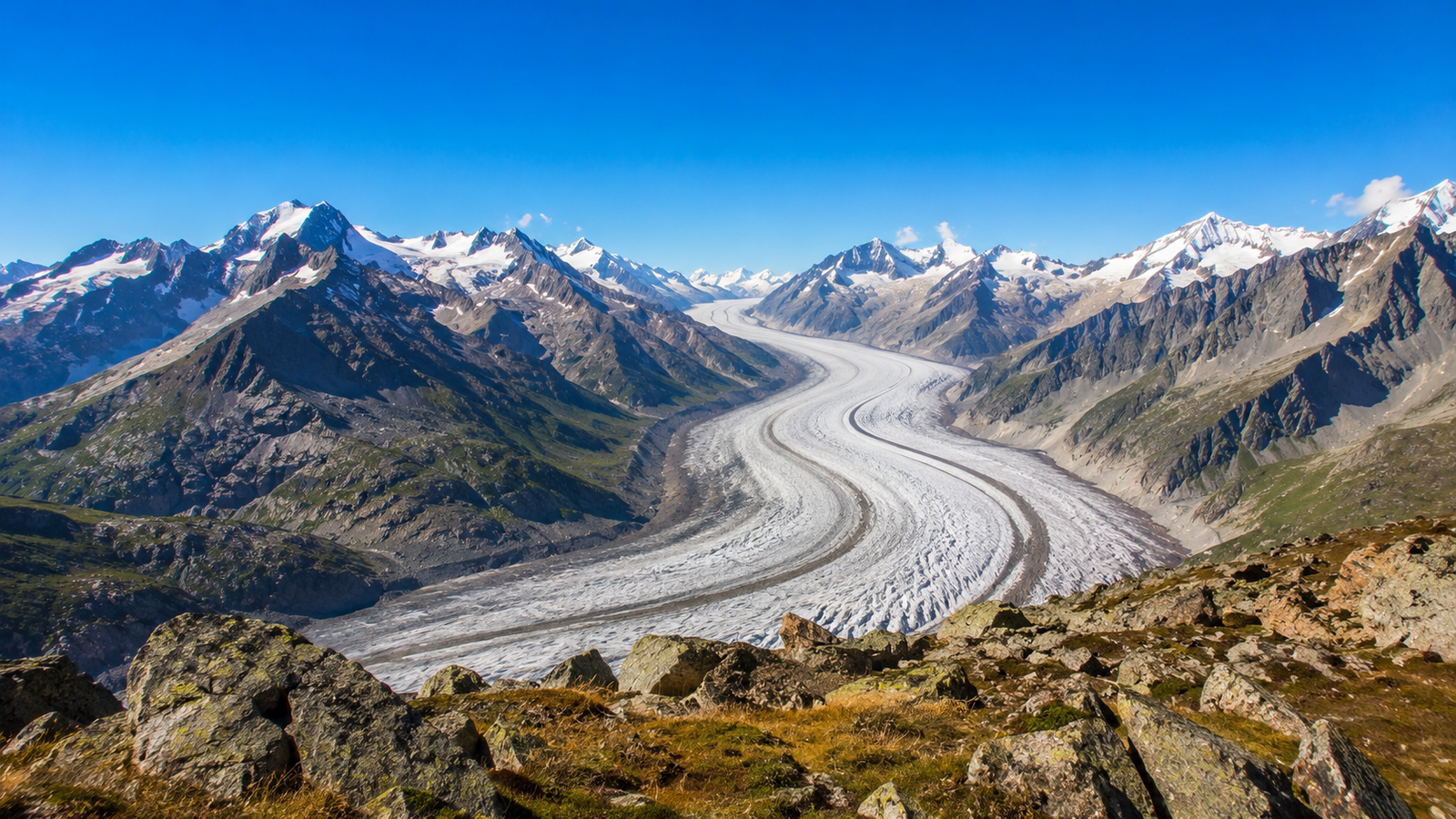
Bettmerhorn rises along a ridge above Bettmeralp, overlooking both the Great Aletsch Glacier and the Rhône Valley. The summit reaches approximately 2,857 meters above sea level, while the main viewing platform near the mountain station stands at around 2,647 meters. From this position, visitors gain a unique perspective of the glacier’s dramatic transition from a straight flow into one of its most impressive curves.
The mountain forms part of the Bernese Alps and lies within one of the most significant protected mountain landscapes in Europe. The surrounding terrain is characterized by rugged ridges, glacially carved valleys, and expansive alpine vistas that extend far beyond the immediate glacier basin.
What makes Bettmerhorn especially appealing is the balance it offers between accessibility and wilderness. Visitors can reach high alpine terrain without undertaking a strenuous climb, yet the scenery retains a sense of remoteness and grandeur.
The Great Aletsch Glacier at Center Stage
The defining attraction of Bettmerhorn is undoubtedly its relationship with the Great Aletsch Glacier.
Stretching for roughly 20 kilometers through the heart of the UNESCO-protected landscape, the glacier is the longest ice stream in the Alps. Over countless generations, it has carved valleys, shaped mountain slopes, and influenced the natural development of the region.
While neighboring viewpoints each reveal different sections of the glacier, Bettmerhorn is particularly known for showcasing both the glacier’s broad central section and its dramatic bend. The result is a perspective that highlights not only the glacier’s immense scale but also its movement through the surrounding mountains.
The glacier is more than a scenic backdrop. It serves as one of the Alps’ most important natural landmarks and remains a powerful symbol of the geological forces that continue to shape high mountain environments.
A View That Extends Beyond the Glacier
Visitors arriving at Bettmerhorn quickly discover that the glacier is only part of the spectacle.
The viewing platform offers expansive panoramas across several major Alpine ranges. Looking southward and westward, travelers can observe prominent peaks of the Valais Alps, including the Matterhorn, Weisshorn, and Dom on clear days. To the north, the glacier flows toward a dramatic horizon of ice-covered summits.
The contrast between the white glacier, dark mountain ridges, and green alpine slopes creates a landscape of extraordinary visual depth. Throughout the day, changing sunlight continuously transforms the appearance of the terrain, making every visit slightly different.
Photographers often favor early morning and late afternoon when shadows emphasize the glacier’s textures and the contours of the surrounding mountains.
Discovering Glacier World
Bettmerhorn offers more than scenic observation.
Near the mountain station, visitors can explore Glacier World, an educational experience dedicated to the history, formation, and significance of the Aletsch Glacier. The exhibits help explain how glaciers develop, how they shape landscapes, and why the region holds international environmental importance.
For travelers unfamiliar with alpine geology, the displays provide valuable context that deepens appreciation for the scenery outside.
Combining education with direct observation makes Bettmerhorn especially appealing for families, students, and visitors interested in natural history.
Hiking Along a UNESCO Landscape
One of the most rewarding aspects of visiting Bettmerhorn is the opportunity to continue beyond the viewpoint.
The mountain serves as a starting point for several notable hiking routes within the Aletsch Arena. Trails lead toward Märjelensee, a mountain lake associated with the glacier, as well as neighboring viewpoints and high-alpine ridges.
Among the most celebrated routes is the high trail connecting Bettmerhorn and Eggishorn. This path follows elevated terrain above the glacier and delivers continuous views of the UNESCO World Heritage landscape. Portions of the route require confidence on mountain trails, but the scenery is widely regarded as one of the highlights of the region.
Shorter walks are also available, allowing visitors to enjoy the landscape without committing to a full-day hike.
The Character of Bettmeralp
Any visit to Bettmerhorn is closely connected to Bettmeralp, the mountain village below.
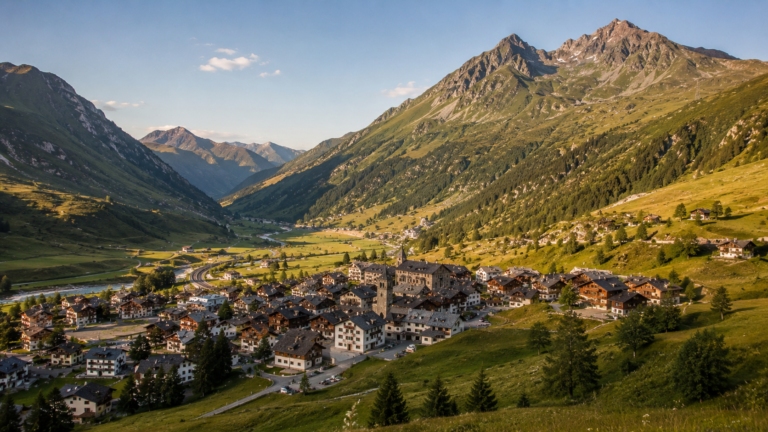
Accessible only by cable car, Bettmeralp is a car-free resort community situated on a sunny plateau above the Rhône Valley. Traditional chalets, mountain hotels, and walking paths create an atmosphere that contrasts sharply with the busy urban centers of Switzerland.
The village serves as a gateway to the glacier region while preserving the relaxed pace of a classic Alpine destination. Visitors often combine a trip to Bettmerhorn with time exploring Bettmeralp’s trails, lake, and local restaurants.
This connection between village life and high-mountain adventure contributes significantly to the area’s enduring appeal.
Visiting Through the Seasons
Bettmerhorn offers different experiences depending on the time of year.
Summer and early autumn are particularly popular for sightseeing and hiking. Snow-free trails provide access to viewpoints and mountain routes, while generally stable weather allows for broad glacier panoramas.
Winter transforms the area into part of the wider Aletsch Arena ski region. Snow blankets the surrounding slopes, creating a striking contrast with the glacier and nearby peaks. Skiers and winter visitors often ride the mountain lifts simply to experience the views.
Regardless of season, mountain weather can change quickly. Visitors should carry suitable layers and check local conditions before heading into higher elevations.
Reaching Bettmerhorn
Despite its alpine setting, Bettmerhorn is surprisingly easy to access.
Travelers typically reach the region by train to Betten Talstation on the Matterhorn Gotthard Railway line. From there, a cable car ascends to Bettmeralp. After crossing the village, a gondola lift continues to the Bettmerhorn mountain station.
The final viewpoint lies only a short walk from the station and is designed to be easily accessible for a wide range of visitors.
This efficient transport network allows travelers to experience a high-alpine glacier environment without extensive mountaineering experience.
Why Travelers Continue to Choose Bettmerhorn
Bettmerhorn’s appeal comes from its ability to reveal the Great Aletsch Glacier in a way few locations can. The mountain combines close-up glacier views, sweeping Alpine panoramas, educational experiences, and excellent hiking opportunities within a UNESCO World Heritage landscape.
For visitors seeking to understand both the beauty and scale of the Swiss Alps, Bettmerhorn delivers an experience that is memorable long after the mountain journey ends. Standing above the glacier, watching the immense flow of ice curve through the valley below, it becomes clear why this viewpoint remains one of the defining highlights of the Aletsch Arena.