Engelberg, Canton of Obwalden, Switzerland
Engelberg: Switzerland’s Mountain Village of Monastic Heritage and Alpine Adventure
Few destinations in Switzerland combine centuries of history, dramatic mountain scenery, and year-round outdoor recreation as naturally as Engelberg. Nestled within a broad Alpine valley in Central Switzerland, this mountain village has evolved from a religious settlement into one of the country’s most recognized alpine destinations. Visitors arrive for many reasons—some are drawn by the famous summit of Titlis, while others come for hiking trails, winter sports, or the peaceful atmosphere of a traditional Swiss mountain community.
What makes Engelberg distinctive is the balance it maintains between its historic roots and modern tourism. The village remains closely connected to its monastic heritage while serving as a gateway to some of the most impressive high-mountain landscapes in the Swiss Alps.
Where Mountains and History Meet
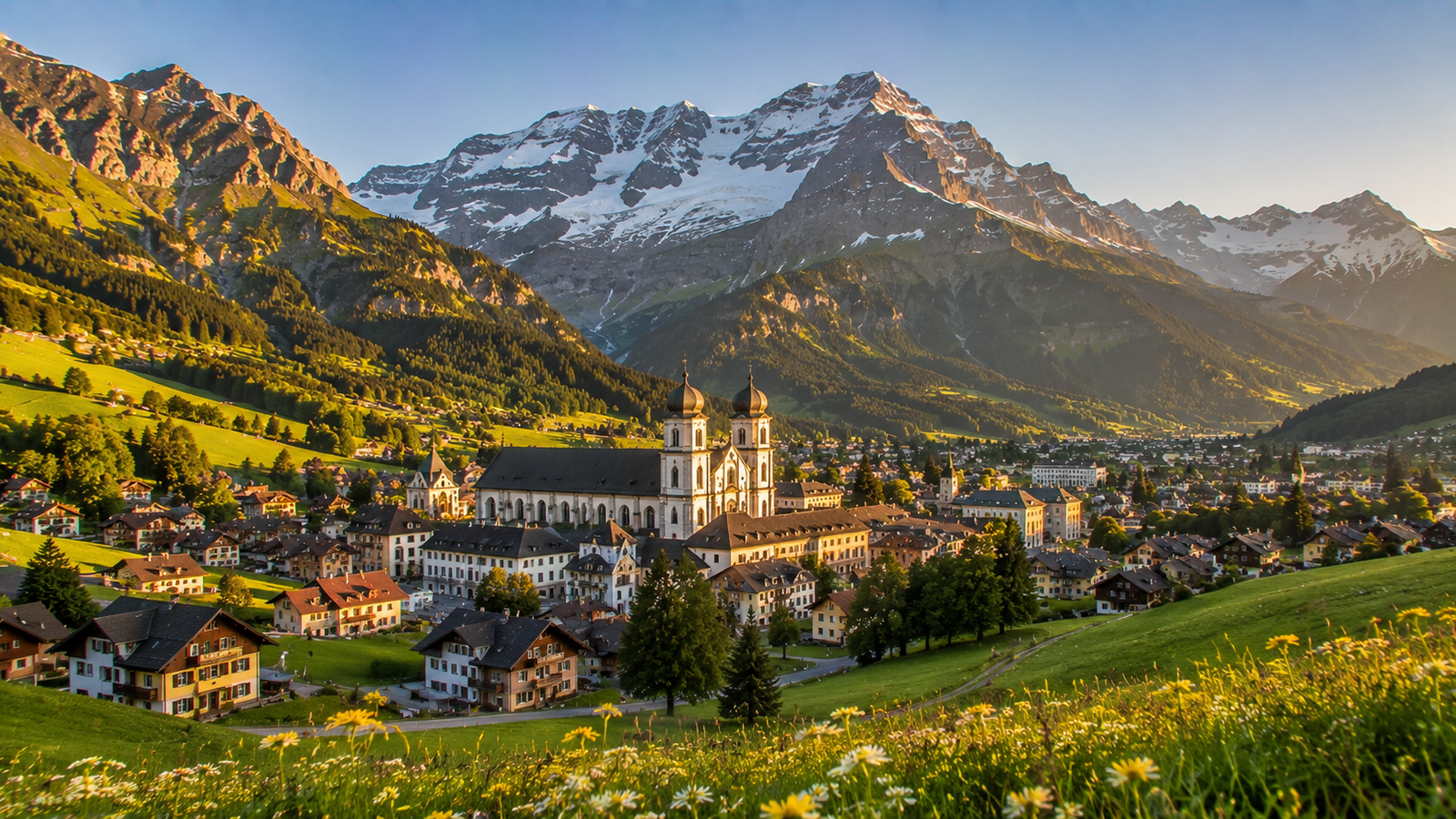
Engelberg lies south of Lake Lucerne in the Canton of Obwalden, surrounded by rugged peaks and alpine pastures. The village sits within a valley enclosed by mountains that create a dramatic natural amphitheater. This setting gives Engelberg a sense of seclusion despite being relatively accessible from major Swiss cities.
The name Engelberg is commonly translated as “Mountain of Angels,” reflecting legends associated with the area’s religious origins. At the heart of the village stands the Benedictine monastery known as Engelberg Abbey, one of the most important historic landmarks in Central Switzerland. Founded during the 12th century, the monastery played a central role in shaping the development of the settlement and continues to function today.
Walking through the village, visitors quickly notice how the monastery remains an integral part of local identity. Its church towers rise above traditional buildings, linking Engelberg’s modern tourism economy with centuries of spiritual and cultural history.
A Gateway to Mount Titlis
While Engelberg itself is attractive, Mount Titlis is the destination’s most famous natural landmark. Rising above the village, Titlis is among the best-known mountain excursions in Switzerland.
Visitors reach the summit via a sequence of cable cars that climb from the valley floor into a world of glaciers, snowfields, and rocky peaks. The final stage is the Titlis Rotair, widely recognized as the world’s first revolving cable car. During the ascent, passengers enjoy continuously changing views of glaciers, cliffs, and surrounding Alpine landscapes.
At the summit, visitors encounter a high-altitude environment where snow and ice often remain throughout the year. Observation platforms provide panoramic views across the Swiss Alps, while glacier attractions allow travelers to experience a mountain environment that feels dramatically different from the green valley below.
The contrast between Engelberg’s pastoral setting and Titlis’s icy summit is one of the destination’s defining characteristics.
Exploring the Village Beyond the Peaks
Many visitors initially focus on the mountains, but Engelberg itself rewards exploration. The village combines traditional Swiss architecture with a relaxed atmosphere that encourages slower travel.
Wooden chalets, flower-filled balconies, and mountain views create a setting that feels authentically Alpine. Local shops, cafés, and restaurants contribute to a welcoming environment, while walking paths connect different sections of the community.
The monastery complex remains one of the most significant attractions within the village. Visitors can admire the architecture, learn about its history, and gain insight into a tradition that has influenced Engelberg for centuries.
Nearby meadows and pastures further enhance the village’s charm. During warmer months, grazing cattle and alpine flowers create scenes that many travelers associate with classic Switzerland.
Outdoor Activities Throughout the Year
One reason Engelberg has become a leading mountain destination is its ability to attract visitors in every season.
Summer and Autumn
During the warmer months, hiking becomes one of the area’s main attractions. Trails lead through forests, across alpine meadows, and toward mountain viewpoints overlooking the surrounding valleys.
Routes vary in difficulty, making the region suitable for casual walkers as well as experienced mountain hikers. Scenic lifts also allow visitors to access higher elevations without undertaking demanding climbs.
Mountain biking has become increasingly popular, while lakes, mountain streams, and picnic areas offer quieter alternatives for travelers seeking relaxation.
Autumn brings colorful landscapes and generally clear mountain views, making it a particularly rewarding season for photography and sightseeing.
Winter
When snow arrives, Engelberg transforms into a major winter sports destination. Skiing and snowboarding attract visitors from Switzerland and abroad, with extensive mountain terrain accessible from the village.
The area’s high elevation helps support winter activities, while mountain infrastructure provides access to a variety of slopes and alpine environments.
Cross-country skiing, snowshoeing, winter hiking, and sledding offer additional options for visitors who prefer alternatives to downhill skiing.
The combination of reliable mountain conditions and impressive scenery has helped establish Engelberg as one of Switzerland’s notable winter destinations.
The Landscape That Defines Engelberg
Geography plays a major role in shaping the visitor experience. Steep mountain walls surround the valley, while rivers and alpine meadows contribute to the area’s visual appeal.
Unlike some larger resort destinations, Engelberg retains a strong connection to its natural surroundings. The transition from village streets to open mountain landscapes happens quickly, allowing visitors to immerse themselves in nature within minutes.
The scenery changes dramatically throughout the year. Spring brings fresh greenery and waterfalls fed by snowmelt. Summer reveals vibrant alpine pastures. Autumn introduces golden tones across forests and hillsides. Winter blankets the valley in snow, creating a completely different atmosphere.
This seasonal transformation helps explain why many travelers return multiple times.
Getting to Engelberg
Despite its mountain setting, Engelberg is relatively easy to reach. Rail connections link the village with Lucerne, making train travel one of the most convenient transportation options.
Many visitors begin their journey in Lucerne and continue through scenic landscapes toward the mountains. The railway itself becomes part of the travel experience, offering views of lakes, valleys, and Alpine terrain.
Road access is also available, though public transportation remains a popular choice due to Switzerland’s efficient rail network.
The village’s accessibility contributes significantly to its popularity among both international travelers and Swiss residents seeking mountain escapes.
Cultural Identity and Local Traditions
Beyond outdoor recreation, Engelberg maintains a strong cultural character. Traditional Swiss customs remain visible through local events, architecture, regional cuisine, and agricultural practices.
The monastery continues to symbolize the community’s historic foundations, while nearby farms and alpine traditions preserve links to the region’s rural heritage.
Visitors often appreciate how Engelberg balances tourism with local identity. Although it welcomes travelers from around the world, it retains the atmosphere of a functioning mountain community rather than feeling exclusively designed for visitors.
This authenticity contributes greatly to the destination’s appeal.
Helpful Advice for First-Time Visitors
Weather conditions in mountain regions can change quickly, even during summer. Layered clothing is useful throughout the year, especially for excursions to higher elevations such as Titlis.
Comfortable footwear is recommended for exploring village streets and hiking trails. Travelers planning mountain activities should check weather forecasts and transportation schedules before departure.
Early morning visits often provide clearer views and a quieter experience at popular attractions. Those staying overnight have the added advantage of enjoying the village atmosphere after day visitors leave.
Why Engelberg Continues to Captivate Travelers
Engelberg succeeds because it offers more than a single attraction. Visitors can experience medieval history, Alpine culture, dramatic mountain landscapes, glacier adventures, and outdoor recreation within one destination. The combination of a centuries-old monastery, the towering summit of Titlis, and a welcoming mountain village creates a travel experience that feels both authentic and memorable.
For travelers seeking a destination that reflects multiple sides of Switzerland—from historic traditions to spectacular natural scenery—Engelberg remains one of the country’s most rewarding places to explore.