UN Rights Chief Welcomes Navi Pillay’s Nobel as Trump Tensions Loom
GENEVA — The United Nations’ top human rights official has welcomed South African jurist Navi Pillay’s 2026 Nobel Peace Prize, describing the award as a significant endorsement of international justice while avoiding a direct assessment of its implications for US President Donald Trump.
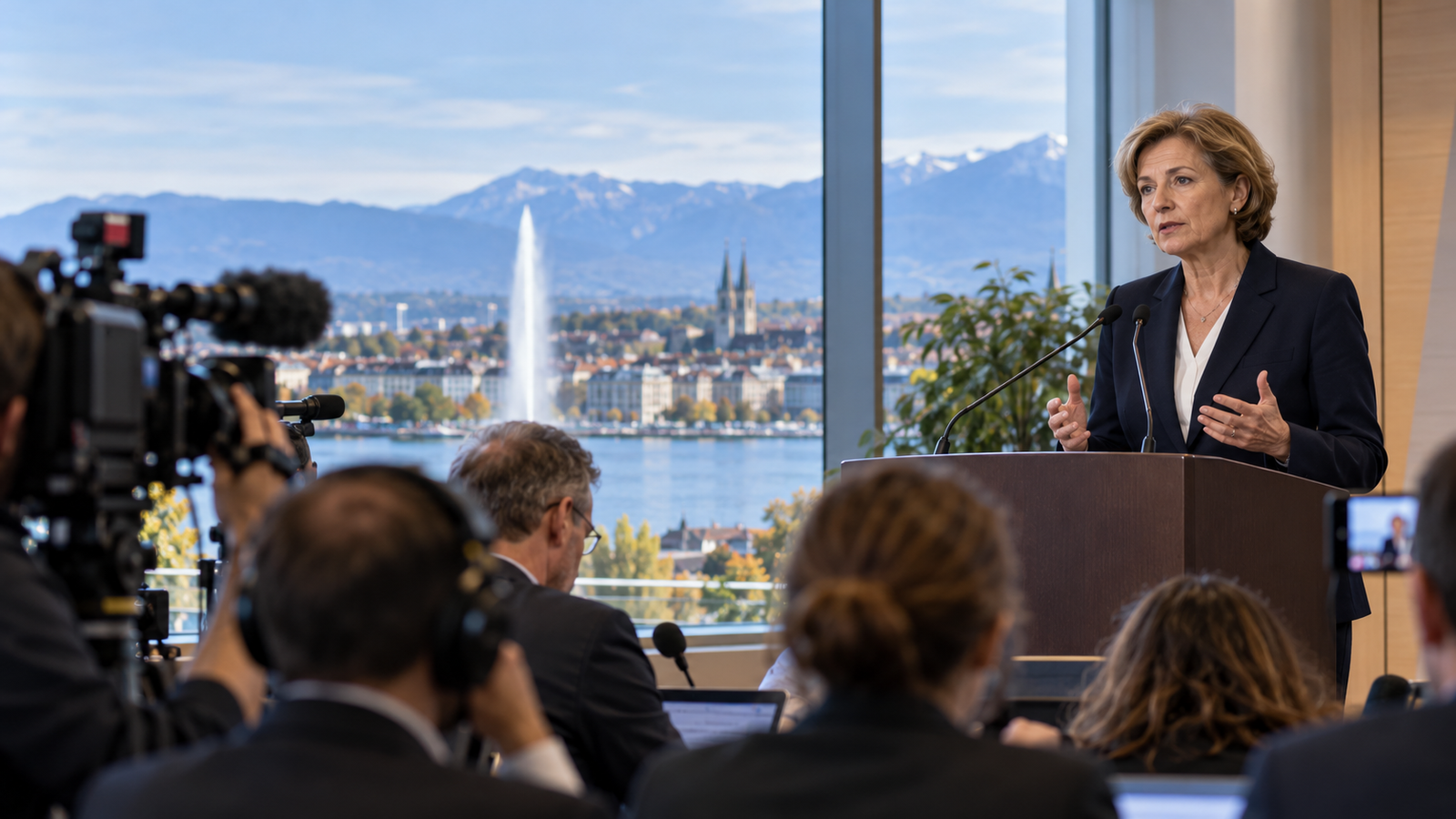
Volker Türk, the UN high commissioner for human rights, praised Pillay on October 9 for her decades of work defending human rights and strengthening international accountability. Speaking to journalists in Geneva, he emphasized the importance of institutions such as the International Criminal Court (ICC), which has faced mounting political pressure, including sanctions imposed by the United States.
The Norwegian Nobel Committee announced the award to Pillay on Friday, recognizing her efforts to promote peace and international law. Her selection comes amid disputes over the authority of international courts and the willingness of governments to accept their decisions.
Türk did not explicitly characterize the award as a message directed at Trump, who has repeatedly criticized the ICC. Instead, he focused on Pillay’s professional record and the broader need for mechanisms that can investigate serious international crimes and pursue accountability.
The distinction leaves the political implications of the award open to interpretation while placing the UN’s response firmly around the principles of international law and human rights.
A career built around international accountability
Pillay, 85, has held several influential positions in the international legal system. She served as the UN high commissioner for human rights from 2008 to 2014, presided over the International Criminal Tribunal for Rwanda and previously served as a judge at the ICC. Her career also began in South Africa, where she worked as a lawyer during the apartheid era.
The Nobel Committee recognized her contribution to efforts to ensure that war crimes, crimes against humanity and genocide can be prosecuted. The award highlights the role of legal institutions in addressing grave abuses, including when investigations involve powerful political or military actors.
Pillay has also chaired the UN Independent International Commission of Inquiry on the Occupied Palestinian Territory, including East Jerusalem, and Israel. A report issued by the commission in 2025 concluded that Israel had committed genocide in Gaza. Israeli authorities strongly rejected the finding, making the report a source of significant international controversy.
Her work therefore spans several areas of international justice, from accountability for atrocities in Rwanda to investigations concerning the Israeli-Palestinian conflict. The Nobel decision has brought renewed attention to the wider question of how international law should operate when its findings conflict with the positions of national governments.
Why the International Criminal Court is central to the debate
The ICC prosecutes individuals accused of genocide, crimes against humanity, war crimes and the crime of aggression within the limits of its jurisdiction. It is separate from the United Nations, although the two institutions have overlapping interests in peace, security and accountability.
The United States is not a party to the Rome Statute, the treaty that established the court, and does not accept the court’s jurisdiction in the same way as its member states. The Trump administration has taken measures against the institution and individuals associated with it, arguing against actions it considers illegitimate or directed at US interests and allies.
The US sanctions have raised concerns among supporters of international justice about the ability of court officials and associated organizations to carry out their work. On October 9, the UN secretary-general also condemned the announcement of sanctions against the ICC as an institution, warning of their potential impact on its ability to fulfill its mandate.
Pillay’s professional history makes the dispute particularly relevant to the discussion surrounding her award. Her work has included service on international judicial bodies and advocacy for accountability in cases involving alleged serious crimes.
However, the Nobel Committee’s stated rationale was her work promoting peace and international law. It did not formally describe the award as a response to Trump or to a specific US policy.
Türk’s response stops short of a direct political confrontation
Türk’s remarks in Geneva reflected a careful distinction between defending international institutions and commenting directly on the political motivations surrounding the Nobel decision.
He described Pillay as an eminent legal scholar and a personal inspiration, referring to her as his “big sister.” He also conveyed the sense of pride and satisfaction within the Office of the High Commissioner for Human Rights, saying the recognition was thoroughly deserved.
When questions arose about whether the award could be interpreted as a response to Trump, Türk did not directly address the US president. Instead, he pointed to the attacks and pressure faced by his own office, UN special rapporteurs and the ICC.
That response underscored a broader institutional concern: international human rights work depends not only on legal mandates but also on the ability of investigators, judges and officials to operate without undue interference.
The UN’s position does not mean that every finding by an international body is beyond scrutiny. Rather, its stated emphasis is on preserving the capacity of institutions to investigate allegations, apply legal standards and establish accountability through recognized processes.
For Türk, Pillay’s award offered an opportunity to highlight those principles without turning his remarks into a direct exchange with the US administration.
Recognition comes amid sharply divided reactions
The Nobel announcement drew praise from senior UN officials and other supporters of international law. Secretary-General António Guterres congratulated Pillay, emphasizing her record in defending human rights and contributing to international legal proceedings. He also presented the award as recognition of the wider community working to uphold justice and human dignity.
The decision also attracted criticism. Israeli officials rejected the recognition in light of Pillay’s leadership of the commission that concluded Israel had committed genocide in Gaza. That conclusion remains disputed by the Israeli government.
These reactions illustrate the political sensitivity of international legal investigations, particularly when they concern an ongoing conflict. Findings by UN commissions and judgments by courts have different legal status and procedures, and their conclusions should be assessed according to the evidence and mandate involved.
The Nobel Peace Prize is an award, not a judicial ruling. Its selection of Pillay recognizes her work and the principles the committee associates with it; it does not itself determine the legal merits of allegations investigated by the commission she chaired.
What the award means for international justice
The practical effects of the Nobel decision remain uncertain. It does not change the ICC’s jurisdiction, remove existing sanctions or guarantee that governments will cooperate with international investigations.
Its significance is instead likely to be measured through the attention it brings to international accountability and the challenges facing institutions responsible for addressing serious crimes. Pillay’s career places those questions at the center of the public discussion surrounding the award.
For the United Nations, the immediate message is clear: international law and human rights remain central to its work, even as the institutions responsible for upholding them face political opposition.
Türk’s decision not to directly link the prize to Trump leaves the interpretation of that political context unresolved. But his emphasis on the ICC, the protection of human rights and the need for accountability shows why the award has significance beyond the career of a single jurist.
As the debate continues, the central question will be whether international institutions can retain the independence and practical capacity needed to investigate serious violations, regardless of the governments or powerful individuals involved.