Swiss Solar Deregulation Proposal Collapses After Signature Shortfall
A Swiss campaign seeking to make solar installations easier to build has failed to secure enough valid signatures to qualify for a national vote, ending an effort to reduce planning restrictions on solar panels across the country. The initiative’s deadline expired on October 8, 2026, after authorities determined that the campaign had not met the legal requirement of 100,000 valid signatures within 18 months.
The proposal, known as the federal popular initiative “For solar installations exempt from planning permission,” sought a constitutional change that would have removed the requirement for planning permission for solar installations on buildings and other structures, including in protected townscapes and landscapes.
The setback comes as Switzerland continues to pursue greater domestic renewable electricity production while balancing energy infrastructure development against heritage conservation, landscape protection and existing construction rules.
The initiative’s failure means the proposed constitutional change will not proceed to a nationwide referendum through this campaign. It does not, however, reverse existing measures that already simplify approval procedures for certain solar installations.
Thousands of signatures failed verification
The campaign’s organizers said their association had collected approximately 117,500 signatures. However, verification conducted during July and August identified nearly 20,000 invalid signatures, according to Roland Weiss, one of the initiative’s organizers, who spoke to the Keystone-SDA news agency.
The discrepancy left the campaign short of the 100,000 valid signatures required to bring a federal popular initiative forward. The Federal Chancellery confirmed in the Federal Gazette that the required number had not been submitted by the October 8 deadline.
Weiss said a lawyer was investigating how such a large number of signatures had been rejected despite the involvement of professional signature-collection companies. The organizers have therefore raised questions about the collection and verification process, but the available reporting does not establish that fraud or deliberate wrongdoing occurred.
The initiative committee consisted of seven private individuals associated with an interest group based in Basel-Landschaft. It did not include nationally recognized political figures, according to the published report.
For a Swiss federal popular initiative, gathering signatures is only one stage of the process. The signatures must also meet formal requirements and be validated before the proposal can proceed. In this case, the number collected was insufficient once invalid entries were excluded.
What the proposed constitutional change would have done
The initiative aimed to remove planning-permission requirements for solar installations on buildings and structures, whether located inside or outside protected townscapes and landscapes.
Its proposed rules would have substantially reduced the role of planning authorization in areas where solar projects can face restrictions associated with heritage preservation or the appearance of historic settlements. Exceptions would have remained possible for cultural monuments of national or cantonal importance and for historic sites, where permission could still have been required subject to conditions.
Supporters of reducing administrative barriers have pointed to the difficulty of installing solar panels on some buildings because of conservation requirements. In historic centers and protected areas, the visual impact of panels can be a central consideration in decisions about whether an installation is acceptable.
The initiative sought a broader legal change than simply speeding up applications. By proposing a constitutional provision exempting installations from planning permission, it would have changed the balance between solar development and certain planning controls.
Because the campaign failed to qualify, voters will not decide on that proposed constitutional provision through this initiative.
Solar installations already benefit from simplified procedures
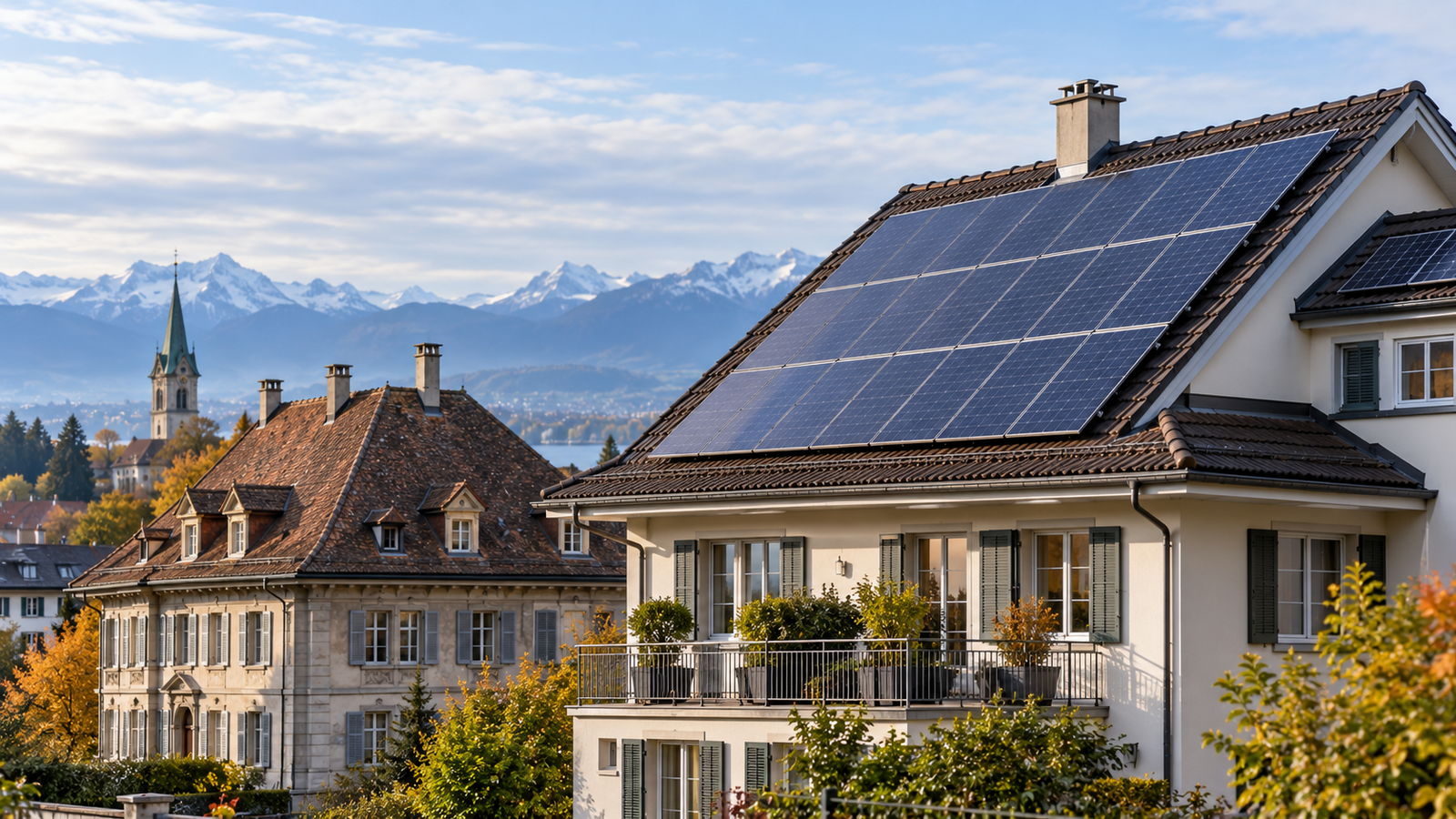
The failure should not be interpreted as meaning that all Swiss solar installations require full planning permission. Existing rules already allow certain rooftop systems to proceed through a notification process instead of a conventional building-permit procedure.
According to Swissolar, suitably adapted solar installations on roofs generally require notification rather than a building permit, while installations on cultural monuments remain subject to authorization requirements. Cantonal rules and the characteristics of an individual project determine which procedure applies.
The canton of Zurich, for example, allows many suitably adapted rooftop systems to use a simplified notification process. However, installations in core zones, areas covered by townscape or heritage inventories, and locations subject to heritage-protection orders can still require permission.
These distinctions are important for property owners considering solar panels. The failed initiative would have expanded exemptions significantly, but its defeat does not remove existing opportunities to install qualifying systems under current rules.
Property owners should therefore check the applicable cantonal and municipal requirements rather than assume that either all installations need permission or all are exempt.
Renewable energy expansion remains a national priority
Switzerland is pursuing several policies intended to increase renewable electricity generation and improve energy security. The government has introduced measures to accelerate approval procedures for major solar, wind and hydropower projects considered to be of national interest.
In February 2026, the Federal Council announced that most provisions of a legislative package designed to shorten authorization procedures would enter into force on April 1. The measures include streamlined approval processes for nationally significant renewable energy installations and changes to the available appeal procedures.
Those reforms are separate from the failed initiative concerning planning permission for solar installations on buildings and structures. They demonstrate that the failure of one campaign does not halt other efforts to accelerate renewable energy development.
The Federal Council also rejected a different proposal in March 2026: the “Solar Initiative,” which sought to require suitable building surfaces to be used for renewable energy production. The government opposed that proposal without presenting a counterproposal and said it would submit its formal position in December 2026.
The two initiatives addressed different questions. One sought to exempt solar installations from planning permission, while the other proposed an obligation to use suitable building surfaces for renewable energy. Their outcomes should not be confused.
What happens next?
The immediate consequence is that the planning-permission initiative cannot proceed to a national vote after missing its signature target. The organizers’ investigation into the rejected signatures may clarify how the shortfall occurred, but no further outcome has been established in the available reporting.
Switzerland’s broader energy-policy debate will continue through existing legislation, government proposals and other political initiatives. The challenge remains how to increase domestic electricity production while respecting property rights, heritage protection and local planning responsibilities.
For households and businesses considering solar installations, current approval rules remain in effect. The failed campaign would have introduced a much wider exemption, but its collapse leaves that proposed constitutional change off the national voting agenda.