
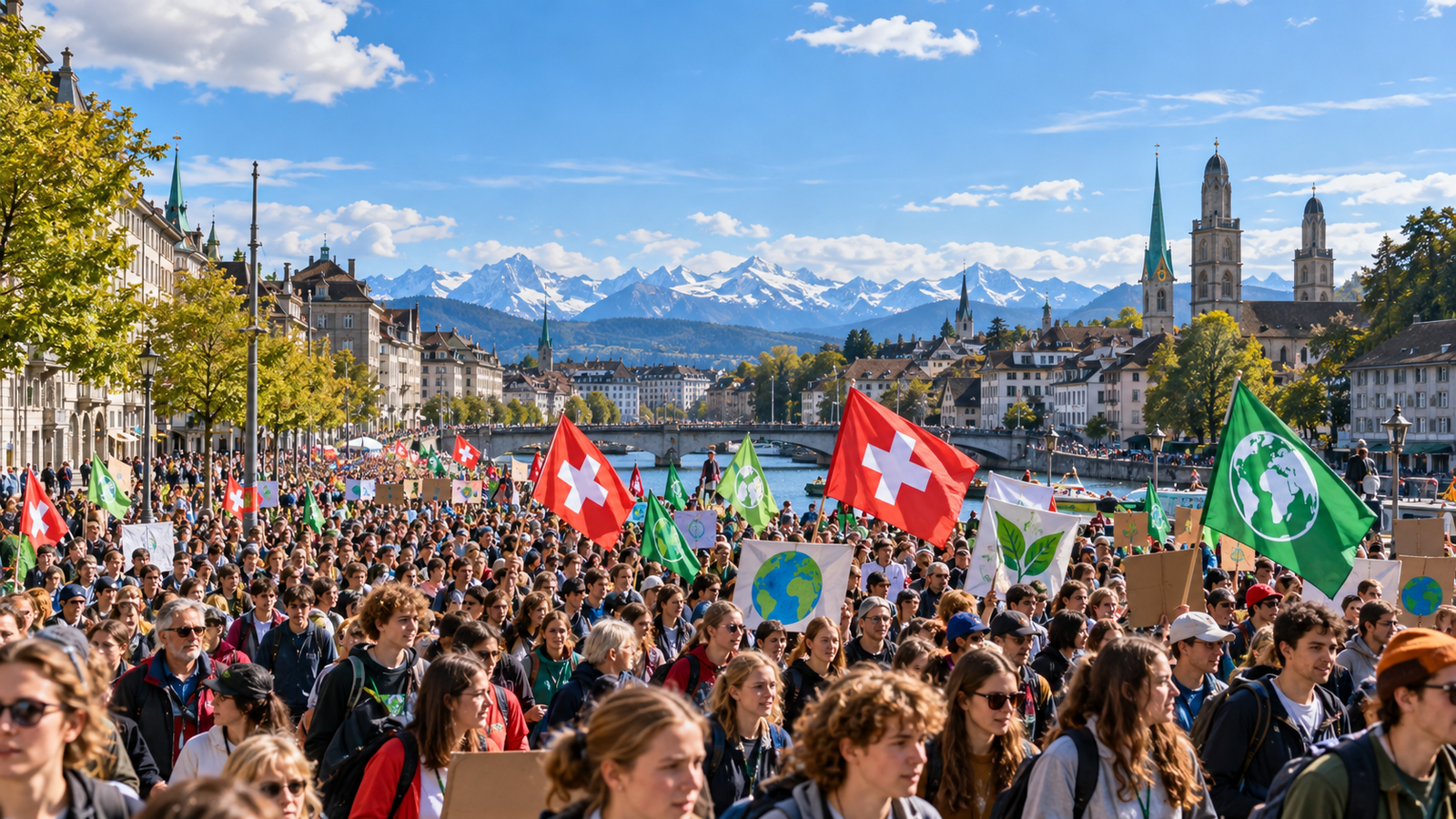
Thousands Rally Across Switzerland Calling for Stronger Climate Policies
Thousands of people took to the streets in several Swiss cities over the weekend in a coordinated demonstration urging stronger action on climate change, reflecting continued public concern over environmental challenges despite recent political setbacks for some climate-focused initiatives.
The demonstrations brought together environmental groups, climate activists, students, families, and supporters of sustainability policies. Participants carried banners, delivered speeches, and marched through city centers to call attention to issues including greenhouse gas emissions, renewable energy development, biodiversity protection, and Switzerland’s long-term climate commitments.
Organizers said the demonstrations were intended to keep climate policy high on the national agenda as governments across Europe face growing pressure to balance economic concerns, energy security, and environmental objectives. Protesters argued that climate-related risks continue to increase despite international efforts to reduce emissions and accelerate the transition toward cleaner energy sources.
The rallies are part of a broader climate movement that has remained active in Switzerland for several years. Since the emergence of nationwide climate strikes in 2018 and 2019, environmental groups have regularly organized demonstrations aimed at influencing public debate and government policy. Some of the largest climate-related gatherings in Swiss history occurred during that period, drawing tens of thousands of participants across the country.
This latest round of demonstrations comes at a time when climate policy remains a subject of political debate in Switzerland. Earlier national votes and policy discussions have shown differing views among voters and political parties regarding the pace and scale of climate-related measures. While environmental organizations continue to advocate for stronger action, some critics have expressed concerns about economic costs and the potential impact of new regulations on households and businesses.
Many participants at the weekend events emphasized the growing visibility of climate-related impacts around the world, including extreme heat, drought conditions, flooding, and wildfires. Environmental campaigners argued that these developments underscore the need for governments to accelerate efforts to reduce emissions and strengthen climate adaptation measures.
Speakers at several events highlighted the importance of international cooperation, noting that climate change is a global challenge that cannot be addressed by individual countries acting alone. Calls were made for stronger commitments to renewable energy, improved public transportation systems, and investments in technologies designed to support emissions reductions. Protesters also urged policymakers to consider environmental consequences when making economic and infrastructure decisions.
Switzerland has positioned itself as a country committed to climate goals through a combination of domestic policies and international agreements. However, environmental groups argue that additional measures are needed to align future emissions reductions with scientific recommendations and international climate objectives. The demonstrations sought to reinforce those demands and encourage policymakers to adopt more ambitious strategies in the years ahead.
The protests also reflected broader trends seen across Europe and other regions, where climate organizations continue to mobilize supporters despite shifting political priorities and economic pressures. Recent climate-focused events in multiple countries have highlighted concerns that environmental issues may receive less attention as governments focus on inflation, geopolitical tensions, and energy security challenges. Activists contend that delaying climate action could increase long-term costs and risks.
Observers noted that public demonstrations remain an important part of Switzerland’s civic culture, allowing citizens and advocacy groups to express views on issues ranging from social policy to environmental protection. The country’s system of direct democracy frequently places major policy questions before voters, creating opportunities for public participation both at the ballot box and through peaceful demonstrations.
While no immediate policy changes were announced as a result of the demonstrations, organizers described the rallies as part of a longer-term effort to maintain momentum around climate issues. They said future campaigns, public events, and policy discussions are expected as environmental groups continue pressing for action at local, national, and international levels.
The turnout demonstrated that climate change remains a significant concern for many people in Switzerland. As policymakers weigh environmental objectives alongside economic and social considerations, the debate over how best to address climate challenges is likely to remain a prominent issue in the country’s public discourse.