
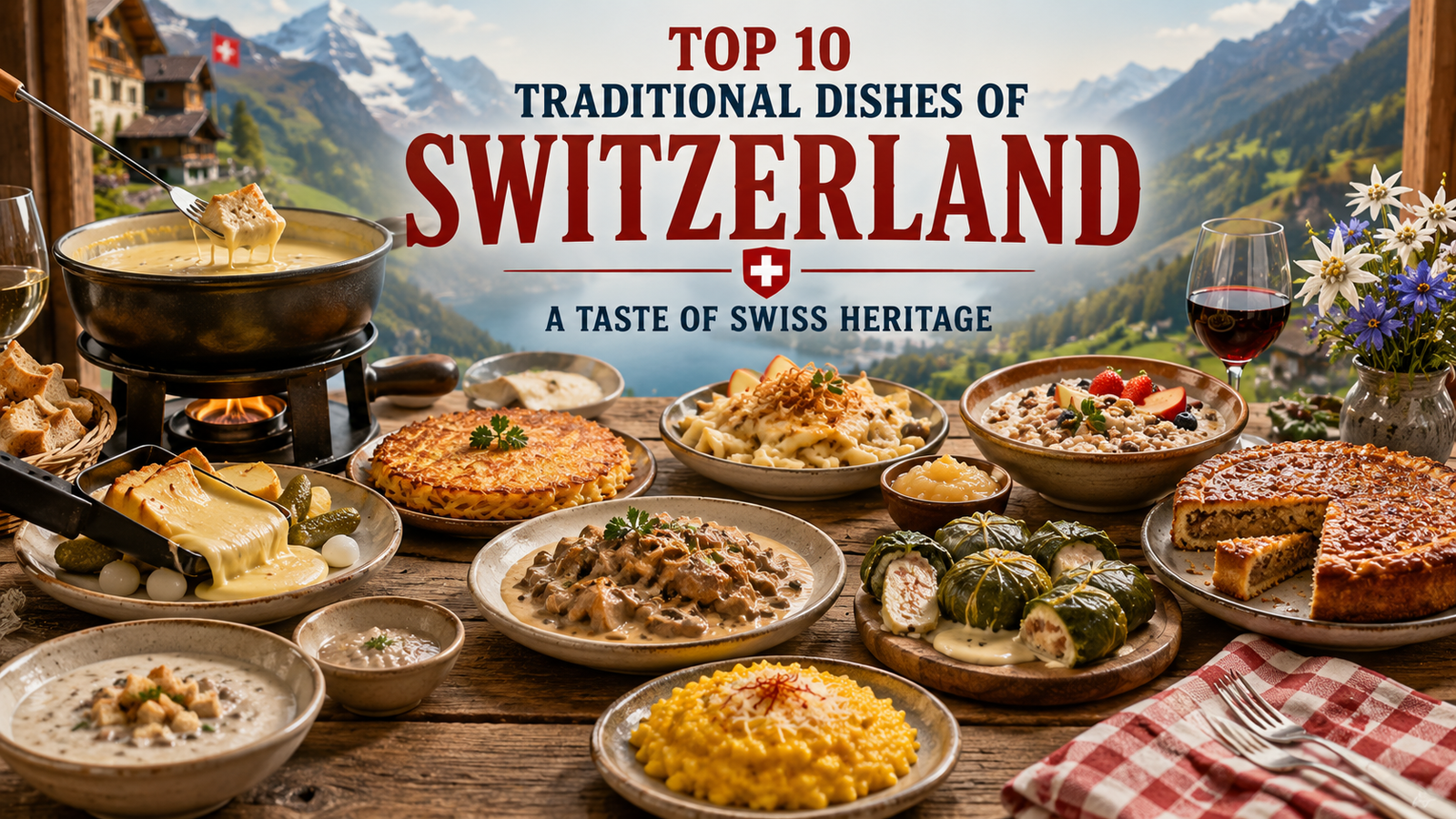
Top 10 Swiss Dishes Everyone Should Try for an Authentic Taste of Switzerland
Switzerland’s culinary identity is often overshadowed by its mountains, lakes, and famous rail journeys. Yet the country’s food culture tells an equally fascinating story. Shaped by Alpine traditions and influenced by neighboring France, Germany, Italy, and Austria, Swiss cuisine reflects the diversity of its regions while maintaining a distinct character of its own.
From hearty mountain meals developed to sustain farmers through long winters to refined specialties enjoyed in cities and lakeside towns, Switzerland offers a remarkable range of traditional dishes. For travelers seeking an authentic cultural experience, tasting local food is one of the most rewarding ways to understand the country.
Here are ten Swiss dishes that have become icons of the nation’s culinary heritage.
1. Cheese Fondue
No dish is more closely associated with Switzerland than cheese fondue. Traditionally prepared by melting Swiss cheeses such as Gruyère and Vacherin Fribourgeois with white wine, fondue is served in a communal pot where diners dip pieces of bread using long forks.
Originally a practical meal in Alpine regions, fondue evolved into a symbol of Swiss hospitality and social dining. Today it is enjoyed throughout the country, particularly during colder months when the warm, rich cheese creates a comforting mountain experience.
Many visitors consider sharing a traditional fondue meal an essential part of any Swiss journey.
2. Raclette
Another beloved cheese specialty, raclette originated in the canton of Valais. The dish takes its name from the French word meaning “to scrape,” referring to the process of melting cheese and scraping it onto plates.
Traditional accompaniments include potatoes, pickled onions, and gherkins. Modern versions may feature additional ingredients, but the essence of raclette remains unchanged: high-quality Swiss cheese served in a simple yet satisfying way.
The dish is especially popular during winter and at festive gatherings across Switzerland.
3. Rösti
What began as a breakfast dish among farmers in the German-speaking regions has become one of Switzerland’s national foods.
Rösti consists of grated potatoes that are fried until crisp and golden. While simple in appearance, achieving the perfect texture requires skill and attention. The dish is often served alongside meats, eggs, sausages, or vegetable preparations.
Its popularity throughout the country has transformed rösti from a regional specialty into a symbol of Swiss comfort food.
4. Zürcher Geschnetzeltes
One of Zurich’s most famous culinary contributions, Zürcher Geschnetzeltes features thin slices of veal cooked in a creamy sauce typically made with cream, stock, and mushrooms.
The dish is traditionally paired with rösti, creating a combination that remains a staple of Swiss restaurant menus. Its refined yet approachable character reflects the culinary traditions of Switzerland’s largest city.
For many travelers, it offers an excellent introduction to classic Swiss cuisine beyond cheese-based specialties.
5. Älplermagronen
Often described as Swiss Alpine macaroni, Älplermagronen combines pasta, potatoes, cream, cheese, and onions into a hearty mountain meal.
The dish developed in Alpine farming communities where simple, energy-rich ingredients were readily available. One of its most distinctive features is the traditional serving of applesauce alongside the savory pasta mixture.
The combination may surprise first-time visitors, but it remains a cherished example of Swiss mountain cooking.
6. Birchermüesli
Unlike many dishes on this list, Birchermüesli was created by a physician rather than farmers or cooks. Swiss doctor Maximilian Bircher-Brenner developed the dish in the late nineteenth century as part of a nutritional approach emphasizing fresh ingredients.
Made with oats, fruit, nuts, and dairy products, Birchermüesli became internationally influential and inspired many modern breakfast cereals. Despite its global popularity, it remains deeply connected to Switzerland and continues to be enjoyed nationwide.
Its emphasis on fresh, wholesome ingredients reflects a longstanding Swiss appreciation for quality food.
7. Basel Flour Soup (Basler Mehlsuppe)
This traditional specialty from Basel is closely associated with the city’s famous Fasnacht carnival celebrations.
The soup is prepared by slowly browning flour before combining it with broth to create a dark, flavorful dish. Although its ingredients are simple, the cooking process develops a distinctive taste that has remained popular for generations.
Visitors exploring Basel during carnival season often encounter this regional favorite as part of local culinary traditions.
8. Saffron Risotto from Ticino
Switzerland’s Italian-speaking canton of Ticino introduces Mediterranean influences into the national cuisine. One of the region’s most recognized dishes is saffron risotto.
Creamy, aromatic, and deeply rooted in northern Italian culinary traditions, the dish reflects Ticino’s unique cultural position within Switzerland. It highlights the country’s linguistic and cultural diversity while remaining an important component of Swiss gastronomy.
The dish is commonly enjoyed alongside local meats or seasonal ingredients.
9. Capuns
Originating in the canton of Graubünden, Capuns showcases the distinctive cuisine of Switzerland’s southeastern mountain regions.
The dish consists of dough made with flour, eggs, and herbs, often mixed with pieces of cured meat, wrapped in Swiss chard leaves and cooked gently before being served with a creamy sauce.
Capuns remains one of Graubünden’s most celebrated specialties and offers travelers an opportunity to experience flavors unique to Switzerland’s Romansh-speaking areas.
10. Nusstorte
A list of Swiss culinary classics would be incomplete without dessert. Engadine Nusstorte, commonly known as Nusstorte, comes from the Engadin Valley in Graubünden.
This rich pastry features a buttery crust filled with caramelized sugar, cream, and walnuts. Originally associated with local bakeries, it has become one of Switzerland’s most famous desserts and can now be found throughout the country.
Its combination of sweetness, texture, and Alpine heritage makes it a memorable way to conclude a traditional Swiss meal.
A Culinary Journey Through Switzerland
One of the most fascinating aspects of Swiss cuisine is how strongly it reflects regional identity. The cheese traditions of the Alps, the hearty dishes of mountain communities, the refined specialties of urban centers, and the Mediterranean influences of Ticino all contribute to a remarkably diverse food culture.
Travelers often arrive expecting fondue and chocolate, but Switzerland offers far more than its most famous exports. Exploring local restaurants, mountain inns, lakeside cafés, and historic towns reveals a culinary landscape shaped by geography, tradition, and centuries of cultural exchange.
Whether sharing a bubbling fondue in a mountain village, enjoying rösti in a traditional restaurant, or tasting Nusstorte in the Engadin Valley, each dish offers a deeper connection to Switzerland’s history and regional character.