Top 10 Most Famous Swiss People of All Time and Their Global Legacy
Switzerland is often associated with Alpine landscapes, precision watches, international diplomacy, and political neutrality. Yet the country’s influence extends far beyond its borders because of the remarkable individuals who helped shape science, philosophy, humanitarian law, architecture, psychology, education, and sport.
Choosing the most famous Swiss people is not simply a matter of popularity. The individuals featured here transformed how people think, learn, compete, build, govern, and understand the world. Some were born Swiss, while others became Swiss citizens and produced their most important work in Switzerland. Together, they represent the extraordinary impact of a nation that has consistently produced global innovators and cultural pioneers.
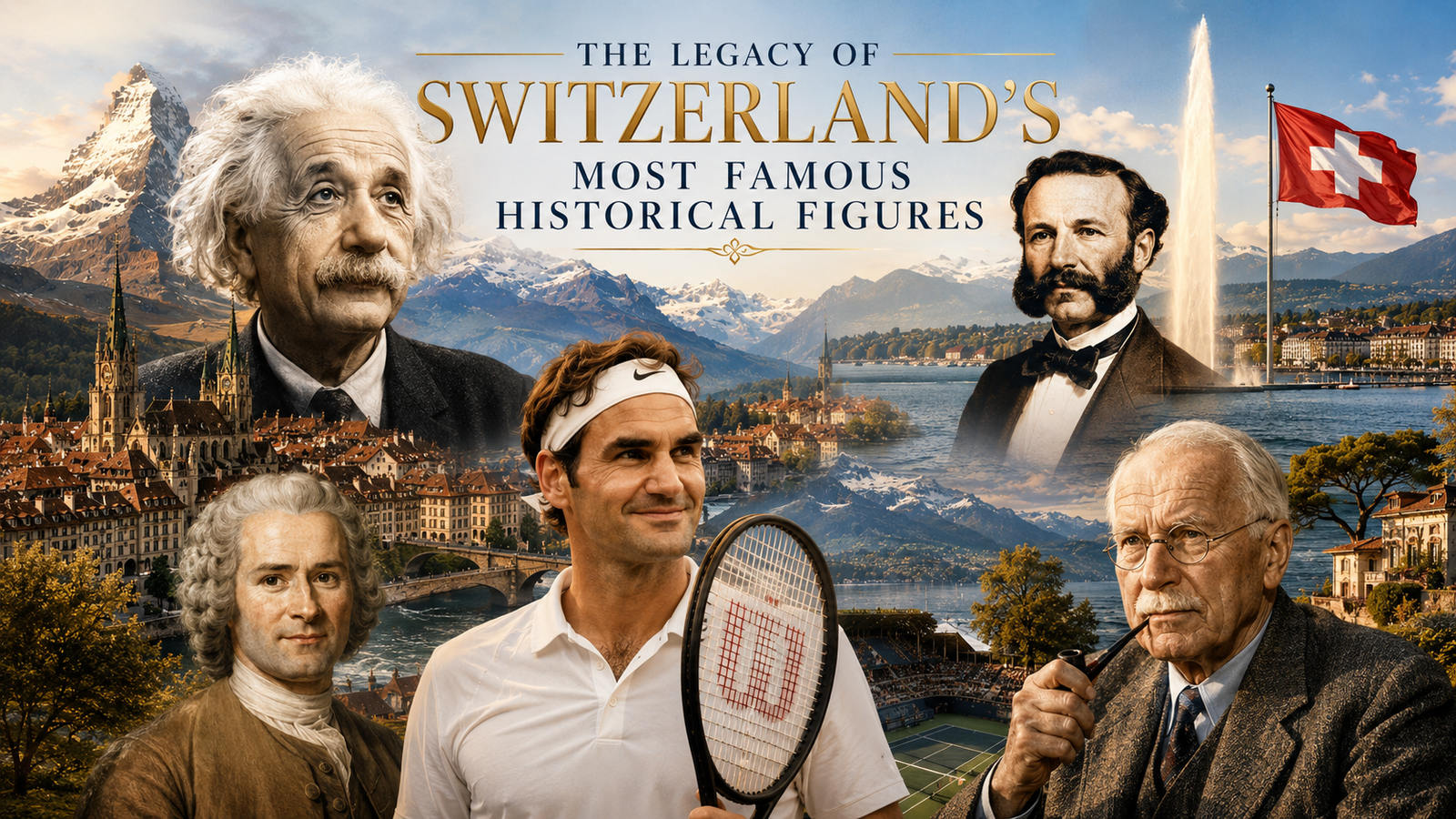
1. Albert Einstein
Although born in Germany, Albert Einstein became a Swiss citizen in 1901 and developed his groundbreaking theory of special relativity while working at the Swiss Patent Office in Bern. His scientific achievements revolutionized modern physics and transformed humanity’s understanding of space, time, energy, and the universe.
Einstein’s years in Switzerland were among the most productive of his career. Today, Bern continues to celebrate its connection to the scientist through museums and historical sites associated with his life. His global influence remains unmatched among figures connected to Switzerland.
2. Henri Dunant
Few Swiss individuals have had a greater humanitarian impact than Henri Dunant. After witnessing the suffering of wounded soldiers following the Battle of Solferino in 1859, he advocated for organized humanitarian assistance during wartime.
His efforts led to the creation of the International Committee of the Red Cross in Geneva and helped inspire the Geneva Conventions. Dunant became the first recipient of the Nobel Peace Prize in 1901, and his humanitarian vision continues to influence international law and relief work worldwide.
3. Roger Federer
For millions of sports fans, Roger Federer is the modern face of Switzerland. Born in Basel, he became one of the most successful and admired tennis players in history.
Federer’s elegant playing style, longevity, sportsmanship, and record-breaking achievements elevated him beyond tennis into the realm of global cultural icon. His popularity helped introduce Switzerland to audiences far beyond traditional tourism and business circles, making him one of the country’s most recognizable ambassadors.
4. Jean-Jacques Rousseau
Born in Geneva in 1712, Jean-Jacques Rousseau became one of the most influential philosophers of the Enlightenment era.
His writings on political authority, education, society, and human nature profoundly shaped modern democratic thought. Works such as The Social Contract influenced political movements across Europe and beyond. More than two centuries after his death, Rousseau remains a foundational figure in philosophy, political theory, and education.
5. Carl Gustav Jung
Carl Jung transformed the study of psychology during the twentieth century. Born in Switzerland, he developed analytical psychology and introduced concepts that remain influential today, including archetypes, the collective unconscious, introversion, and extraversion.
His ideas extended beyond psychology into literature, religion, philosophy, art, and cultural studies. Jung’s work continues to inspire scholars, therapists, and researchers throughout the world.
6. Le Corbusier
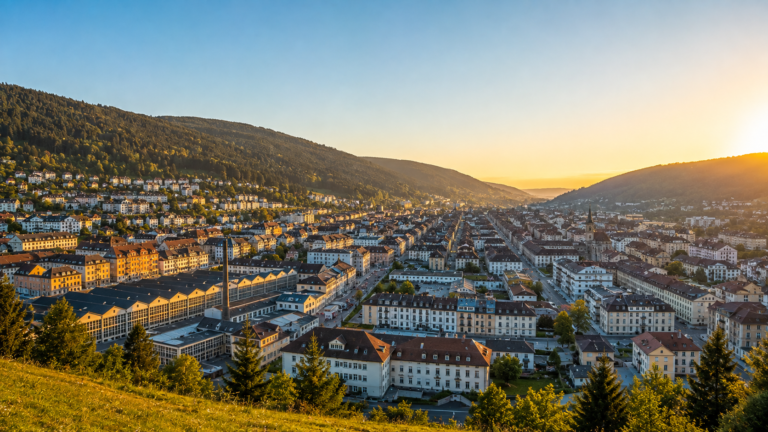
Known professionally as Le Corbusier, Charles-Édouard Jeanneret was born in La Chaux-de-Fonds and became one of the most influential architects of the modern era.
His innovative approach to urban planning and building design helped define twentieth-century architecture. Structures designed by Le Corbusier can be found across Europe, Asia, and the Americas, while several of his works have received UNESCO World Heritage recognition. His influence remains visible in cities around the globe.
7. Leonhard Euler
Among mathematicians, Leonhard Euler is considered one of the greatest figures in the history of science. Born in Basel in 1707, he made major contributions to mathematics, physics, engineering, astronomy, and logic.
Many mathematical symbols, formulas, and concepts still used today are connected to Euler’s work. His extraordinary productivity and intellectual influence established him as one of Switzerland’s most important scientific minds.
8. Johann Heinrich Pestalozzi
Education around the world owes much to Johann Heinrich Pestalozzi. The Swiss educator championed child-centered learning and believed education should develop intellectual, emotional, and practical abilities together.
His ideas influenced modern teaching methods and educational reform far beyond Switzerland. Many principles that are now considered standard educational practice trace their roots to Pestalozzi’s pioneering work.
9. Paracelsus
Centuries before modern medicine emerged, Paracelsus challenged conventional medical thinking and helped reshape scientific approaches to health and healing.
Born in Switzerland in the late fifteenth century, he promoted observation, experimentation, and the use of chemical substances in medicine. His work played an important role in the development of toxicology and medical chemistry, influencing generations of physicians and researchers.
10. William Tell
Unlike the others on this list, William Tell is a legendary figure rather than a documented historical individual. Nevertheless, no character is more deeply connected to Swiss national identity.
According to tradition, Tell’s defiance of tyranny and famous crossbow feat became symbols of freedom, courage, and independence. Whether historical or mythical, his story remains one of the most enduring narratives associated with Switzerland and continues to be celebrated in Swiss culture and literature.
The Remarkable Breadth of Swiss Influence
What makes these figures extraordinary is not simply their fame but the diversity of their achievements. Switzerland produced pioneers of humanitarian law, revolutionary scientists, influential philosophers, visionary architects, educational reformers, and sporting legends.
Their contributions shaped international institutions, modern science, democratic thought, psychology, medicine, architecture, and athletics. In many cases, their influence continues to affect daily life across continents long after their lifetimes.
For travelers exploring Switzerland today, their legacy can still be experienced through museums, historical sites, universities, cultural institutions, monuments, and cities that preserve the stories of individuals whose ideas changed the world.