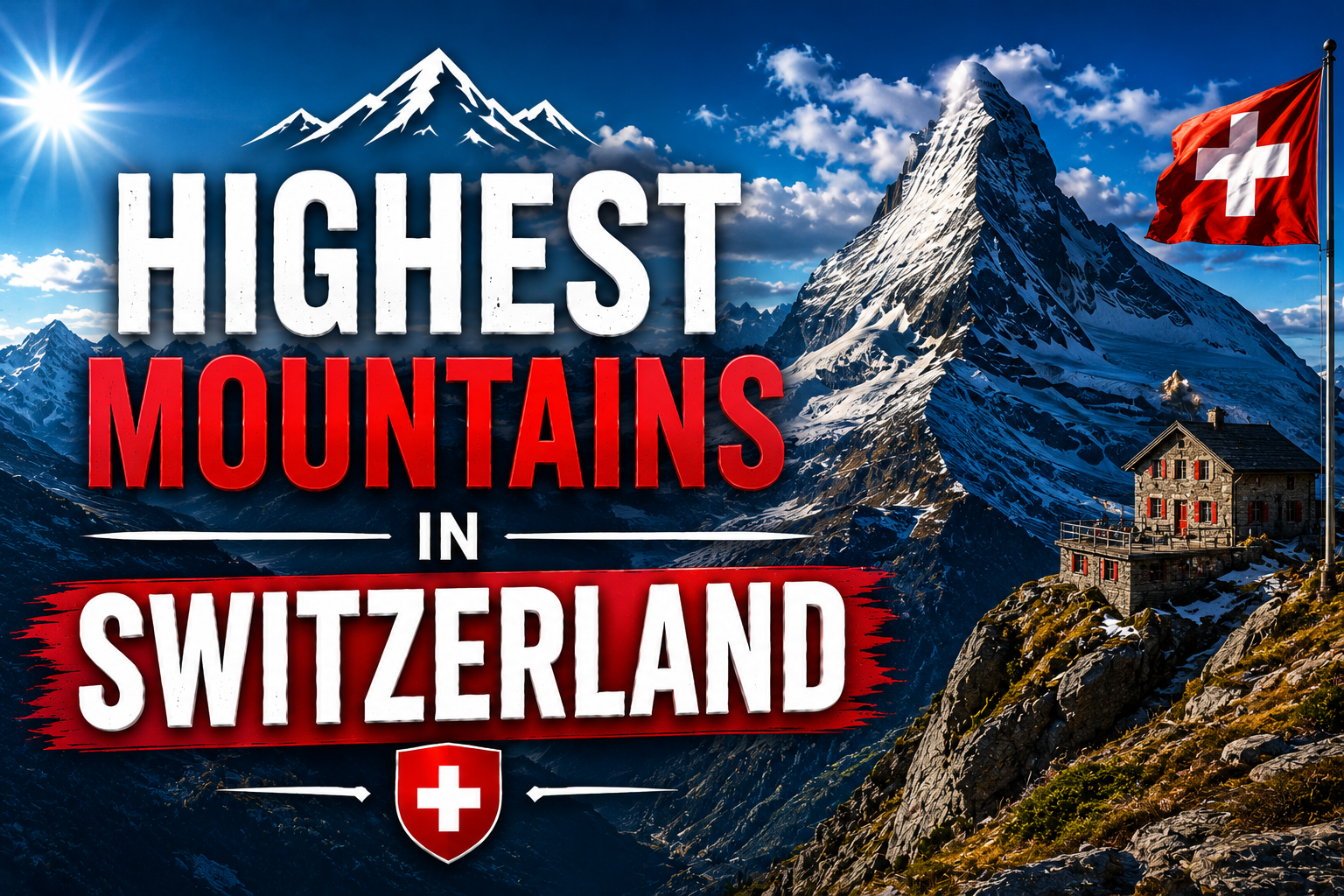
Above the Clouds: Exploring Switzerland’s Highest Mountains
Switzerland’s national identity is inseparable from mountains.
They shape the country’s climate, transportation networks, culture, tourism, and history. Yet when people imagine the Swiss Alps, they often think first of famous silhouettes such as the Matterhorn rather than the peaks that actually rise highest above the continent.
The story of Switzerland’s loftiest summits is therefore not merely about elevation. It is a story of geography, exploration, glaciation, and the extraordinary concentration of Alpine giants found within a relatively small region of the country.
Remarkably, nearly all of Switzerland’s highest mountains are clustered within the canton of Valais, where vast glaciers and rugged ridgelines create one of the greatest high-mountain landscapes in Europe.
The Roof of Switzerland: Dufourspitze
At 4,634 meters above sea level, Dufourspitze is Switzerland’s highest mountain and the highest summit of the Monte Rosa massif. The peak rises within the Pennine Alps near the Italian border and remains the country’s ultimate elevation benchmark.
Named after Swiss General and cartographer Guillaume-Henri Dufour, the summit was first climbed in 1855 during the golden age of Alpine exploration. Today, it stands not only as Switzerland’s highest point but also as one of the highest peaks in the entire Alps.
Unlike the instantly recognizable Matterhorn, Dufourspitze impresses through scale. The surrounding Monte Rosa massif contains an immense concentration of glaciers, ice fields, and four-thousand-meter summits that dominate the skyline east of Zermatt.
For mountaineers, reaching its summit remains one of Switzerland’s great Alpine achievements.
The Highest Mountain Entirely Within Switzerland: Dom
While Dufourspitze sits close to the international border, Dom holds a unique distinction.
At 4,545 meters, it is the highest mountain located entirely on Swiss territory. Part of the Mischabel range in Valais, the peak towers above the Matter Valley and ranks among the highest mountains in the Alps.
Dom lacks the global fame of some neighboring summits, yet experienced mountaineers often regard it with enormous respect. Its immense size, glaciated approaches, and demanding ascent make it one of Switzerland’s great high-altitude objectives.
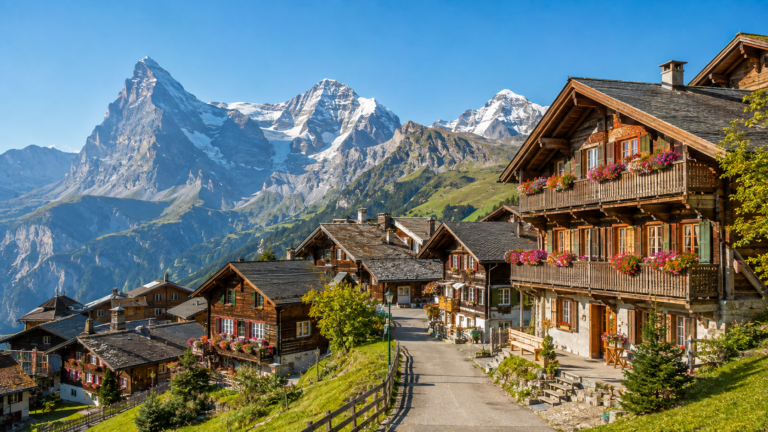
Viewed from the Gornergrat region near Zermatt, the mountain forms part of a dramatic skyline that includes several of the Alps’ most significant peaks.
Weisshorn: The Perfect Alpine Pyramid
Many climbers consider Weisshorn the most beautiful mountain in Switzerland.
Rising to 4,505 meters, the mountain forms an elegant three-sided pyramid above the Valais Alps. Unlike broader massifs such as Monte Rosa, Weisshorn appears almost sculpted, with sharply defined ridges converging toward a singular summit.
Its appearance has inspired generations of mountaineers, photographers, and landscape artists.
Although it receives less public attention than the Matterhorn, experienced climbers often regard the Weisshorn ascent as one of the most magnificent and demanding routes in the Alps.
The mountain’s isolated position further enhances its visual impact, allowing it to dominate surrounding valleys from remarkable distances.
Matterhorn: The World’s Most Recognizable Mountain
Height alone does not determine fame.
At 4,478 meters, the Matterhorn is lower than several Swiss peaks, yet no mountain is more closely associated with Switzerland. Its near-symmetrical pyramid shape has become one of the most recognizable natural landmarks on Earth.
Overlooking Zermatt and straddling the Swiss-Italian border, the Matterhorn has played a central role in the history of mountaineering. Its dramatic first ascent in 1865 remains one of the defining events of Alpine exploration.
Today, it serves as an international symbol of Switzerland itself.
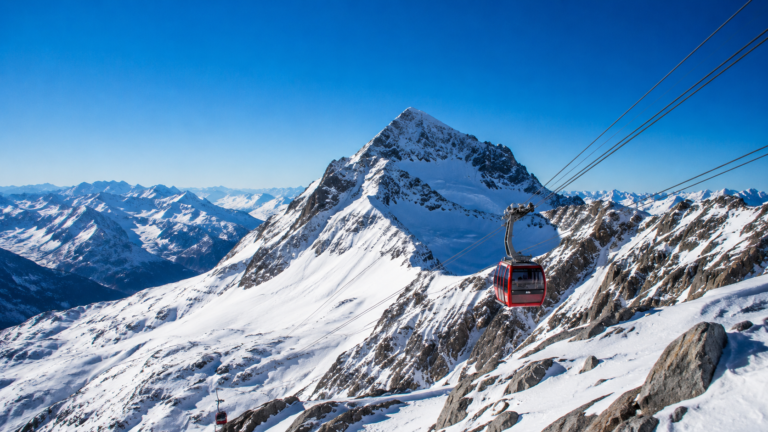
Millions of visitors travel to Zermatt each year to see the mountain, whether from hiking trails, panoramic trains, cable cars, or village viewpoints.
Few peaks combine geological grandeur and cultural significance so completely.
Dent Blanche: The Mountain of Isolation
Among Switzerland’s highest mountains, Dent Blanche often appears as one of the most striking.
Standing at 4,357 meters, it rises in relative isolation, creating an imposing presence visible across much of Valais.
The mountain’s steep ridges and dramatic faces give it an almost fortress-like appearance.
Because it stands apart from neighboring summits, Dent Blanche often appears larger than peaks of similar elevation. This visual dominance has helped establish its reputation among mountaineers and landscape photographers alike.
Grand Combin: The Giant of Western Valais
Far from the crowds of Zermatt lies one of Switzerland’s great mountain strongholds.
Grand Combin reaches 4,309 meters and forms a vast glaciated massif in western Valais. Unlike the sharply pointed Matterhorn or Weisshorn, Grand Combin is characterized by immense ice fields and broad summit structures.
Its scale is best appreciated from surrounding valleys and mountain passes, where glaciers spill from the massif into remote Alpine landscapes.
The mountain exemplifies the raw, untamed character of Switzerland’s high Alps.
Finsteraarhorn: The Highest Peak Outside Valais
The dominance of Valais among Switzerland’s highest mountains is remarkable.
One major exception is Finsteraarhorn.
At 4,274 meters, it is the highest mountain in the Bernese Alps and one of the most significant peaks outside Valais. Located within a region of vast glaciers and protected Alpine environments, Finsteraarhorn rises above the UNESCO-listed Swiss Alps Jungfrau-Aletsch area.
Its remote setting contributes to its mystique.
Unlike peaks easily viewed from resort towns, Finsteraarhorn feels genuinely wild, surrounded by some of the largest glacier systems in the Alps.
For many mountaineers, it represents one of Switzerland’s most rewarding high-altitude experiences.
The Landscape of Four-Thousanders
One of the most extraordinary facts about Switzerland is the concentration of mountains exceeding 4,000 meters.
The Valais Alps contain a remarkable collection of these summits, including Dufourspitze, Dom, Weisshorn, Matterhorn, Dent Blanche, Nadelhorn, Alphubel, Täschhorn, Zinalrothorn, and numerous peaks within the Monte Rosa massif.
This concentration has helped establish Switzerland as one of the world’s premier destinations for mountaineering.
Railways, mountain huts, cable cars, and extensive trail networks provide access to landscapes that remain among the most spectacular in Europe.
The result is an Alpine environment where visitors can experience some of the continent’s highest mountains without venturing far from modern infrastructure.
More Than Elevation
The highest mountains in Switzerland reveal something deeper than a list of elevations.
Dufourspitze demonstrates sheer scale. Dom represents geographical distinction. Weisshorn embodies Alpine elegance. Matterhorn symbolizes national identity. Grand Combin showcases glacial wilderness. Finsteraarhorn highlights remote grandeur.
Together, they form a mountain landscape unlike any other in Europe.
For travelers arriving by train in Zermatt, hiking above the Aletsch Glacier, or gazing across a Valais valley at sunset, these peaks are more than geological features. They are the defining architecture of Switzerland itself—ancient, imposing, and permanently woven into the country’s story.