Bern, Canton of Bern, Switzerland
Bern: Exploring Switzerland’s Historic Capital on the Aare
A Capital Unlike Any Other
When travelers imagine a national capital, they often picture a city dominated by skyscrapers, heavy traffic, and dense urban development. Bern offers a very different experience. Switzerland’s capital is distinguished not by size or modern spectacle, but by its remarkable preservation, human scale, and historical character.
Built within a dramatic bend of the Aare River, Bern combines centuries of history with the everyday rhythm of a modern European city. Medieval towers stand alongside government institutions, covered arcades shelter bustling streets, and riverside landscapes remain only a short walk from the city center. This blend of heritage and livability has helped make Bern one of Switzerland’s most fascinating destinations.
The Story Behind the City
Bern’s origins date to the Middle Ages when the city was founded by the Zähringen dynasty. Over time, its strategic location contributed to its growing importance as a commercial and political center.
Although much of the city was rebuilt after a major fire during the medieval period, the reconstruction followed a carefully planned design that shaped the character of Bern’s historic core. Many of the streets, arcades, and architectural elements established centuries ago continue to define the city today.
As Switzerland developed into a modern federal state, Bern was selected as the seat of the federal government. This role strengthened its national importance while allowing the city to retain its historic atmosphere and cultural identity.
Geography Shaped by the Aare River
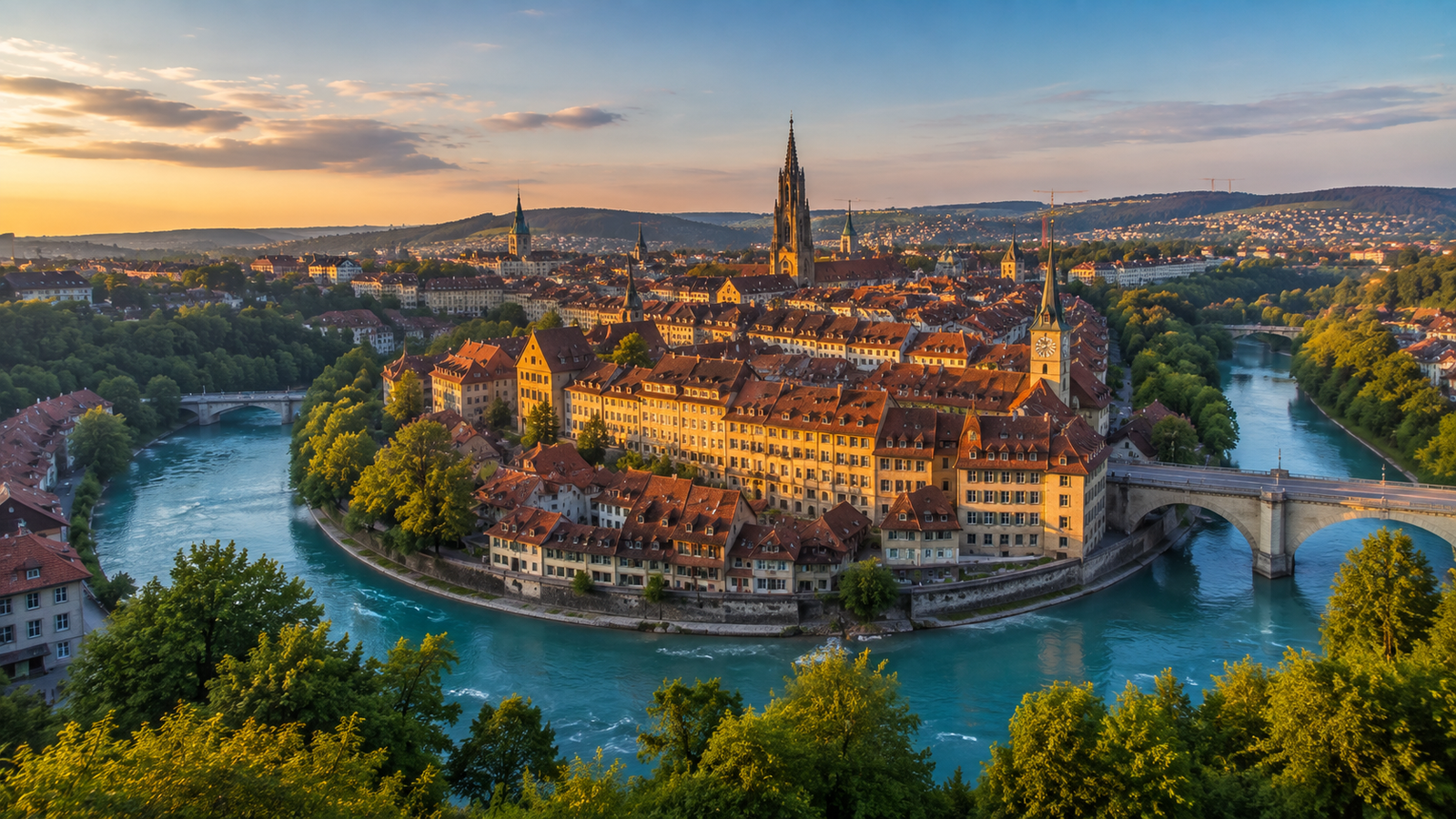
Bern occupies a distinctive geographic setting in central Switzerland. The city center sits on a peninsula formed by a sweeping curve of the Aare River, creating natural boundaries that influenced urban development for centuries.
This river remains one of Bern’s defining features. Its striking turquoise waters surround much of the historic center and contribute significantly to the city’s visual appeal. Bridges crossing the river connect different neighborhoods while offering panoramic views of the cityscape.
The surrounding region features rolling landscapes, green parks, and access to wider areas of the Swiss Plateau, creating an attractive balance between urban and natural environments.
The UNESCO-Listed Old Town
The heart of Bern is its Old Town, recognized as a UNESCO World Heritage Site for its exceptional preservation and historical significance.
Walking through this district feels like stepping into another era. Long stretches of sandstone buildings line narrow streets, while covered arcades provide sheltered walkways that extend for kilometers through the city center. These arcades are among Bern’s most recognizable features and continue to serve both residents and visitors.
Unlike many historic city centers that function primarily as tourist attractions, Bern’s Old Town remains a living part of everyday city life. Shops, cafés, government offices, residences, and cultural institutions all operate within the historic urban fabric.
Landmarks That Define Bern
Several landmarks help tell the story of the city and contribute to its unique identity.
The Zytglogge, Bern’s famous medieval clock tower, stands among the city’s most recognizable structures. Originally serving defensive and civic functions, it remains a central landmark and an enduring symbol of Bern’s history.
The Federal Palace serves as the home of Switzerland’s federal government and occupies a prominent position overlooking the city. Its architecture reflects the country’s political significance while remaining integrated into Bern’s historic surroundings.
The city is also known for its decorative fountains. Many of these historic structures feature colorful figures and elaborate designs that reflect local traditions, legends, and civic history.
Life Along the Aare
While Bern’s architecture often receives the most attention, the Aare River plays an equally important role in the visitor experience.
Riverside pathways provide opportunities for walking, cycling, and sightseeing. Green spaces along the river create areas where residents and visitors can relax while enjoying views of the historic city skyline.
The relationship between the city and the river gives Bern a distinctive atmosphere rarely found in European capitals. Nature and urban life coexist closely, contributing to the city’s reputation for quality of life and environmental appeal.
Museums, Culture, and Intellectual Heritage
Bern offers a rich cultural landscape that extends beyond its historic architecture.
The city is home to numerous museums covering subjects ranging from art and history to science and communication. One of the most internationally recognized figures associated with Bern is Albert Einstein, who lived in the city during an important period of his scientific career.
Cultural institutions, galleries, theaters, and events contribute to a vibrant artistic environment while preserving connections to Bern’s historical legacy.
Visitors interested in Swiss culture often find Bern particularly rewarding because it combines national significance with local traditions in a highly accessible setting.
Experiences That Capture the Spirit of Bern
The most memorable experiences in Bern are often surprisingly simple.
Strolling beneath the historic arcades allows visitors to appreciate the city’s architecture while exploring local businesses and cafés. Climbing viewpoints or crossing river bridges reveals panoramic perspectives of the Old Town and surrounding landscapes.
Exploring public squares, historic streets, and riverside paths provides insight into the city’s character without requiring a structured itinerary.
Many travelers discover that Bern’s greatest attraction is its atmosphere—an environment where history remains present without feeling staged or artificial.
Best Time to Visit
Bern can be enjoyed throughout the year, though each season offers a different perspective on the city.
Spring brings blooming parks and comfortable temperatures for walking tours.
Summer provides long daylight hours and vibrant activity along the river and outdoor spaces.
Autumn introduces seasonal colors that enhance the beauty of the city’s historic architecture and surrounding landscapes.
Winter creates a quieter atmosphere, with festive decorations and seasonal events adding charm to the historic streets.
Transportation and Accessibility
Bern is one of Switzerland’s most accessible cities thanks to the country’s highly efficient transportation network.
Direct rail connections link the capital with major destinations including Zurich, Geneva, Basel, Lucerne, and Interlaken. Visitors arriving by train can reach the historic center within a short distance of the main station.
Within the city, public transportation provides convenient access to attractions, neighborhoods, and cultural institutions. The compact nature of the Old Town also makes walking an enjoyable and practical way to explore.
Practical Travel Advice
Comfortable walking shoes are highly recommended, as much of Bern’s appeal is best experienced on foot.
Visitors should allocate time not only for major landmarks but also for wandering through side streets and riverside areas where some of the city’s most rewarding views can be found.
Photography enthusiasts may find early morning and late afternoon particularly appealing, when softer light enhances the colors of the sandstone buildings and river landscapes.
Why Bern Continues to Captivate Visitors
Bern succeeds because it offers something increasingly rare: authenticity. The city has preserved its historical character while continuing to function as a modern capital.
Rather than overwhelming visitors with grand monuments or intense urban energy, Bern invites exploration at a slower pace. Its medieval streets, river setting, cultural institutions, and political significance combine to create a destination that feels both historically important and remarkably approachable.
Conclusion
Bern stands apart from many European capitals through its combination of heritage, beauty, and livability. The UNESCO-listed Old Town, the graceful curve of the Aare River, historic landmarks, and vibrant cultural life make it one of Switzerland’s most rewarding urban destinations. Whether visiting for history, architecture, culture, or simply to experience a different side of Switzerland, travelers will find that Bern offers a distinctive and memorable journey into the heart of the country.