
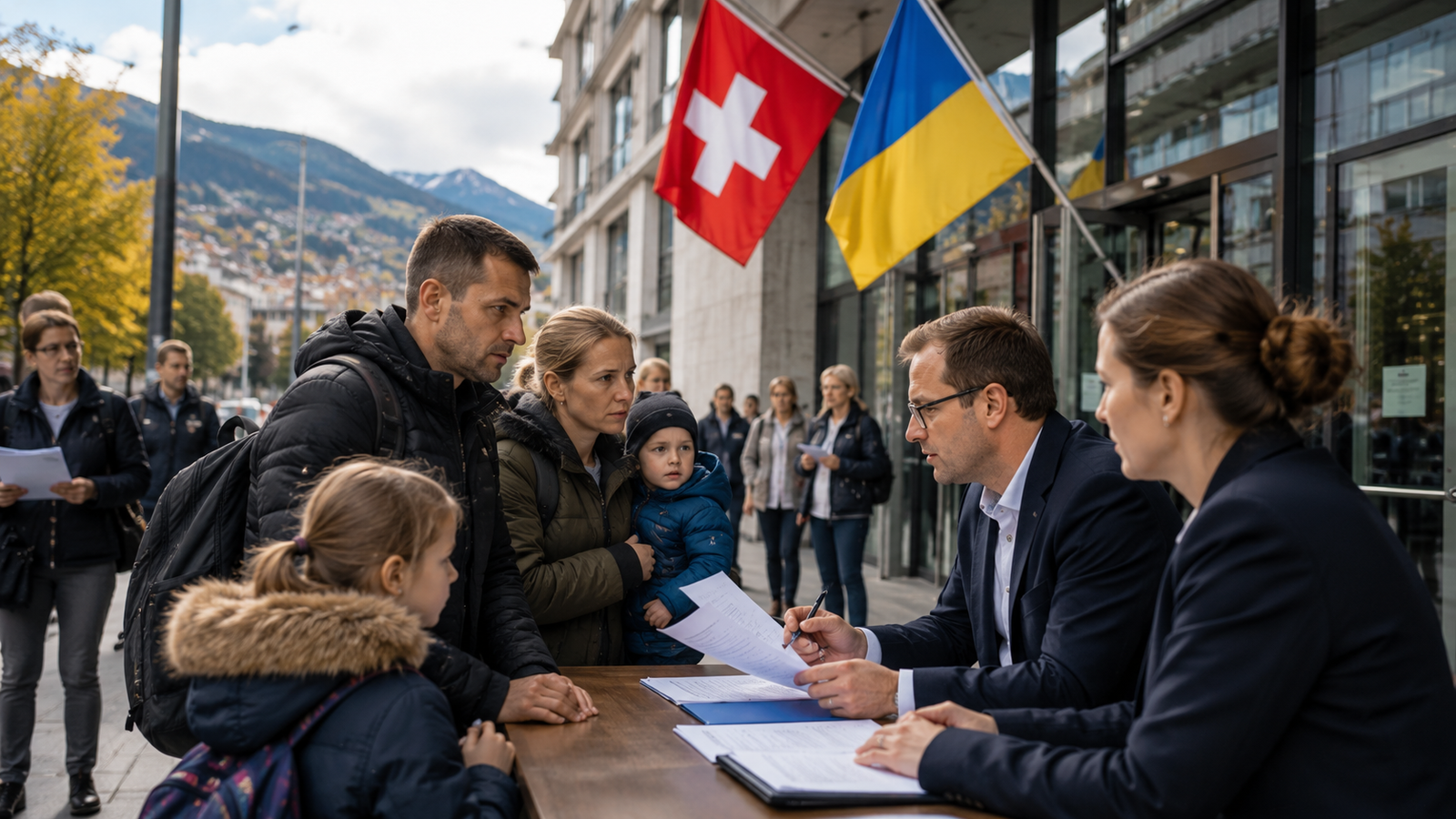
Swiss Canton Seeks to End Emergency Assistance for Dozens of Ukrainian Refugees
A dispute over refugee assistance has emerged in Switzerland after authorities in one canton moved to end emergency support payments for dozens of Ukrainian nationals, highlighting growing tensions surrounding refugee integration, social welfare obligations, and the long-term management of people displaced by Russia’s invasion of Ukraine.
The proposal has triggered political and legal debate as Switzerland continues to host tens of thousands of Ukrainians under its special protection framework. The canton argues that some beneficiaries no longer meet the conditions required for emergency assistance, while critics warn that removing support could leave vulnerable individuals without adequate resources during a period of continued uncertainty.
The case comes at a time when Swiss authorities are reassessing several aspects of refugee policy. Although the war in Ukraine remains ongoing, governments across Europe are increasingly focusing on questions of long-term residence, labor market participation, and the sustainability of support programs that were initially introduced as emergency measures following the outbreak of war in 2022.
At the center of the dispute are Ukrainian refugees who currently hold Switzerland’s Protection Status S, a legal mechanism activated for the first time after Russia’s full-scale invasion of Ukraine. The status allows displaced Ukrainians to live and work in Switzerland without going through the standard asylum process. It also grants access to accommodation, social support, healthcare, education, and integration services.
Swiss federal authorities recently confirmed that Protection Status S will remain in place until at least March 2028, citing the absence of a lasting ceasefire or stable security conditions in Ukraine. The federal government also decided to continue integration support measures and funding for cantonal programs that help Ukrainians access language training, education, and employment opportunities.
However, while the federal framework remains in place, individual cantons retain responsibility for administering many forms of social support. That decentralized structure can sometimes produce differing interpretations of eligibility requirements, particularly when authorities determine that recipients may have access to alternative sources of income, assets, or support.
Supporters of the canton’s position argue that emergency assistance should be reserved for individuals who demonstrate genuine financial need. They contend that public authorities have a responsibility to ensure taxpayer-funded programs are distributed fairly and that eligibility rules are consistently enforced.
Opponents, including refugee advocates and some political representatives, counter that abrupt reductions in support risk creating hardship for people who continue to face displacement and uncertainty. They argue that many refugees remain unable to return home safely and may still face significant barriers to achieving full economic independence.
The issue reflects a broader European debate that has intensified as the conflict in Ukraine enters another year. Governments that initially focused on rapid humanitarian protection are now confronting questions about integration, labor participation, housing availability, and the long-term cost of support programs.
Switzerland has generally maintained a comparatively supportive approach toward Ukrainians under Protection Status S. Federal authorities recently reaffirmed their commitment to the program while simultaneously introducing additional restrictions for certain future applicants in an effort to align aspects of Swiss policy with developments within the European Union. Under the revised framework, some new applicants may face stricter eligibility requirements linked to military-service obligations in Ukraine, though existing beneficiaries are not affected by those changes.
Since the introduction of Protection Status S, Swiss authorities have also emphasized the importance of integration into the labor market. Policymakers have increasingly encouraged employment participation as a pathway toward reducing long-term dependence on public assistance. Several cantons have expanded language programs, vocational training opportunities, and job-placement initiatives to support that objective.
Migration experts note that disputes over social benefits often emerge during transitions from emergency response to long-term integration. While immediate humanitarian assistance is typically provided with broad eligibility criteria, governments frequently tighten oversight once displacement situations become prolonged. Such reviews can generate political controversy, particularly when they affect individuals who remain vulnerable despite living outside active conflict zones.
The latest controversy also raises questions about consistency across Switzerland’s federal system. Because cantons administer many social programs independently, decisions regarding assistance can vary from one region to another. Critics argue that this can create unequal treatment, while supporters say local authorities are best positioned to evaluate individual circumstances.
For Ukrainian refugees currently living in Switzerland, the outcome of the dispute may have implications beyond the canton directly involved. Legal challenges or political reactions could influence how other cantons interpret support rules and determine eligibility in similar cases.
The broader humanitarian context remains significant. Swiss officials continue to maintain that conditions in Ukraine do not yet permit a large-scale withdrawal of protection measures. That assessment formed the basis for the federal decision to extend Protection Status S through 2028 and continue integration support programs.
As the canton’s proposal moves through administrative and potentially legal review processes, policymakers will be balancing two competing priorities: ensuring that public resources are allocated according to established rules while maintaining protections for people displaced by one of Europe’s largest humanitarian crises in recent decades.
The debate is likely to remain closely watched across Switzerland, where refugee policy continues to evolve alongside changing realities in Ukraine and broader discussions about migration, integration, and public spending.