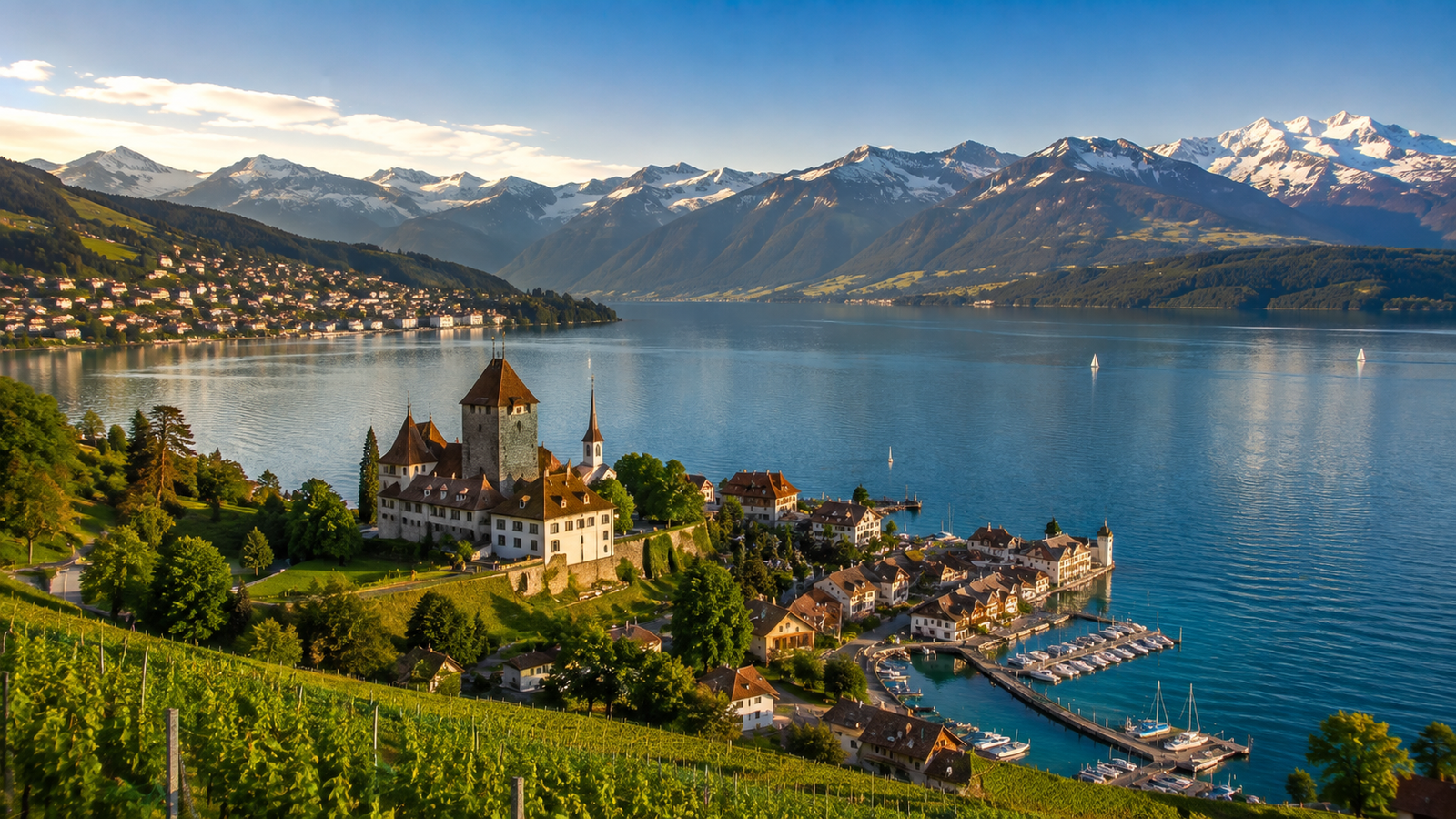
Spiez, Bernese Oberland, Switzerland
Spiez: Switzerland’s Lakeside Castle Town Beneath the Bernese Alps
Some Swiss destinations impress visitors with towering peaks, while others are celebrated for their historic landmarks or lakeside beauty. Spiez succeeds because it combines all three. Set along the southern shore of Lake Thun and framed by the dramatic backdrop of the Bernese Alps, this elegant town offers one of the most picturesque settings in Switzerland.
From its medieval castle overlooking the lake to its vineyards climbing sunny hillsides, Spiez presents a distinctly different side of the Bernese Oberland. While nearby Interlaken often attracts travelers seeking adventure, Spiez appeals to those who appreciate scenery, history, culture, and a more relaxed pace of exploration.
The result is a destination where centuries of heritage coexist with some of the country’s most remarkable natural landscapes.
A Remarkable Setting on Lake Thun
Spiez occupies a privileged location along Lake Thun, one of Switzerland’s most beautiful lakes. Positioned between the city of Bern and the heart of the Bernese Oberland, the town serves as both a destination and a gateway to some of the country’s most famous mountain regions.
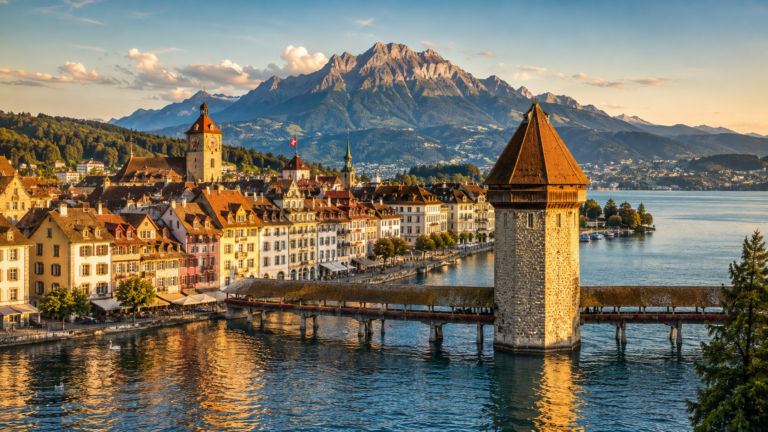
The lake itself plays a central role in shaping the landscape. Its deep blue waters reflect surrounding peaks and provide a striking contrast to the vineyards, forests, and historic buildings that characterize the shoreline.
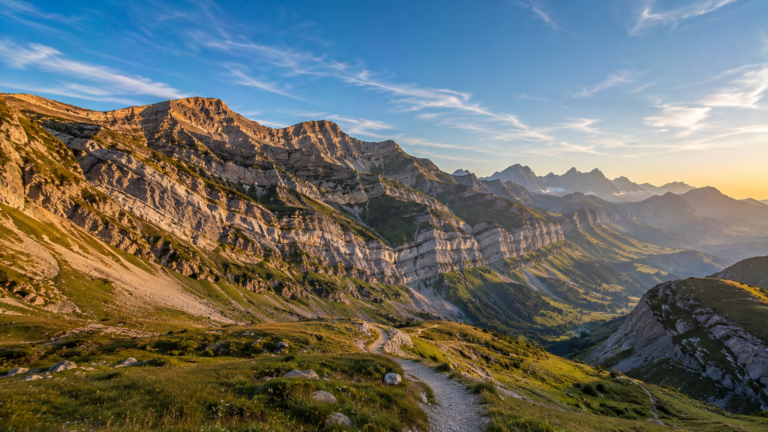
Behind the town, rolling hills gradually rise toward the higher elevations of the Bernese Alps. This combination of lake and mountain scenery creates a visual balance that distinguishes Spiez from many other Swiss communities.
Whether viewed from the waterfront, the castle grounds, or the surrounding hillsides, the panorama remains one of the town’s defining attractions.
Centuries of History Above the Harbor
The story of Spiez is closely tied to its most recognizable landmark: Spiez Castle.
Perched on a promontory overlooking Lake Thun, the castle complex has served as a focal point of the community for centuries. The site includes historic buildings and a Romanesque church that reflect the region’s long history and cultural significance.
The castle occupies one of the most scenic locations in Switzerland. Visitors exploring the grounds enjoy sweeping views across the lake while gaining insight into the area’s medieval past.
Over generations, the castle became associated with influential noble families and played an important role in the development of the surrounding region. Today it remains one of the Bernese Oberland’s most important cultural landmarks and a symbol of Spiez itself.
The combination of architecture, history, gardens, and scenery makes the castle one of the town’s most rewarding attractions.
A Town Influenced by Lake and Climate
Spiez benefits from a relatively mild climate compared with many Alpine destinations.
The presence of Lake Thun helps moderate temperatures, creating favorable conditions that have supported agriculture and viticulture for generations. This climate has contributed to one of the town’s most distinctive characteristics: its vineyards.
While Switzerland is not always associated internationally with wine production, the Lake Thun region has a long tradition of viticulture. Hillsides surrounding Spiez feature vineyards that add texture and color to the landscape throughout the year.
These vineyards are more than a scenic backdrop. They represent an important part of local culture and help connect modern visitors with centuries of agricultural history.
The combination of lake views and vineyard-covered slopes creates an atmosphere that often feels different from the more rugged Alpine environments elsewhere in the Bernese Oberland.
Discovering the Harbor District
One of the most enjoyable areas of Spiez is the harbor and lakeside promenade.
The harbor serves as a gathering place for residents and visitors alike. Boats arrive and depart throughout the day, linking Spiez with other communities around Lake Thun and offering scenic transportation opportunities across the region.
Walking along the waterfront provides uninterrupted views of the lake and distant mountains. Cafés, green spaces, and viewing points encourage visitors to slow down and appreciate the setting.
The harbor is also one of the best places to observe the changing light conditions that make Lake Thun famous among photographers. Early mornings, golden-hour evenings, and calm days often produce remarkable reflections across the water.
This combination of accessibility and scenery helps explain why the lakeside area remains one of Spiez’s most popular attractions.
Exploring Beyond the Town Center
Although Spiez is relatively compact, the surrounding landscape offers numerous opportunities for exploration.
Walking routes connect the town center with vineyards, forest paths, and elevated viewpoints overlooking the lake. These trails provide a deeper understanding of the region’s geography while rewarding visitors with spectacular scenery.
The nearby hillsides offer excellent perspectives of both Lake Thun and the Bernese Alps. On clear days, distant snow-covered peaks create a dramatic backdrop that reinforces the area’s reputation as one of Switzerland’s most scenic regions.
Outdoor enthusiasts often use Spiez as a starting point for excursions throughout the Bernese Oberland. Its central location allows convenient access to mountain destinations, lakeside villages, and hiking areas across the canton of Bern.
Lake Cruises and Regional Connections
Water has always played an important role in the identity of Spiez.
Passenger boats operating on Lake Thun connect the town with destinations including Interlaken, Thun, and several lakeside communities. These cruises are among the most enjoyable ways to experience the region.
From the water, travelers gain a unique perspective on castles, vineyards, mountain slopes, and historic villages lining the shoreline. The constantly changing scenery transforms transportation into an attraction in its own right.
For many visitors, a boat journey combined with time spent exploring Spiez creates one of the highlights of a trip to central Switzerland.
The strong transportation connections also make the town a practical base for discovering neighboring destinations without relying on a car.
A Balance of Culture and Nature
One of Spiez’s greatest strengths is its ability to combine cultural heritage with outdoor experiences.
Historic landmarks such as Spiez Castle provide opportunities to engage with the past, while the surrounding environment encourages exploration and recreation. Few destinations offer such a seamless transition between history, landscape, and leisure.
Local events, seasonal celebrations, and regional traditions further contribute to the town’s character. Visitors often encounter a community that embraces tourism while maintaining a strong connection to its heritage.
This balance helps preserve the authenticity that many travelers seek when visiting Switzerland.
Rather than feeling dominated by tourism, Spiez retains the atmosphere of a lived-in lakeside town where local culture remains visible in everyday life.
Visiting Throughout the Year
Each season reveals a different side of Spiez.
Spring brings blossoming landscapes, fresh greenery, and comfortable conditions for walking and sightseeing.
Summer attracts visitors eager to enjoy boat cruises, lakeside relaxation, and outdoor dining with views of Lake Thun.
Autumn transforms the vineyards and surrounding hillsides into a colorful landscape, creating excellent conditions for photography and scenic walks.
Winter introduces a quieter atmosphere while maintaining beautiful views of snow-covered Alpine peaks rising beyond the lake.
Because of this seasonal variety, Spiez remains appealing throughout the year rather than being limited to a single tourism season.
Planning Your Visit
Spiez is exceptionally well connected within Switzerland’s transportation network. Direct rail services link the town with Bern, Interlaken, and major Swiss cities, while lake boats provide additional travel options during much of the year.
Visitors should allocate enough time to explore both the castle area and the lakeside district, as each offers a distinct perspective on the destination.
Comfortable walking shoes are recommended for exploring vineyard paths and elevated viewpoints. Travelers interested in photography may find sunrise and sunset particularly rewarding due to the interaction of lake reflections and mountain light.
What ultimately makes Spiez memorable is not a single attraction but the harmony of its surroundings. The combination of a medieval castle, vineyard-covered hills, sparkling lake waters, and Alpine scenery creates a destination that feels both elegant and unmistakably Swiss. For travelers seeking beauty, history, and tranquility in equal measure, Spiez remains one of the Bernese Oberland’s most rewarding places to discover.