Swiss Alpine Farming Traditions Through the Centuries
Life Above the Valleys
Long before Switzerland became known for banking, luxury watches, and world-famous mountain railways, its identity was shaped by people who lived high among the Alps. Across steep valleys and rugged mountain slopes, generations of farming families learned how to survive in one of Europe’s most challenging landscapes. Their methods, traditions, and seasonal rhythms created a unique agricultural culture that remains one of the most recognizable symbols of Switzerland today.
Swiss Alpine farming is more than an economic activity. It is a way of life that has helped shape local communities, preserve mountain landscapes, and define Swiss cultural identity for centuries. From the ringing of cowbells across green pastures to the production of celebrated mountain cheeses, these traditions continue to connect modern Switzerland with its rural past.
A Landscape That Demanded Ingenuity
The Swiss Alps cover a large portion of the country, creating a landscape that is both beautiful and demanding. Steep slopes, long winters, and limited farmland forced early communities to develop agricultural systems that made the most of every available resource.
Rather than relying solely on crops, mountain farmers focused heavily on livestock. Cattle proved especially important because they could graze on Alpine meadows that were unsuitable for cultivation. Over time, Swiss communities developed sophisticated seasonal farming practices that allowed them to maximize the use of different elevations throughout the year.
These methods were not merely practical solutions. They became deeply embedded in local culture, influencing architecture, cuisine, festivals, and community life across many regions of Switzerland.
The Annual Journey to the High Pastures
One of the most famous traditions in Swiss Alpine farming is the seasonal movement of livestock between valleys and mountain pastures. This practice, known as transhumance, has been part of Alpine life for centuries.
Each spring, farmers guide cattle from lower villages toward higher elevations where fresh grass becomes available after the winter snow melts. Throughout the summer, cows graze on nutrient-rich Alpine meadows, benefiting from a diverse range of mountain herbs and wildflowers.
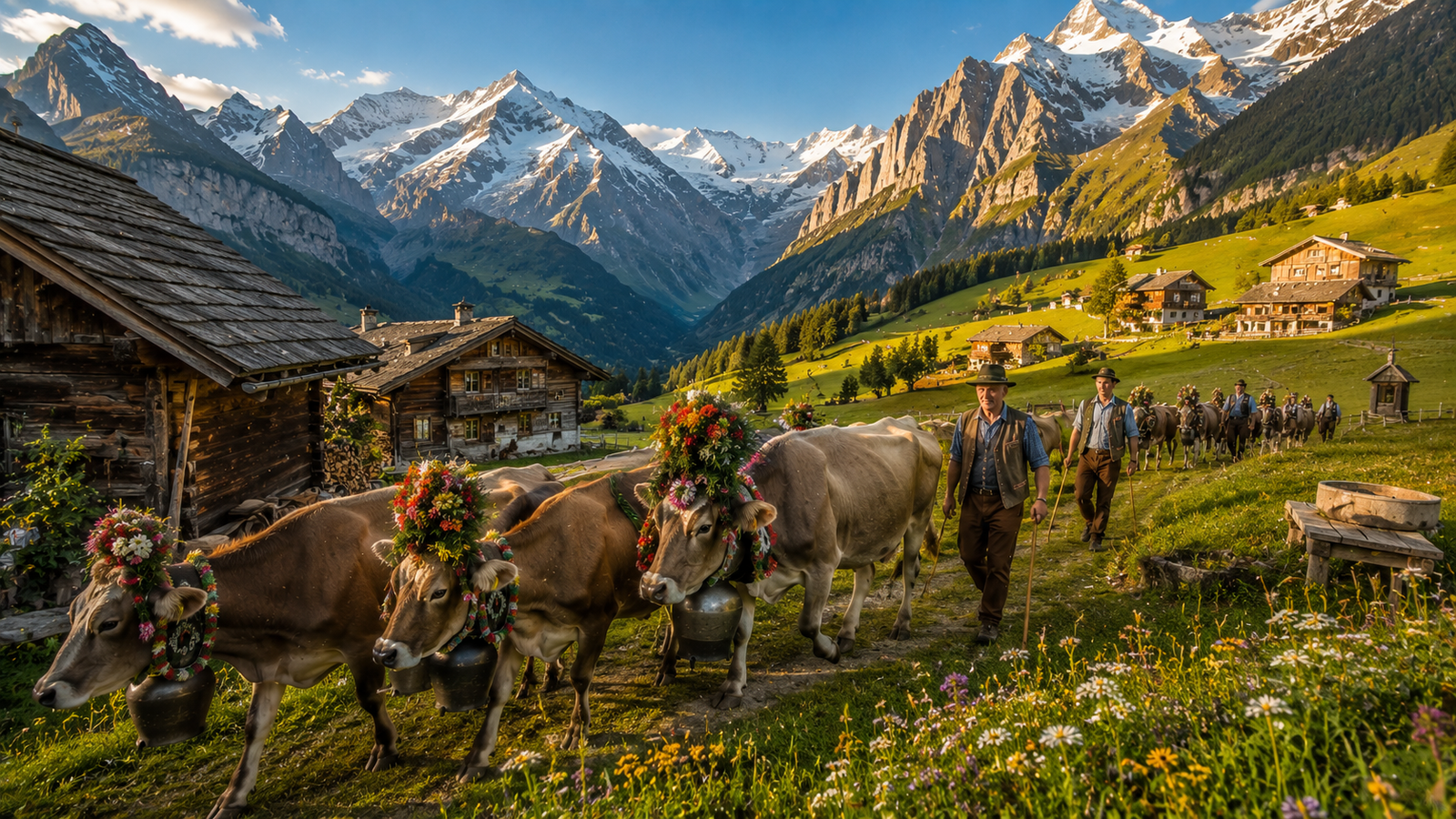
As autumn approaches, the animals return to the valleys in a celebrated event known as the Alpabzug or Désalpe, depending on the region. These processions often feature cows decorated with elaborate flower arrangements and large ceremonial bells. Villagers gather to celebrate the successful summer grazing season, transforming an agricultural necessity into a cherished cultural tradition.
For visitors, these events provide one of the most authentic glimpses into Switzerland’s living heritage.
Where Switzerland’s Famous Cheeses Begin
Many of Switzerland’s most renowned cheeses owe their character to Alpine farming traditions. The unique vegetation found in mountain pastures contributes to the flavor of milk produced by grazing cattle.
During the summer months, herds often remain in remote Alpine locations where milk is processed close to the source. Traditional mountain dairies continue to produce cheeses using methods passed down through generations.
Among the country’s best-known cheeses are Gruyère, Emmental, Appenzeller, and various regional Alpine cheeses. While production methods have evolved over time, many producers continue to value craftsmanship, local knowledge, and seasonal rhythms.
The connection between landscape and food remains one of the defining features of Swiss agriculture. Every mountain region brings subtle differences in climate, vegetation, and traditions, creating distinctive products that reflect their place of origin.
The Soundtrack of the Alps
Few sounds are more closely associated with Switzerland than the ringing of cowbells echoing through Alpine valleys.
Historically, bells served practical purposes. Farmers used them to locate livestock grazing across large mountain areas, particularly in foggy weather or rugged terrain. Different sizes and tones helped identify individual animals and herds.
Over time, these bells became cultural symbols. Decorative bells are now featured during festivals, livestock processions, and local celebrations. Many families treasure antique bells that have been passed down through multiple generations.
Today, visitors often encounter these iconic sounds while hiking through mountain regions, creating an unmistakable connection between Switzerland’s landscapes and its agricultural traditions.
Mountain Villages Built Around Farming
Swiss Alpine farming influenced the development of villages throughout the mountain regions. Traditional chalets, barns, and storage buildings were designed specifically to support agricultural life.
Wood became the dominant building material in many areas, resulting in the picturesque chalet architecture that visitors associate with Switzerland today. Large roofs protected structures from heavy snowfall, while balconies and lofts provided space for drying hay and storing supplies.
Many villages were organized around seasonal farming activities. Community cooperation was essential for maintaining trails, managing water resources, and transporting livestock between elevations.
Even in the modern era, numerous mountain communities continue to preserve architectural styles that reflect their agricultural heritage.
Challenges of the Modern Era
Like many traditional industries, Swiss Alpine farming has faced significant changes during the past century.
Mechanization, urbanization, and economic pressures have transformed rural life. Many young people have left mountain communities for opportunities in cities, leading to concerns about the future of traditional farming practices.
The geography of the Alps also presents unique challenges. Maintaining farms on steep terrain often requires more labor and higher costs than farming in lowland areas. Global competition has further increased economic pressures on small producers.
Despite these difficulties, Swiss authorities and local organizations recognize the importance of Alpine agriculture. Support programs help maintain farming activity in mountain regions, not only for food production but also for landscape preservation and cultural heritage.
Without active farming, many Alpine meadows would gradually become overgrown, altering the landscapes that attract millions of visitors each year.
Traditions That Continue to Shape Switzerland
What makes Swiss Alpine farming remarkable is not simply its longevity but its continued relevance. The traditions developed centuries ago still influence modern Swiss life in countless ways.
Tourism frequently celebrates Alpine farming culture through festivals, farm visits, cheese routes, and mountain experiences. Local markets showcase regional products, while restaurants proudly feature ingredients connected to traditional agricultural practices.
The values often associated with Switzerland—self-reliance, craftsmanship, precision, and respect for nature—can be traced in part to generations of mountain farming communities that learned to thrive in demanding conditions.
A Living Heritage in the High Mountains
Swiss Alpine farming traditions are not relics of a distant past. They remain visible across the country’s valleys, villages, and mountain landscapes. Every decorated cattle procession, every wheel of mountain cheese, and every historic chalet tells part of a story that stretches back centuries.
For travelers exploring Switzerland, understanding these traditions adds a deeper dimension to the Alpine scenery. Behind every meadow and mountain pasture lies a heritage shaped by hard work, adaptation, and an enduring connection between people and the land.
That connection continues to define Switzerland today, making Alpine farming one of the country’s most valuable cultural treasures and one of the most authentic ways to experience the heart of the Swiss Alps.