
Swiss Christmas Traditions: A Magical Winter Celebration
When Winter Transforms Switzerland
As the first snow settles across the Alps and the scent of roasted chestnuts drifts through historic town squares, Switzerland begins one of its most enchanting seasons. Christmas in Switzerland is far more than a single holiday. It is a collection of traditions shaped by centuries of history, regional cultures, mountain communities, and the country’s unique blend of German, French, Italian, and Romansh influences.
From glittering Christmas markets beside medieval cathedrals to candlelit celebrations in remote Alpine villages, the festive season reveals a different side of Switzerland. Visitors often arrive expecting beautiful scenery and discover a rich cultural experience that combines faith, family, food, music, and local customs.
The result is a Christmas season that feels both timeless and distinctly Swiss.
A Season Rooted in Many Cultures
One reason Swiss Christmas traditions are so fascinating is the country’s cultural diversity. Switzerland has four national languages and several regional identities, each contributing its own customs to the holiday season.
In German-speaking regions, Christmas traditions often resemble those found in neighboring Germany and Austria. French-speaking cantons share influences with France, while Italian-speaking Ticino celebrates with customs connected to northern Italy. The Romansh-speaking valleys of Graubünden preserve traditions that have survived for generations in isolated mountain communities.
Despite these regional differences, common themes unite the country: family gatherings, festive decorations, religious observances, seasonal foods, and a deep appreciation for community.
The Glow of Switzerland’s Christmas Markets
Perhaps no tradition is more visible to visitors than the Christmas market. Beginning in late November, towns and cities across the country transform their historic centers into festive gathering places.
Cities such as Zurich, Basel, Bern, Lucerne, Geneva, and Montreux host some of Europe’s most admired Christmas markets. Wooden stalls line cobblestone streets, decorated with lights, evergreen branches, and handcrafted ornaments.
Visitors can browse handmade gifts, Swiss chocolates, artisan crafts, candles, seasonal decorations, and regional specialties while enjoying warm drinks in the crisp winter air.
Many markets are set against remarkable historic backdrops. Medieval squares, lakeside promenades, and centuries-old churches create an atmosphere that feels almost cinematic during the holiday season.
The Importance of Advent
Long before Christmas Day arrives, Swiss families begin observing Advent, the four-week period leading up to Christmas.
Advent calendars are especially popular. Children eagerly open a small door each day in December, counting down the days until Christmas. Many Swiss families also display Advent wreaths decorated with four candles. One additional candle is lit each Sunday until Christmas arrives.
Town centers and churches frequently host Advent concerts featuring choirs, brass ensembles, and traditional Christmas music. These performances add warmth and anticipation to the dark winter evenings.
The Advent season is often viewed as a time for reflection, preparation, and togetherness rather than simply a countdown to gift-giving.
Samichlaus and Other Holiday Characters
In many Swiss regions, one of the most beloved holiday figures appears before Christmas itself.
Known as Samichlaus, the Swiss version of Saint Nicholas traditionally visits children on December 6. Dressed in a bishop’s robe and carrying a staff, Samichlaus often travels with a companion known as Schmutzli.
Children may recite poems, sing songs, or answer questions about their behavior throughout the year. In return, they receive nuts, mandarins, chocolates, and small gifts.
Unlike the modern image of Santa Claus, Samichlaus remains closely connected to older European traditions and is still celebrated in schools, communities, and family gatherings throughout Switzerland.
Christmas Trees and Festive Decorations
Swiss homes begin to take on a festive appearance during December. Christmas trees, decorated with lights, ornaments, and candles, become the centerpiece of many households.
Public Christmas trees also play an important role. Some town squares feature towering trees adorned with thousands of lights, creating gathering points for residents and visitors alike.
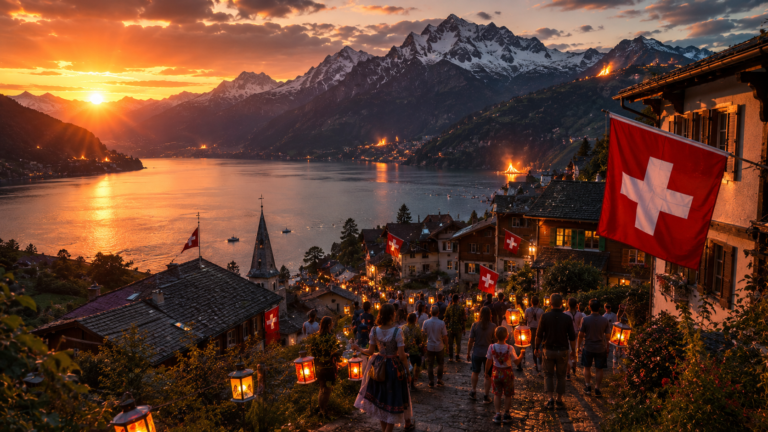
Windows are often decorated with stars, candles, and handcrafted displays. In mountain villages, warm lights shining from wooden chalets create scenes that seem lifted from a winter storybook.
The emphasis is often on elegance and tradition rather than extravagance, reflecting the Swiss appreciation for craftsmanship and quality.
The Flavors of a Swiss Christmas
Food is at the heart of Christmas celebrations across Switzerland.
One of the most popular holiday treats is Mailänderli, a buttery Christmas biscuit enjoyed throughout the country. Other seasonal favorites include cinnamon stars, gingerbread, nut pastries, and various regional cookies prepared from family recipes.
Chocolate naturally plays an important role. Swiss chocolatiers create festive collections that become treasured gifts during the holiday season.
Christmas Eve meals vary by region and family tradition. Some households enjoy fondue or raclette, while others prepare elaborate festive dinners featuring meats, vegetables, and local specialties.
The sharing of food remains one of the strongest expressions of togetherness during the Swiss Christmas season.
Celebrating Christmas in the Alps
Away from the major cities, Christmas traditions often take on a distinctly Alpine character.
Mountain villages throughout regions such as the Bernese Oberland, Valais, and Graubünden celebrate with candlelit churches, community gatherings, and snow-covered landscapes that seem untouched by time.
In some areas, local customs include traditional music, folk performances, and festive processions. These celebrations highlight the enduring connection between community life and seasonal traditions.
For visitors, experiencing Christmas in an Alpine village offers a glimpse into customs that have evolved over centuries while remaining deeply meaningful to local residents.
Christmas Eve and Christmas Day
Christmas Eve holds special significance throughout Switzerland. Families gather to exchange gifts, share meals, and attend church services.
Midnight Mass remains an important tradition for many communities. Historic churches illuminated by candlelight provide a memorable setting for worship and reflection.
Christmas Day itself is generally quieter. Families spend time together, enjoy festive meals, and visit relatives. Unlike some countries where shopping and commercial activities dominate the holiday, Swiss Christmas often places greater emphasis on family connections and meaningful traditions.
This slower pace contributes to the unique atmosphere many visitors find so appealing.
A Tradition That Continues to Evolve
Modern Switzerland continues to welcome new influences and changing lifestyles, yet Christmas traditions remain remarkably resilient.
Historic markets thrive alongside contemporary celebrations. Ancient customs coexist with modern decorations and international holiday influences. Families adapt traditions to new generations while preserving the values that define the season.
The result is a holiday experience that feels both contemporary and deeply rooted in history.
Why Swiss Christmas Traditions Remain So Special
Few places combine winter scenery, cultural diversity, and festive traditions as successfully as Switzerland. Snow-covered mountains, illuminated town squares, centuries-old churches, and family customs come together to create a Christmas season unlike any other.
Whether exploring a bustling market in Zurich, attending a concert in Geneva, wandering through a decorated village in Graubünden, or enjoying fondue beside a fireplace in the Alps, visitors quickly discover that Swiss Christmas traditions are about far more than holiday decorations.
They reflect the country’s history, regional identities, and enduring sense of community. In a rapidly changing world, these traditions continue to bring people together, transforming the darkest weeks of winter into one of Switzerland’s most magical and memorable seasons.