
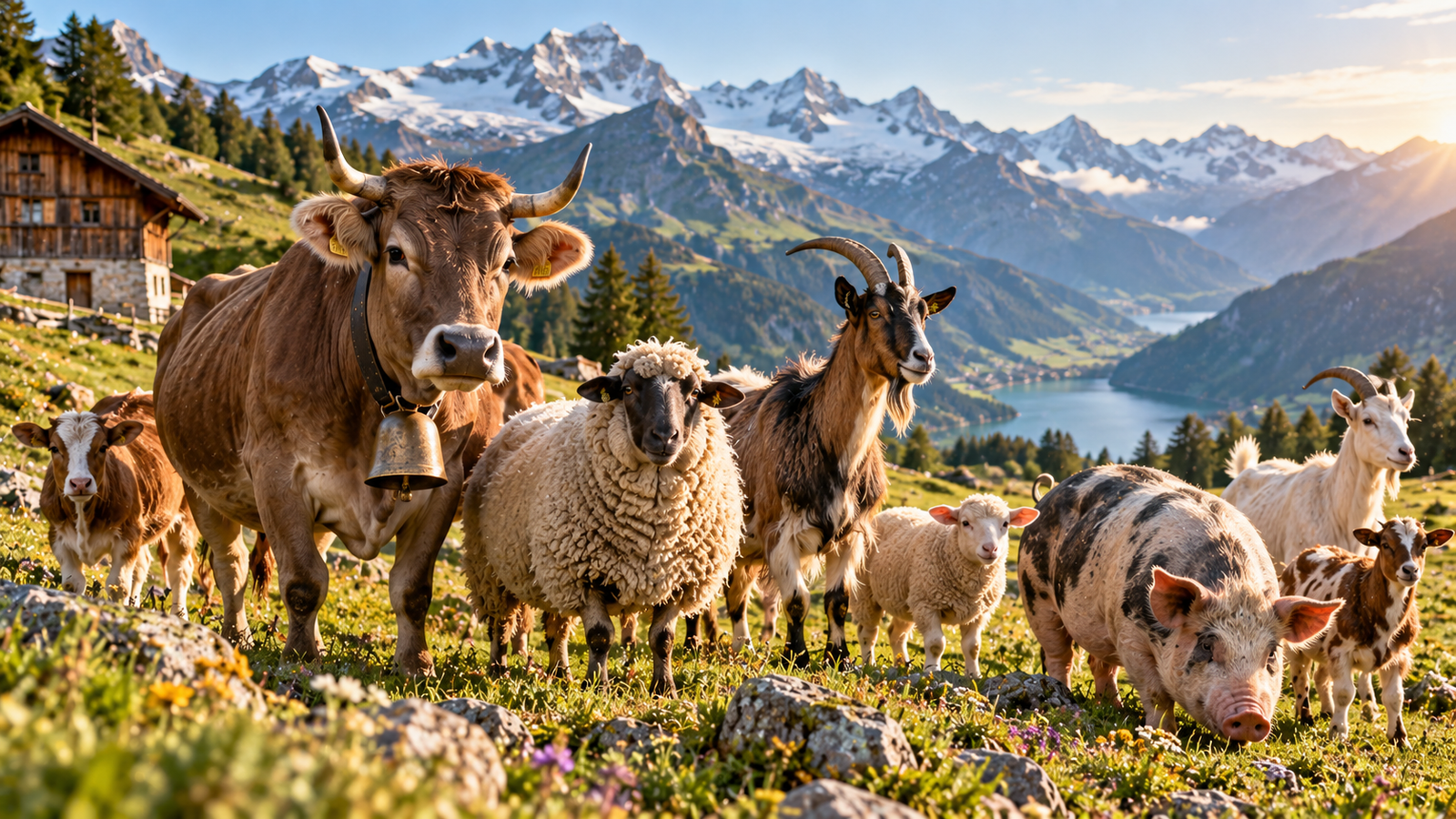
Swiss Post Highlights Endangered Farm Breeds With New Stamp Collection
Switzerland’s postal service is turning to one of the country’s oldest forms of public communication to spotlight a modern conservation challenge. A newly released series of commemorative postage stamps features endangered farm animal breeds, bringing national attention to livestock varieties that have played a significant role in Swiss agricultural history but now face uncertain futures.
The collection combines cultural heritage, biodiversity awareness, and philately, using everyday postage stamps to introduce the public to animal breeds that have become increasingly rare across the Swiss countryside. The initiative reflects a broader effort to preserve genetic diversity in agriculture at a time when modern farming systems often favor a limited number of highly productive commercial breeds.
For generations, traditional livestock breeds helped shape life in Switzerland’s mountain valleys, alpine pastures, and rural communities. Many were specifically adapted to local climates, rugged terrain, and regional farming practices. However, agricultural modernization during the twentieth century led to a decline in numerous native breeds as farmers increasingly adopted animals selected for higher milk yields, faster growth rates, or greater commercial efficiency.
Conservation organizations warn that the loss of traditional breeds represents more than a cultural concern. Genetic diversity within livestock populations can provide resilience against disease outbreaks, environmental changes, and future agricultural challenges. As climate conditions evolve and farming systems face new pressures, preserving a broad genetic base is increasingly viewed as an important long-term strategy.
The stamp series highlights several endangered farm animals that remain part of Switzerland’s agricultural heritage. While many of these breeds survive through dedicated breeding programs, their populations remain relatively small compared with mainstream livestock varieties. The new stamps aim to increase public recognition of these animals and the efforts required to protect them.
Organizations involved in agricultural biodiversity have welcomed the initiative. Switzerland has long supported conservation programs designed to safeguard traditional plant varieties and animal breeds. One of the best-known organizations in this field is the Swiss foundation ProSpecieRara, which works to preserve endangered livestock breeds and heritage crop varieties through breeding networks, conservation projects, and public education programs.
Experts note that heritage breeds often possess characteristics developed through centuries of adaptation to specific environments. In mountainous regions, for example, some traditional cattle breeds are known for their ability to thrive on steep alpine pastures and make efficient use of limited grazing resources. Such traits can prove valuable even in modern agricultural systems.
The use of postage stamps as a conservation tool may seem unusual, but stamps have long served as miniature ambassadors for national identity. Swiss stamps frequently highlight historical events, cultural traditions, scientific achievements, landscapes, and aspects of everyday life. By featuring endangered farm animals, the latest collection extends that tradition while drawing attention to a contemporary issue. Switzerland itself has one of the world’s most respected philatelic traditions, with postal authorities regularly issuing commemorative series that reflect national heritage and public interests.
Beyond their practical purpose, commemorative stamps often become collectible items that reach audiences far beyond their original postal use. Collectors, schools, museums, and cultural institutions frequently use stamp releases as educational opportunities, helping to preserve knowledge about subjects that may otherwise receive limited public attention.
The decision to focus on endangered livestock also reflects growing interest in sustainable food systems and agricultural biodiversity. Across Europe, researchers and policymakers have emphasized the importance of maintaining genetic diversity within both crops and livestock. Traditional breeds may carry unique characteristics that could become increasingly valuable as agriculture adapts to environmental and economic changes.
In Switzerland, concern for rural traditions remains closely connected to national identity. Alpine farming, seasonal livestock movements, and regional agricultural customs continue to play a visible role in the country’s cultural landscape. Many heritage breeds are closely associated with these traditions, making their preservation important not only from a scientific perspective but also from a cultural one.
The stamp collection arrives at a time when awareness of biodiversity issues is growing internationally. While conservation discussions often focus on wildlife and natural ecosystems, experts stress that domesticated animal breeds are also part of the world’s biological heritage. Once a breed disappears, its unique genetic characteristics are lost permanently.
Supporters of livestock conservation hope initiatives like the new stamp series will encourage greater public engagement. Increased awareness can help attract breeders, consumers, and policymakers to conservation efforts that depend on long-term commitment and investment.
For Swiss Post, the project demonstrates how a traditional medium can still contribute to contemporary conversations. Every stamp in the series carries a practical function while also telling a story about the country’s agricultural past and future.
As these stamps enter circulation, they will travel across Switzerland and beyond, carrying images of rare farm animals that have survived generations of change. Their appearance on envelopes and collections serves as a reminder that preserving biodiversity is not limited to forests and wildlife reserves. It also includes safeguarding the domesticated breeds that helped shape human communities for centuries.
The new collection offers a small but visible tribute to that mission, transforming everyday postage into a celebration of Switzerland’s living agricultural heritage and the ongoing efforts to ensure it is not lost to history.