Geneva Review Finds Initial Police Tactics During Anti-G7 Protest Were Lawful
Geneva authorities have concluded that the first phase of a controversial police operation during June’s anti-G7 demonstrations was conducted within the bounds of the law, providing an initial official assessment of an incident that sparked intense debate over public security and civil liberties in Switzerland.
The findings were released as part of an ongoing investigation launched after complaints from organizers of the anti-G7 protest held in Geneva on June 14, one day before world leaders gathered across the border in the French resort town of Évian-les-Bains for the 2026 Group of Seven summit. The review examined police actions taken during a period of escalating unrest that followed an initially peaceful demonstration.
According to the cantonal Department of Institutions and Digital Affairs, the preliminary inquiry focused on a specific stage of the operation, covering the period between approximately 7:21 p.m. and 9:29 p.m. Investigators determined that the temporary containment measures introduced by police during those hours had a sufficient legal basis and were justified by the circumstances confronting officers on the ground.
The anti-G7 demonstration was one of the largest public mobilizations linked to the summit. Geneva had become the focal point for opposition groups because many international delegations arrived through the Swiss city before traveling to France. Authorities had anticipated large crowds for months and deployed extensive security resources amid concerns that militant groups could attempt to disrupt events connected to the summit.
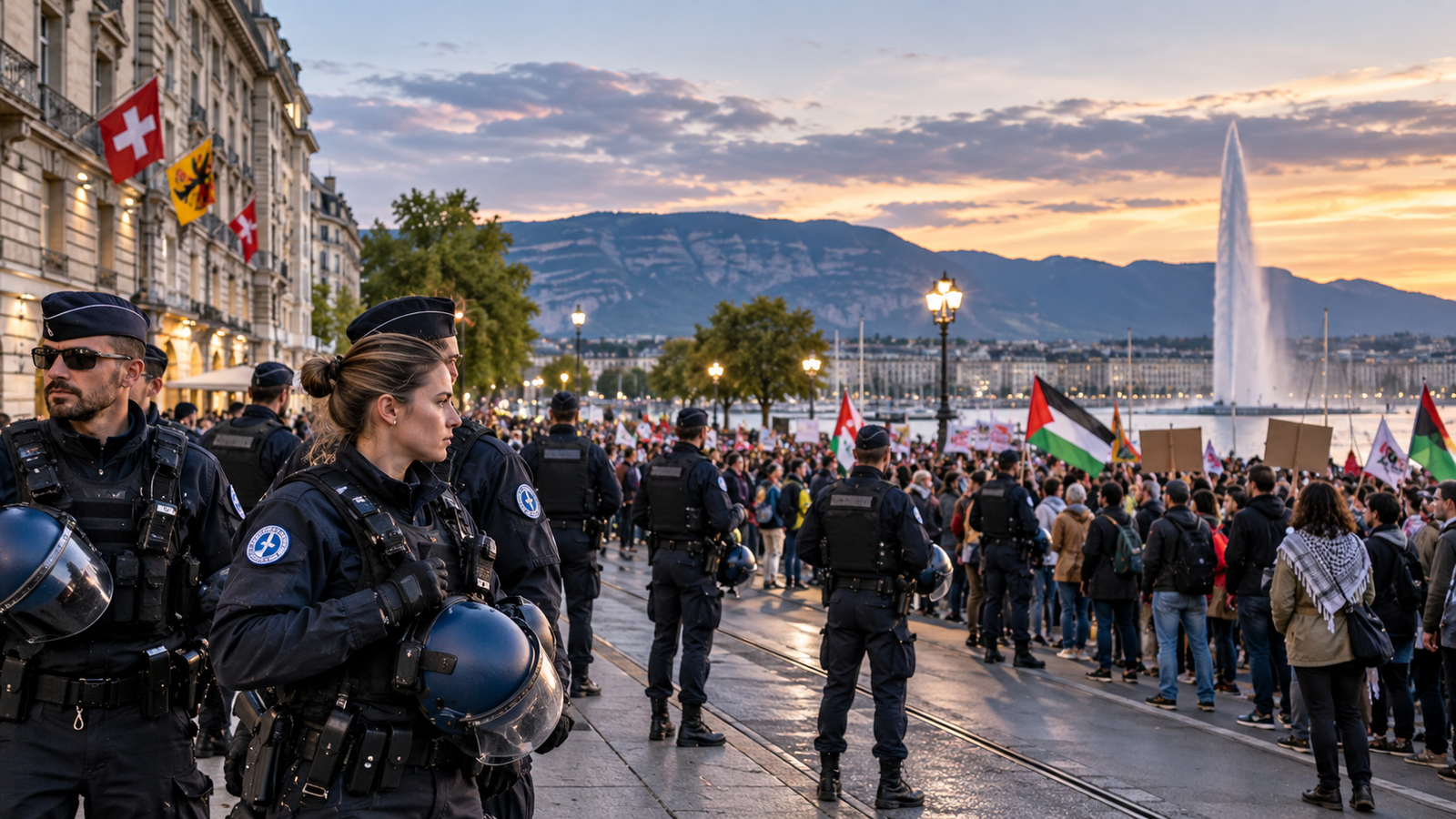
Official accounts indicate that the protest began peacefully but deteriorated later in the day as incidents of vandalism and confrontations with police increased. Authorities reported property damage and other disturbances, prompting commanders to order the dispersal of the gathering. Investigators stated that officers subsequently established a containment zone to prevent suspected offenders from leaving the area, facilitate identity checks, secure evidence, and support criminal investigations linked to alleged acts of violence.
The legality of that decision became a central issue in the weeks that followed. Protest organizers and civil-rights advocates argued that hundreds of people were effectively detained for extended periods despite not being accused of wrongdoing. Members of the “No G7” coalition described the operation as excessive and called for political accountability from senior officials involved in overseeing security preparations.
Government investigators, however, distinguished between temporary crowd-control measures and formal deprivation of liberty. In their initial findings, they concluded that the police action represented a public-order measure rather than an unlawful detention. The report stated that, given the deteriorating security situation, authorities used what they considered the least restrictive option available to restore order and prevent further harm to people or property.
The broader investigation remains unfinished. Officials emphasized that the newly released findings address only the first stage of the operation. Further examination will focus on what occurred after the area was fully sealed, including decisions that led to prolonged identity checks and additional law-enforcement actions later in the evening and overnight.
The scale of the police response has remained a subject of public scrutiny. Following the protest, authorities reported that 549 individuals were stopped during the operation, while dozens were taken to police facilities for questioning. Criminal proceedings and related investigations were subsequently opened in connection with alleged offenses committed during the demonstration.
The controversy reflects a broader challenge faced by governments hosting major international summits. Large-scale gatherings of world leaders often attract peaceful demonstrators, advocacy organizations, and, in some cases, groups willing to engage in property destruction or confrontations with police. Balancing the right to protest with public safety responsibilities remains one of the most difficult tasks confronting security planners.
Security concerns surrounding the Évian summit were unusually significant because of the event’s proximity to Switzerland. Thousands of Swiss military personnel and law-enforcement officers were mobilized, while numerous border crossings between Switzerland and France were temporarily restricted. Businesses in parts of Geneva reinforced storefronts ahead of the demonstrations amid fears of unrest similar to incidents associated with earlier summit protests in the region.
Violence during portions of the June protest reinforced those concerns. Reports from law-enforcement agencies and news organizations described damaged property, burning vehicles, clashes between demonstrators and police, and the use of crowd-control measures including tear gas and water cannons. Authorities said some individuals involved in the unrest had infiltrated an otherwise broader protest movement.
The outcome of the remaining investigation could carry implications beyond Geneva. Legal experts and civil-rights groups are closely watching the review because it may influence future decisions regarding crowd management at major demonstrations in Switzerland. Questions surrounding the limits of police powers, the rights of demonstrators, and the standards governing mass containment operations remain central to the public debate.
For now, authorities have reached a narrow conclusion: the initial containment measures introduced before the area was completely sealed were lawful under existing rules. Whether subsequent actions withstand the same level of scrutiny will be determined as the investigation moves into its next phase.