Swiss Heatwave Drives Farm Losses as Food Prices Begin to Rise
Switzerland’s prolonged summer drought is beginning to reach consumers’ wallets as agricultural losses mount across the country and food prices rise for products ranging from milk to potatoes.
After months of unusually high temperatures and limited rainfall, Swiss farmers are reporting one of the most damaging growing seasons in recent memory. Industry organizations estimate that the financial impact on agriculture has already reached hundreds of millions of francs, while reduced harvests and higher production costs are moving through the food supply chain and into retail prices.
According to estimates from the Swiss Farmers’ Union, total losses for the agricultural sector are expected to reach approximately CHF 522 million in 2026. The organization says the scale of the damage is comparable to the devastating European heatwave of 2003, a benchmark often used in Switzerland to measure severe climate-related agricultural disruption.
The effects have been widespread, affecting crops, livestock operations and dairy production across multiple regions. Among the hardest-hit agricultural products is grain maize, where farmers are estimated to have lost roughly half of expected production. Significant declines have also been recorded for forage maize, potatoes, sugar beet, soybeans, sunflowers and fresh vegetables. Hay production, a critical resource for livestock farmers, has suffered particularly severe losses after pastures and grasslands dried out during extended periods of heat.
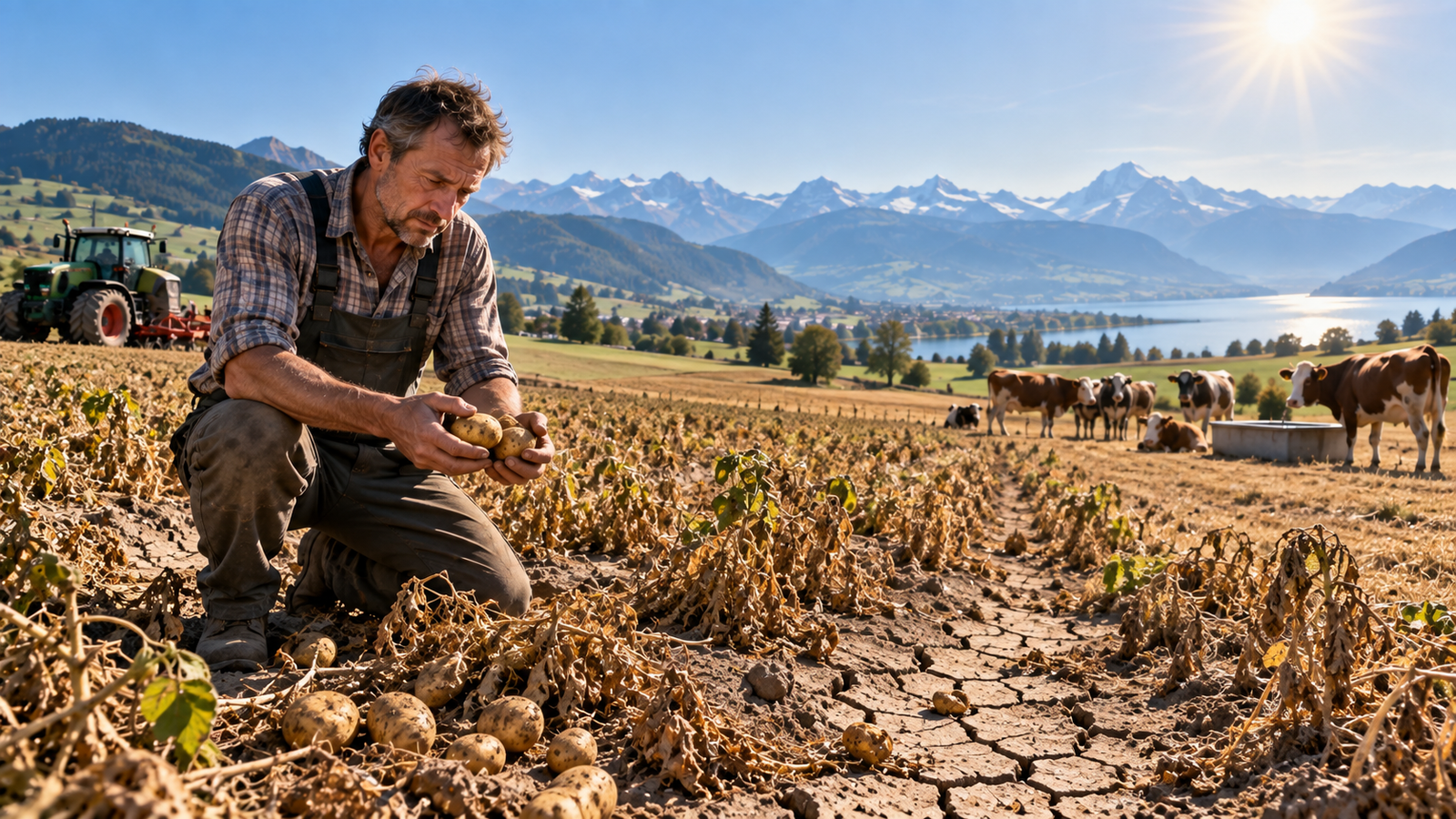
Potatoes have emerged as one of the clearest examples of the season’s impact. Industry figures released this week showed Switzerland experienced its poorest summer potato harvest since records began. Farmers harvested about 333,000 tonnes, nearly one-fifth below the recent multi-year average. To compensate for the shortfall, the country has had to increase imports, bringing in approximately 130,000 tonnes of potatoes from abroad.
The reduction in domestic supply is now contributing to higher prices. Producers and agricultural groups have warned for weeks that potatoes would likely become more expensive because of the drought’s effect on yields. Those predictions are now being reflected in market conditions as retailers and suppliers adjust to lower production volumes.
Dairy farmers are facing a different but equally challenging set of problems. High temperatures place physical stress on cattle, causing animals to eat less and produce less milk. At the same time, drought conditions have reduced grass growth, creating shortages of fodder and forcing many farmers to purchase supplemental feed or draw down winter reserves earlier than planned. These additional costs are contributing to higher milk prices.
The pressure on dairy production is also affecting Switzerland’s renowned cheese industry. Producers have reported tighter milk supplies and rising operating expenses as farmers attempt to maintain herd health during one of the hottest summers in years. Industry representatives have described conditions as extremely difficult, particularly in regions where rainfall deficits have persisted for months.
While the drought’s consequences are being felt most directly on farms, the situation is unfolding against a broader backdrop of agricultural stress across Europe. Several countries have reported declining crop yields as extreme heat, soil moisture shortages and prolonged dry conditions affect production. Recent assessments have warned of significantly reduced harvest expectations across large parts of central and western Europe.
The challenges are also contributing to wider concerns about food inflation. The United Nations Food and Agriculture Organization reported this week that global food prices climbed to their highest level since late 2022. Analysts cited extreme weather, supply disruptions and reduced crop expectations in multiple regions as key factors driving the increase.
For Switzerland, the drought has highlighted the vulnerability of a sector that plays a crucial role in national food security despite representing a relatively small share of overall economic output. Swiss agriculture supplies a substantial portion of the country’s food needs and manages much of the landscape that defines rural Switzerland. When weather extremes reduce production, the effects can ripple through food markets, rural communities and consumer budgets alike.
Agricultural organizations are increasingly warning that weather volatility is becoming a recurring challenge rather than an isolated event. Farmers have invested heavily in irrigation systems and adaptation measures, but many producers argue that infrastructure alone cannot fully offset prolonged drought and record-breaking heat. In some areas, water shortages have limited the effectiveness of irrigation efforts, leaving crops exposed during critical growing periods.
Although weather conditions later in the year could still influence final harvest results for some crops, the economic impact of the summer is already becoming clear. Lower yields, rising input costs and reduced livestock productivity are translating into higher prices for several everyday food products.
For consumers, milk and potatoes may be the most visible examples. For farmers, however, the 2026 season is increasingly being viewed as one of the most challenging agricultural years in decades—a reminder of how quickly extreme weather can reshape both food production and food prices across Switzerland.