
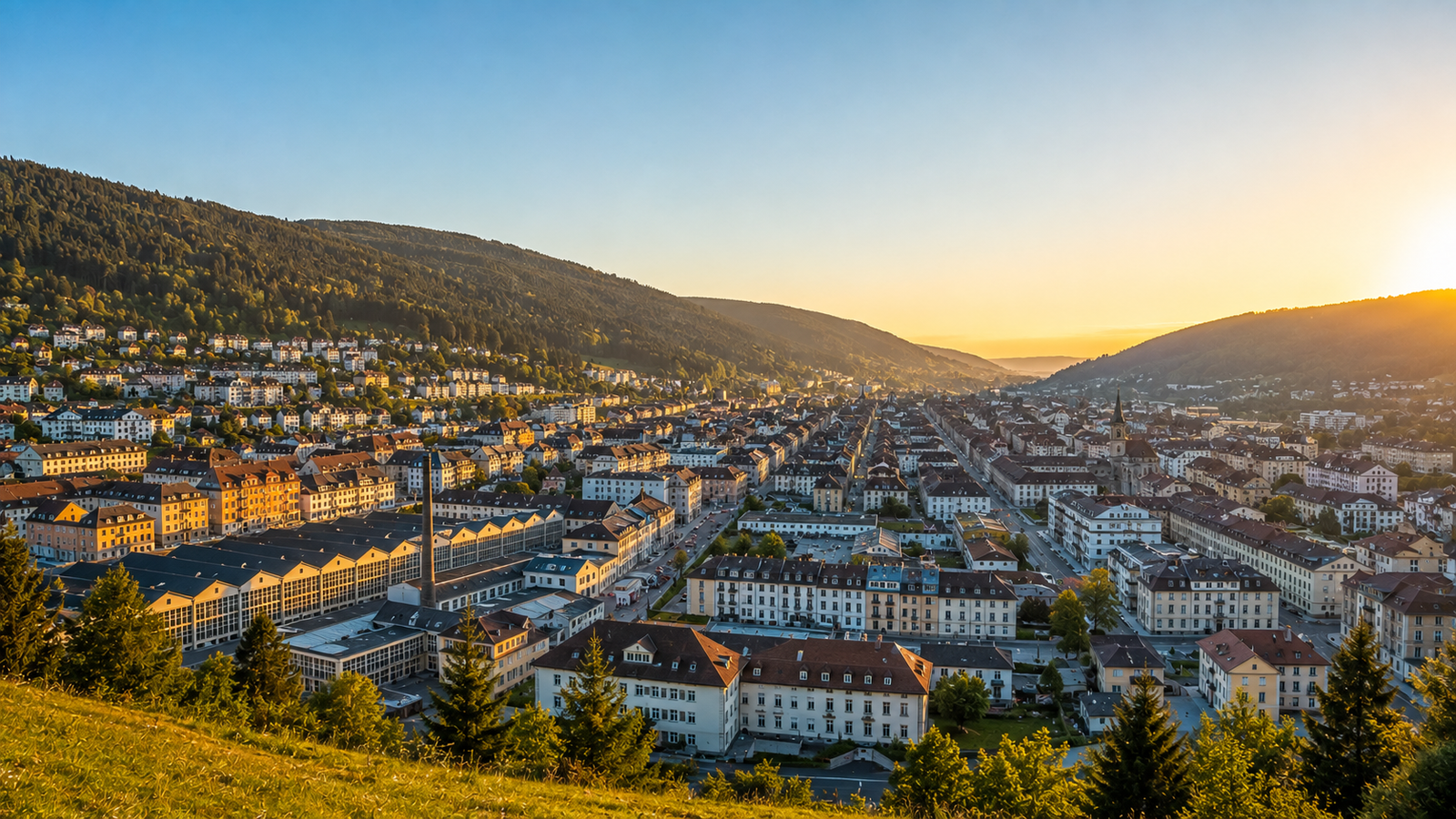
Le Locle, Le Locle, Switzerland
Le Locle: Discover Switzerland’s UNESCO Watchmaking Heartland
In many historic European towns, industry arrived after streets and neighborhoods had already taken shape. Le Locle tells a different story. Nestled high in the Jura Mountains of western Switzerland, this small town developed around a single craft that would eventually become synonymous with Swiss excellence: watchmaking.
Visitors often arrive expecting museums and luxury timepieces. What they discover instead is something far more unusual—a living town whose streets, buildings, workshops, and identity were shaped by centuries of precision craftsmanship. Together with neighboring La Chaux-de-Fonds, Le Locle forms one of Switzerland’s most distinctive UNESCO World Heritage sites, recognized not for a monument or natural wonder but for an entire urban landscape built around the art of making watches.
A Town Born from Ingenuity
Le Locle lies in the canton of Neuchâtel, close to the French border, within the rugged Jura mountain region. The area’s climate and terrain offered limited agricultural opportunities, encouraging local residents to seek alternative sources of income during long winters.
By the seventeenth century, watchmaking had begun to establish itself in the region. Over time, the craft transformed the local economy and influenced every aspect of daily life. Workshops appeared alongside homes, and entire neighborhoods evolved to accommodate the specialized needs of horological production. The town became one of the most important centers of Swiss watchmaking, helping build a reputation that continues to define the country today.
Le Locle is often described as the cradle of the regional watch industry, closely associated with pioneering watchmaker Daniel JeanRichard, whose work helped spread horological knowledge throughout the Jura Mountains.
Understanding the UNESCO Recognition
In 2009, UNESCO added Le Locle and neighboring La Chaux-de-Fonds to the World Heritage List under the designation “La Chaux-de-Fonds / Le Locle, Watchmaking Town Planning.” The recognition highlights a rare example of urban development directly shaped by industrial needs.
Unlike many heritage sites centered on castles, churches, or archaeological remains, Le Locle’s significance lies in its urban design. Following major fires and reconstruction efforts during the nineteenth century, the town was planned according to the practical requirements of watchmaking.
Wide streets allowed natural light into workshops. Residential buildings and workspaces were integrated into the same neighborhoods. The town evolved as an efficient environment where artisans could live and work within a carefully organized framework. UNESCO recognizes this unique relationship between industry, architecture, and urban planning as possessing outstanding universal value.
Walking Through a Living Heritage Site
One of the most rewarding aspects of visiting Le Locle is that its heritage remains visible in everyday life.
The town does not feel like an open-air museum frozen in time. Instead, visitors encounter a functioning community where historical buildings coexist with modern watchmaking activities. The orderly street layout reveals the rational planning that made large-scale production possible while preserving the character of a mountain town.
Many structures still display architectural features associated with watchmaking workshops. Large windows were designed to maximize daylight, allowing craftsmen to perform intricate tasks before electric lighting became available. The urban fabric reflects a remarkable continuity between past and present, illustrating how centuries of specialized craftsmanship influenced the built environment.
Museums That Reveal the Mechanics of Time
Le Locle offers several cultural attractions that help visitors understand the town’s horological legacy.
The region’s watchmaking museums present collections of historic timepieces, technical instruments, and examples of mechanical innovation that contributed to Switzerland’s global reputation. Through exhibits and demonstrations, visitors can explore the evolution of precision engineering and gain insight into the skills required to produce some of the world’s finest watches.
These museums place individual objects within a broader social and economic context, showing how watchmaking shaped education, architecture, trade, and local identity across generations.
For travelers interested in craftsmanship, engineering, industrial heritage, or design, Le Locle provides an unusually comprehensive perspective on the development of a world-famous industry.
Beyond Watches: Discovering the Character of the Jura
Although watchmaking dominates Le Locle’s story, the surrounding landscape adds another dimension to the visitor experience.
The town sits at roughly 1,000 meters above sea level in the Neuchâtel Mountains, an area known for forests, limestone formations, and scenic valleys.
Walking routes around the region reveal a quieter side of Switzerland, far removed from the country’s more famous Alpine resorts. Visitors can explore wooded trails, rural landscapes, and viewpoints that showcase the distinctive beauty of the Jura Mountains.
The nearby French border also contributes to the region’s cultural character, creating connections that have influenced trade, craftsmanship, and daily life for centuries.
Architecture with a Purpose
Le Locle’s architecture differs noticeably from that of medieval Swiss towns.
Rather than winding alleys and irregular squares, visitors encounter a more structured urban pattern. This design emerged from practical considerations. Watchmaking required light, accessibility, and efficient organization. As a result, the town developed according to functional principles while maintaining a harmonious appearance.
The relationship between buildings and industry remains one of the town’s most fascinating features. Homes, workshops, and production spaces were historically interconnected, reflecting a lifestyle where work and domestic life often existed side by side.
This distinctive planning model continues to attract urban historians, architects, and heritage specialists from around the world.
Exploring the UNESCO Interpretation Sites
Visitors interested in understanding the World Heritage designation can explore exhibitions dedicated to watchmaking urbanism and local history.
These interpretive spaces explain how Le Locle evolved from a mountain settlement into an internationally recognized center of precision manufacturing. Multimedia displays and historical materials help connect the town’s streets and buildings with the broader story of Swiss industrial development.
The experience is particularly valuable because it allows travelers to appreciate the town itself as the primary attraction. Every street becomes part of the narrative, revealing how generations of craftsmen shaped an environment uniquely suited to their profession.
Why Le Locle Stands Apart
Switzerland offers no shortage of spectacular destinations. Visitors can choose between towering Alpine peaks, medieval old towns, lakeside promenades, and world-famous resorts. Le Locle distinguishes itself through a different kind of attraction.
Its appeal lies in understanding how human ingenuity transformed a challenging mountain environment into a center of global innovation. The town demonstrates that cultural heritage is not limited to grand monuments. Sometimes it can be found in the layout of streets, the orientation of windows, and the enduring traditions that continue to shape everyday life.
For travelers seeking a deeper understanding of Switzerland beyond postcard scenery, Le Locle offers a compelling journey into the origins of Swiss watchmaking. Its UNESCO-recognized urban landscape remains one of the most remarkable examples of how a specialized craft can influence an entire community, creating a destination where history, architecture, and precision engineering continue to keep perfect time.