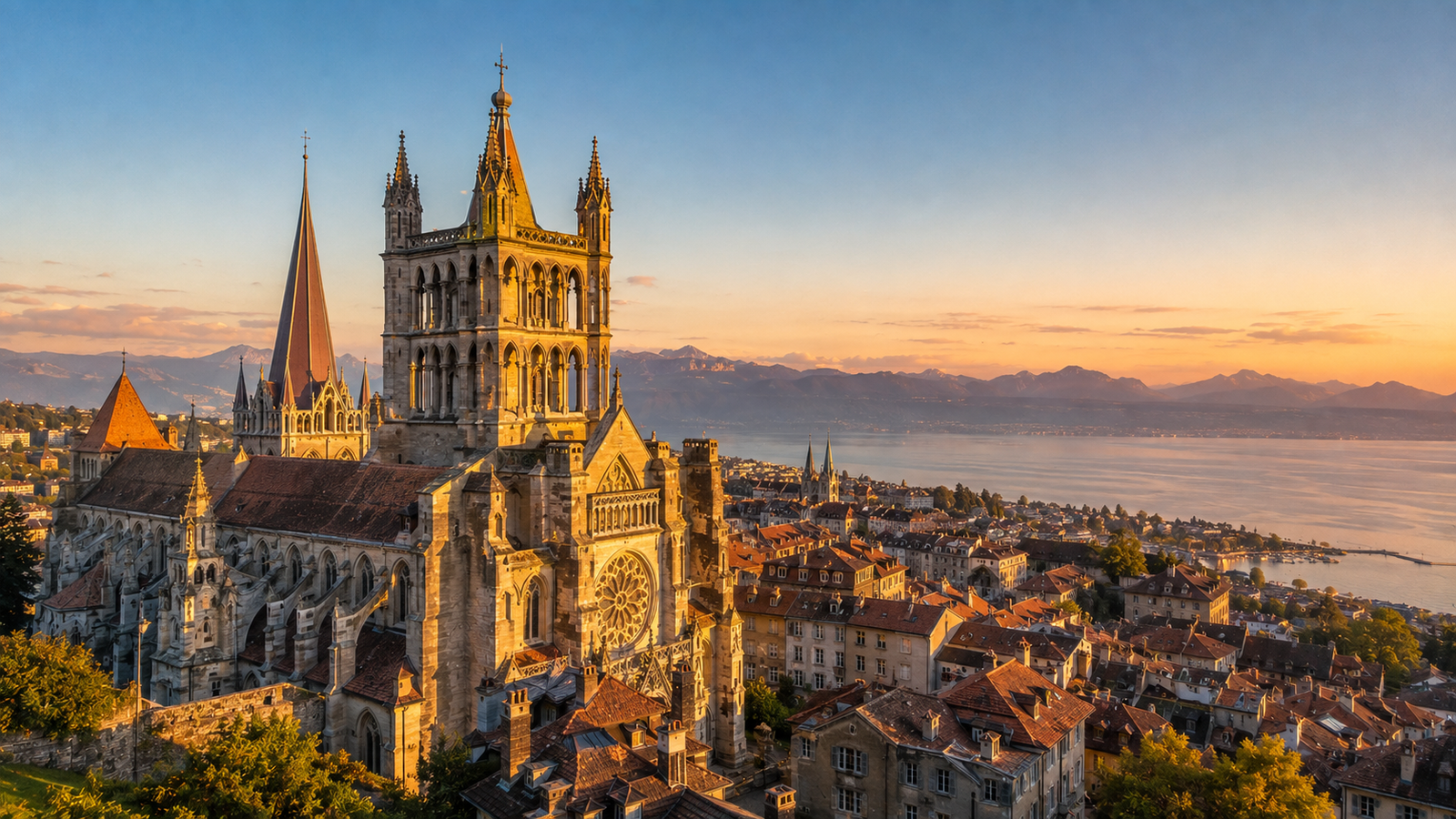
Lausanne Cathedral, Lausanne, Switzerland
Lausanne Cathedral: Switzerland’s Gothic Masterpiece Above Lake Geneva
Long before Lausanne became an Olympic capital, a university city, and one of Switzerland’s most vibrant cultural centers, a monumental construction project was taking shape on a hill overlooking Lake Geneva. Stone by stone, craftsmen, masons, sculptors, and architects created what would become one of the most significant Gothic monuments in the country.
Today, Lausanne Cathedral dominates the city skyline just as it has for centuries. Its soaring towers, intricate stonework, and commanding position above the old town make it one of Switzerland’s most recognizable religious landmarks. Yet the cathedral is more than an architectural masterpiece. It is a witness to medieval faith, political change, artistic achievement, and the evolving identity of Lausanne itself.
For visitors arriving in the city, the cathedral often becomes the focal point of exploration. Whether viewed from the waterfront below or from the winding streets of the historic center, its presence is impossible to ignore.
A Cathedral Built During the Age of Gothic Europe
The origins of Lausanne Cathedral date to the medieval period, when Gothic architecture was transforming church construction across Europe.
Building began during the twelfth century and continued for decades as generations of craftsmen contributed to the project. The cathedral was eventually consecrated in the thirteenth century, becoming one of the most ambitious religious structures in the region.
The Gothic style allowed architects to achieve greater height, larger windows, and more elaborate decorative programs than earlier Romanesque churches. Lausanne Cathedral embraced these innovations, creating an interior characterized by light, verticality, and remarkable architectural harmony.
Even centuries later, the building remains one of the finest examples of Gothic architecture in Switzerland and continues to attract historians, architects, and travelers from around the world.
A Strategic Hilltop Location
The cathedral occupies one of the most important positions in Lausanne.
Built on elevated ground above Lake Geneva, it overlooks the city’s historic core and surrounding landscapes. This location was chosen deliberately. Medieval religious institutions often sought prominent sites that reflected both spiritual importance and civic influence.
The result is a structure that can be seen from many parts of the city.
Approaching the cathedral through Lausanne’s old town enhances its visual impact. Narrow streets gradually reveal towers, arches, and stone facades before visitors finally emerge into the open spaces surrounding the building.
From the cathedral precinct, sweeping views extend across rooftops toward Lake Geneva and the distant French Alps. This combination of architecture and landscape contributes significantly to the site’s appeal.
The Beauty of Gothic Design
One of Lausanne Cathedral’s greatest strengths is the quality of its architectural detail.
The exterior showcases many of the defining characteristics of Gothic construction: pointed arches, elegant tracery, sculpted portals, and soaring vertical lines designed to draw the eye upward.
The western facade is particularly notable for its rich decorative program. Sculptural elements reflect medieval artistic traditions while demonstrating the exceptional craftsmanship involved in constructing such a monumental building.
Inside, visitors encounter lofty vaults supported by slender columns that create an atmosphere of openness and light. The architecture balances grandeur with refinement, allowing the building to feel both imposing and welcoming.
This harmony is one reason the cathedral remains one of Switzerland’s most admired historic monuments.
The Famous Rose Window
Among the cathedral’s most celebrated artistic treasures is its remarkable rose window.
Created during the medieval period, the stained-glass masterpiece is considered one of the most important examples of Gothic glasswork in Switzerland. Its intricate design combines religious symbolism with representations of the medieval understanding of the world.
Unlike many decorative features that require specialized knowledge to appreciate fully, the rose window immediately captures attention through its color, complexity, and scale.
When sunlight filters through the glass, the interior is illuminated with vibrant hues that enhance the cathedral’s atmosphere.
For many visitors, the rose window becomes the highlight of the experience and a powerful reminder of the artistic achievements of the Middle Ages.
The Cathedral Through Religious Change
Lausanne Cathedral has witnessed major transformations in European history.
During the sixteenth century, the Protestant Reformation reached the region and profoundly altered religious life in Lausanne. The cathedral transitioned from a Roman Catholic institution to a Protestant church, reflecting broader political and religious changes occurring throughout Switzerland.
These developments influenced the building’s interior and function while preserving its role as one of the city’s most important landmarks.
The cathedral therefore tells two interconnected stories: the story of medieval Christianity that inspired its construction and the story of the Reformation that reshaped its later history.
This layered heritage contributes to the building’s enduring cultural significance.
The Watchman Tradition
Few European cathedrals maintain a tradition as distinctive as Lausanne’s night watchman.
For centuries, a watchman has called out the hours during the night from the cathedral tower. Historically, this practice served practical purposes, helping protect the city from fire and other dangers.
Remarkably, the tradition survives today.
The continuing presence of the cathedral watchman provides a tangible connection to Lausanne’s medieval past and represents one of the city’s most unusual cultural customs.
While modern technology has long replaced the practical need for such announcements, the tradition remains an important symbol of continuity and local identity.
It is one of the many ways in which the cathedral continues to bridge past and present.
Exploring the Cathedral Interior
Beyond its architectural features, the cathedral offers a rich interior experience.
Visitors encounter historic chapels, decorative stonework, stained-glass windows, and spaces that reveal centuries of artistic and religious development. The atmosphere encourages quiet observation, allowing details that might initially go unnoticed to emerge gradually.
Light plays a particularly important role throughout the building. Depending on the time of day and weather conditions, the interior can appear dramatically different as sunlight filters through stained glass and illuminates architectural details.
This constantly changing environment enhances the cathedral’s visual and emotional impact.
The building rewards both casual visitors and those interested in history, architecture, or religious heritage.
A Landmark Within Lausanne’s Historic Center
The cathedral’s importance extends beyond its walls.
It serves as the centerpiece of Lausanne’s old town, an area characterized by historic streets, public squares, museums, and cultural institutions. Exploring the surrounding neighborhood provides context for understanding the cathedral’s role in the city’s development.
The area surrounding the cathedral remains one of the most atmospheric parts of Lausanne. Stone stairways, historic buildings, and panoramic viewpoints create an environment where visitors can experience layers of urban history within a relatively compact area.
The cathedral functions not only as a monument but also as an anchor for the city’s cultural identity.
Experiencing Lausanne Cathedral Today
Modern Lausanne is known internationally for education, sports, innovation, and cultural life. Yet despite these contemporary associations, the cathedral continues to define the city’s historic character.
Visitors arrive from around the world to admire its architecture, study its artistic treasures, and enjoy its remarkable setting above Lake Geneva. The building remains active as a place of worship while also serving as one of Switzerland’s most important heritage attractions.
Standing beneath its vaulted ceilings or gazing across the lake from its hilltop location, it becomes clear why Lausanne Cathedral has inspired admiration for generations.
More than eight centuries after construction began, it remains a masterpiece of Gothic architecture and one of the most compelling historical landmarks in Switzerland—a monument where art, faith, history, and landscape come together in extraordinary harmony.