La Chaux-de-Fonds, La Chaux-de-Fonds, Switzerland
La Chaux-de-Fonds: Switzerland’s UNESCO Watchmaking City Above the Jura Mountains
Most historic European cities evolved organically over centuries. Streets twisted around medieval walls, markets expanded into squares, and neighborhoods grew wherever space allowed. La Chaux-de-Fonds followed a very different path.
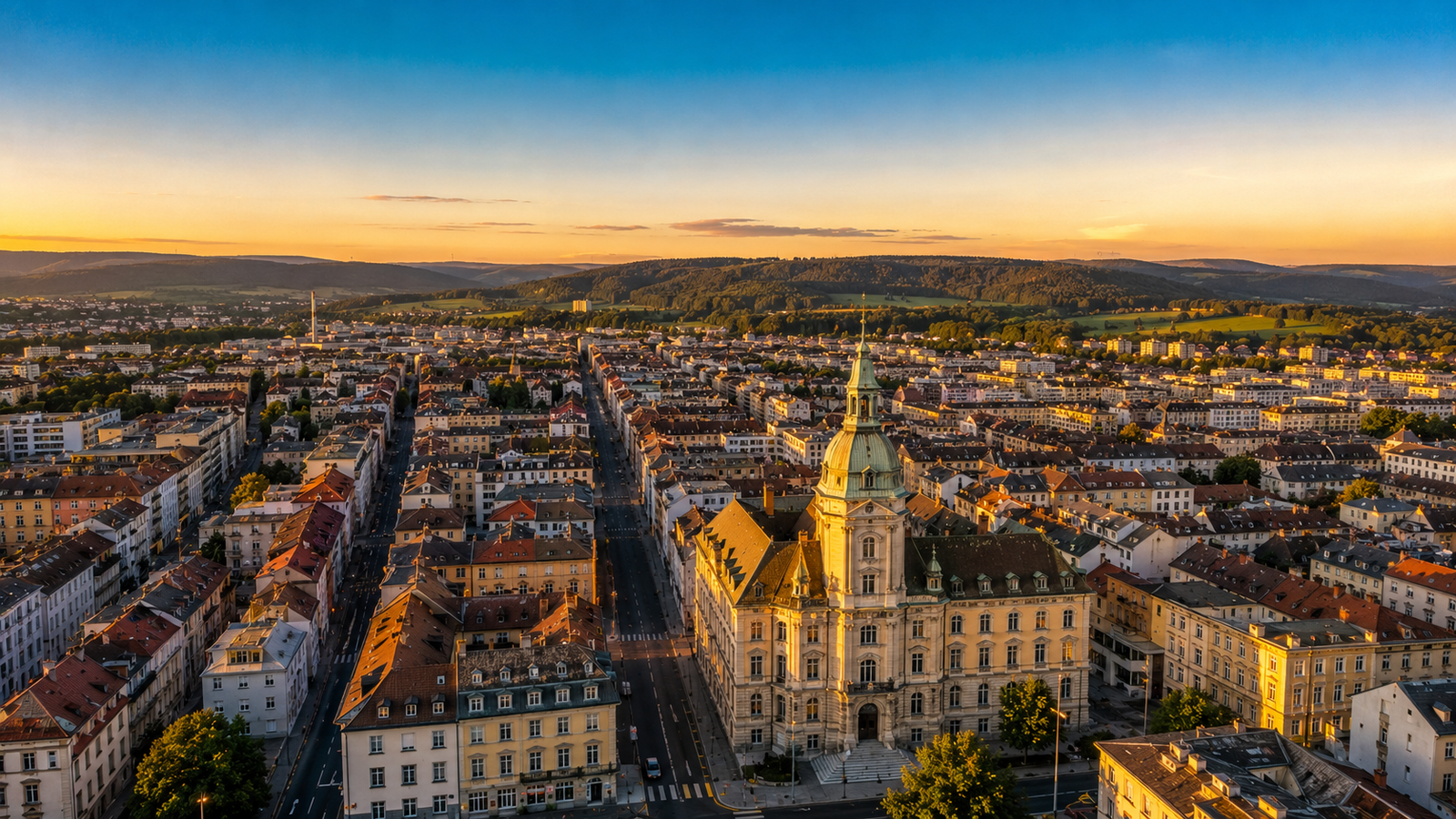
Located high in the Jura Mountains of western Switzerland, this remarkable city was shaped by a single industry: watchmaking. Its broad avenues, geometric street grid, and distinctive architecture were planned to support the production of precision timepieces. Today, La Chaux-de-Fonds stands as one of the world’s most important centers of horological heritage and one of Switzerland’s most distinctive urban destinations.
Recognized together with neighboring Le Locle as a UNESCO World Heritage Site, the city offers visitors an opportunity to explore the intersection of industry, culture, architecture, and innovation in a setting unlike anywhere else in the country.
A City Rebuilt for an Industry
The defining moment in the history of La Chaux-de-Fonds came after a devastating fire in 1794.
Much of the settlement was destroyed, creating an opportunity for reconstruction on a scale rarely seen in Swiss towns of the period. Rather than rebuilding according to traditional patterns, planners developed an organized grid layout that maximized sunlight and efficiency—an important consideration for watchmakers who relied on natural light for highly detailed work. This reconstruction established the urban framework that still characterizes the city today. UNESCO later recognized this exceptional urban planning as a unique example of a city designed around a specialized industrial activity.
The result is a place that feels noticeably different from many Swiss destinations. Wide streets intersect at regular angles, and buildings reflect the practical needs of generations of craftsmen and manufacturers whose livelihoods depended on precision.
Why UNESCO Recognized La Chaux-de-Fonds
In 2009, UNESCO inscribed La Chaux-de-Fonds and Le Locle on the World Heritage List under the designation “Watchmaking Town Planning.”
The recognition was not based solely on the importance of Swiss watches but on the way urban development, architecture, and industry became inseparably connected. The city represents a rare example of an industrial landscape where residential areas, workshops, manufacturing facilities, and civic buildings were integrated into a coherent urban design.
Visitors exploring the city today can still observe how watchmaking influenced everything from building orientation to neighborhood organization. The UNESCO designation highlights not only the economic importance of horology but also its lasting impact on the built environment.
The Heart of Swiss Watchmaking Heritage
Few places are as closely associated with watchmaking as La Chaux-de-Fonds.
For generations, the city served as a center for innovation, craftsmanship, and industrial development within the Swiss watch industry. Numerous manufacturers established operations here, helping transform Switzerland into a global leader in timepiece production.
The city remains home to important horological institutions that preserve and interpret this legacy. For visitors interested in understanding how Swiss watches evolved from handcrafted objects into internationally recognized symbols of quality, La Chaux-de-Fonds offers unparalleled insight.
The connection between the city and watchmaking is not confined to museums. It is visible in architecture, public spaces, educational institutions, and the identity of the local community.
International Museum of Horology
One of the city’s most significant attractions is the International Museum of Horology (Musée international d’horlogerie).
Widely regarded as one of the world’s leading museums dedicated to timekeeping, it presents the history of measuring time from ancient civilizations to modern watchmaking technology. Exhibits include clocks, watches, scientific instruments, and rare historical pieces that demonstrate humanity’s evolving relationship with time.
The museum goes beyond displaying luxury watches. Visitors discover how advances in astronomy, engineering, navigation, and science influenced the development of increasingly precise timekeeping devices.
For travelers who may not initially consider themselves watch enthusiasts, the museum often becomes one of the most memorable parts of a visit because it connects technological innovation with broader human history.
Following the Legacy of Le Corbusier
La Chaux-de-Fonds holds another distinction that reaches far beyond Switzerland.
It is the birthplace of Charles-Édouard Jeanneret, better known as Le Corbusier, one of the most influential architects of the twentieth century.
Before transforming modern architecture worldwide, Le Corbusier spent his formative years in the city. Several early works associated with his career remain in La Chaux-de-Fonds, including Villa Fallet, Villa Jeanneret-Perret, and Villa Schwob. These buildings offer insight into the evolution of ideas that would later reshape architectural thinking across the globe.
For architecture enthusiasts, the city provides a rare opportunity to explore the environment that influenced one of modernism’s most important figures.
Art Nouveau in the Jura Mountains
While watchmaking dominates the city’s identity, another artistic movement left a lasting mark on La Chaux-de-Fonds.
At the turn of the twentieth century, a regional interpretation of Art Nouveau known as the Style Sapin emerged here. Inspired by the forests of the Jura Mountains, artists and designers incorporated motifs drawn from pine trees and local nature into architecture, decorative arts, and interior design.
Several buildings throughout the city preserve examples of this distinctive artistic tradition. The blend of industrial heritage and decorative creativity reveals how economic prosperity from watchmaking encouraged cultural development as well.
Exploring these architectural details adds another dimension to a visit, demonstrating that La Chaux-de-Fonds was not merely a manufacturing center but also a place of artistic innovation.
Museums Beyond Horology
Visitors often arrive expecting watch-related attractions and leave surprised by the city’s cultural diversity.
The city supports a range of museums and cultural institutions that explore art, history, natural sciences, and regional heritage. These attractions help place watchmaking within a broader social and historical context.
The Musée d’Histoire and Musée des Beaux-Arts contribute to an understanding of local development, while nearby natural landscapes provide opportunities to balance cultural exploration with outdoor experiences.
This variety makes La Chaux-de-Fonds attractive not only to watch enthusiasts but also to travelers interested in architecture, history, and Swiss culture.
A Gateway to the Jura Landscape
Although the city is internationally known for industry, nature remains an important part of the visitor experience.
Situated at an elevation of around 1,000 meters in the Jura Mountains, La Chaux-de-Fonds is surrounded by forests, valleys, and open landscapes characteristic of western Switzerland. Hiking trails, cycling routes, and scenic viewpoints are easily accessible from the urban center.
The contrast between industrial heritage and natural scenery creates one of the city’s most appealing qualities. Within a short distance, visitors can move from museums and historic streets to peaceful mountain landscapes.
Seasonal changes further enhance the region’s appeal, from green summer forests to snowy winter scenery that reflects the area’s high-altitude setting.
Experiencing a Different Side of Switzerland
Travelers often associate Switzerland with Alpine resorts, lakeside villages, and medieval old towns. La Chaux-de-Fonds offers a different perspective.
Its significance lies not in dramatic mountain peaks or picturesque waterfronts but in the story of human ingenuity. This is a city that demonstrates how an industry can shape architecture, education, culture, and urban planning across generations.
Walking through its orderly streets, visitors encounter evidence of a community built around precision, innovation, and craftsmanship. Museums preserve extraordinary achievements in watchmaking, while UNESCO recognition acknowledges the global importance of the city’s urban design.
For those interested in understanding the deeper forces that helped shape modern Switzerland, La Chaux-de-Fonds provides an experience unlike any other destination in the country. It is a place where time is not merely measured—it is woven into the city’s identity, architecture, and history.