Jet d’Eau Area, Geneva, Switzerland
Jet d’Eau Area: Exploring Geneva’s Iconic Waterfront and the Fountain That Defines a City
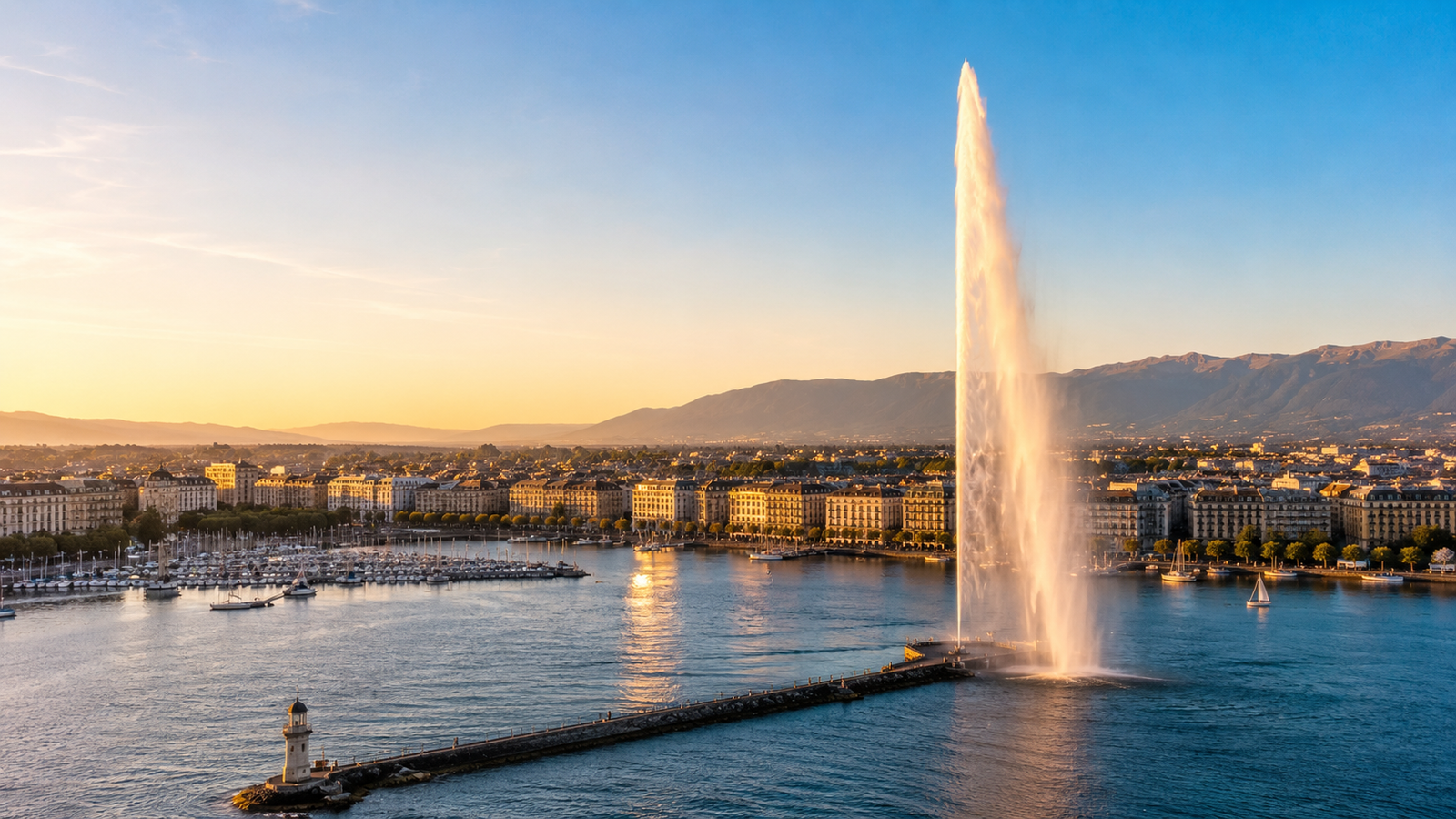
Few landmarks are as closely linked to a city as the Jet d’Eau is to Geneva. Rising dramatically above Lake Geneva, the towering fountain has become the visual signature of Switzerland’s second-largest city. Whether arriving by train, boat, airplane, or simply walking through the city center, visitors eventually find themselves drawn toward the immense plume of water that dominates Geneva’s skyline.
Yet the Jet d’Eau is more than a fountain. The surrounding waterfront area forms one of the city’s most vibrant public spaces, where promenades, parks, harbor views, historic districts, and international Geneva converge along the edge of the lake.
For first-time visitors, the Jet d’Eau Area offers one of the best introductions to Geneva. It combines history, engineering, natural beauty, and urban life in a setting that captures the character of the city itself.
A Landmark Born by Accident
The story of the Jet d’Eau begins not as a tourist attraction, but as an industrial solution.
In 1886, Geneva operated a hydraulic power system that supplied energy from the Rhône River to local workshops and watchmakers. When businesses stopped operating in the evening, excess water pressure had to be released. Engineers created a discharge valve that sent water high into the air. What began as a practical necessity unexpectedly became a source of fascination for residents.
Recognizing its popularity, city authorities relocated the water jet to the harbor in 1891, placing it at the end of the Eaux-Vives jetty where it remains today. Over time, technological improvements transformed the fountain into the city icon known around the world.
The current version dates to 1951, when a dedicated pumping station enabled the fountain to reach its modern height of 140 meters.
The Engineering Behind the Spectacle
Visitors often admire the Jet d’Eau for its beauty, but its technical achievements are equally impressive.
The fountain propels approximately 500 liters of water per second into the air at a speed approaching 200 kilometers per hour. At any given moment, roughly seven tons of water are suspended above Lake Geneva before falling back into the harbor.
The fountain’s brilliant white appearance comes from millions of tiny air bubbles introduced into the water stream through a specialized nozzle system. This creates the distinctive luminous effect that makes the Jet d’Eau visible from great distances and under varying weather conditions.
Although many visitors assume the fountain operates automatically, it continues to be supervised and maintained by dedicated personnel who monitor weather conditions and operational safety. Strong winds or freezing temperatures can require temporary shutdowns.
Walking to the Heart of the Fountain
One of the most memorable experiences in Geneva is not simply viewing the Jet d’Eau from afar but approaching it directly.
A pedestrian-accessible jetty extends into the lake, allowing visitors to walk toward the fountain itself. As the walkway approaches the water column, the sound intensifies and a fine mist fills the air. Depending on wind direction, visitors may leave with a light spray of lake water—a surprisingly enjoyable part of the experience.
Standing near the base offers a completely different perspective from the views available elsewhere along the shoreline. The immense scale of the fountain becomes apparent, and the surrounding cityscape appears framed by water, sky, and mountains.
The pier has become one of Geneva’s most photographed locations and remains a favorite spot for visitors seeking panoramic views across the harbor.
A Front-Row View of Lake Geneva
The Jet d’Eau Area occupies one of the most scenic sections of Geneva’s waterfront.
The fountain stands near the point where Lake Geneva narrows toward the Rhône River, creating broad views across the lake and toward the surrounding Alpine landscape. On clear days, distant mountain ranges provide a dramatic backdrop behind the fountain’s towering column of water.
The lakeside promenade along Quai Gustave-Ador attracts walkers, runners, cyclists, and photographers throughout the year. Benches overlooking the harbor encourage visitors to slow down and appreciate one of Switzerland’s most celebrated urban landscapes.
Morning light often creates mirror-like reflections on the lake, while evenings bring golden colors that illuminate both the fountain and the surrounding waterfront.
Connecting Geneva’s Most Famous Districts
The Jet d’Eau Area occupies a strategic position between several of Geneva’s most important neighborhoods.
To the west lies the city center and historic harbor. Across the water, visitors can explore the Old Town, home to centuries of history, narrow streets, and cultural landmarks. Nearby parks and lakeside gardens provide green spaces within walking distance of the fountain. The area also serves as a gateway to boat excursions that explore Lake Geneva from the water.
Because many of Geneva’s major attractions are concentrated around the lake, the Jet d’Eau often becomes both a starting point and a reference point for exploring the city.
Its visibility from numerous locations helps visitors orient themselves while discovering Geneva’s diverse neighborhoods.
A Symbol of International Geneva
Beyond its engineering and beauty, the Jet d’Eau has acquired symbolic significance.
Geneva is widely recognized as a center of diplomacy, humanitarian organizations, finance, science, and international cooperation. Over time, the fountain has come to represent the city’s dynamism, openness, and global identity. Official tourism organizations frequently describe it as the emblem of Geneva itself.
Special illuminations occasionally transform the fountain into a platform for awareness campaigns, international events, and humanitarian causes. These lighting displays reinforce the fountain’s role as more than a tourist attraction; it serves as a public symbol visible across the city.
This connection between civic identity and public space helps explain why the Jet d’Eau continues to resonate with residents as strongly as it does with visitors.
Experiencing the Area Through the Seasons
The character of the Jet d’Eau Area changes throughout the year.
Spring brings blooming lakeside gardens and increasing boat activity. Summer transforms the waterfront into one of Geneva’s busiest gathering places, with visitors strolling along the promenades and enjoying long evenings by the lake.
Autumn introduces softer light and colorful foliage along the shoreline, while winter often reveals snow-covered Alpine peaks beyond the city. Even when weather conditions occasionally require the fountain to be turned off, the waterfront remains one of Geneva’s most attractive public spaces.
Regardless of season, the combination of water, architecture, mountains, and public life creates a setting that reflects the essence of Geneva.
For many travelers, the Jet d’Eau Area becomes more than a sightseeing stop. It is where they first understand the city’s relationship with Lake Geneva, where they witness one of Switzerland’s most famous engineering achievements, and where they experience the blend of natural beauty and international character that defines Geneva. Long after leaving the city, it is often the image of the Jet d’Eau rising above the lake that remains the lasting memory.