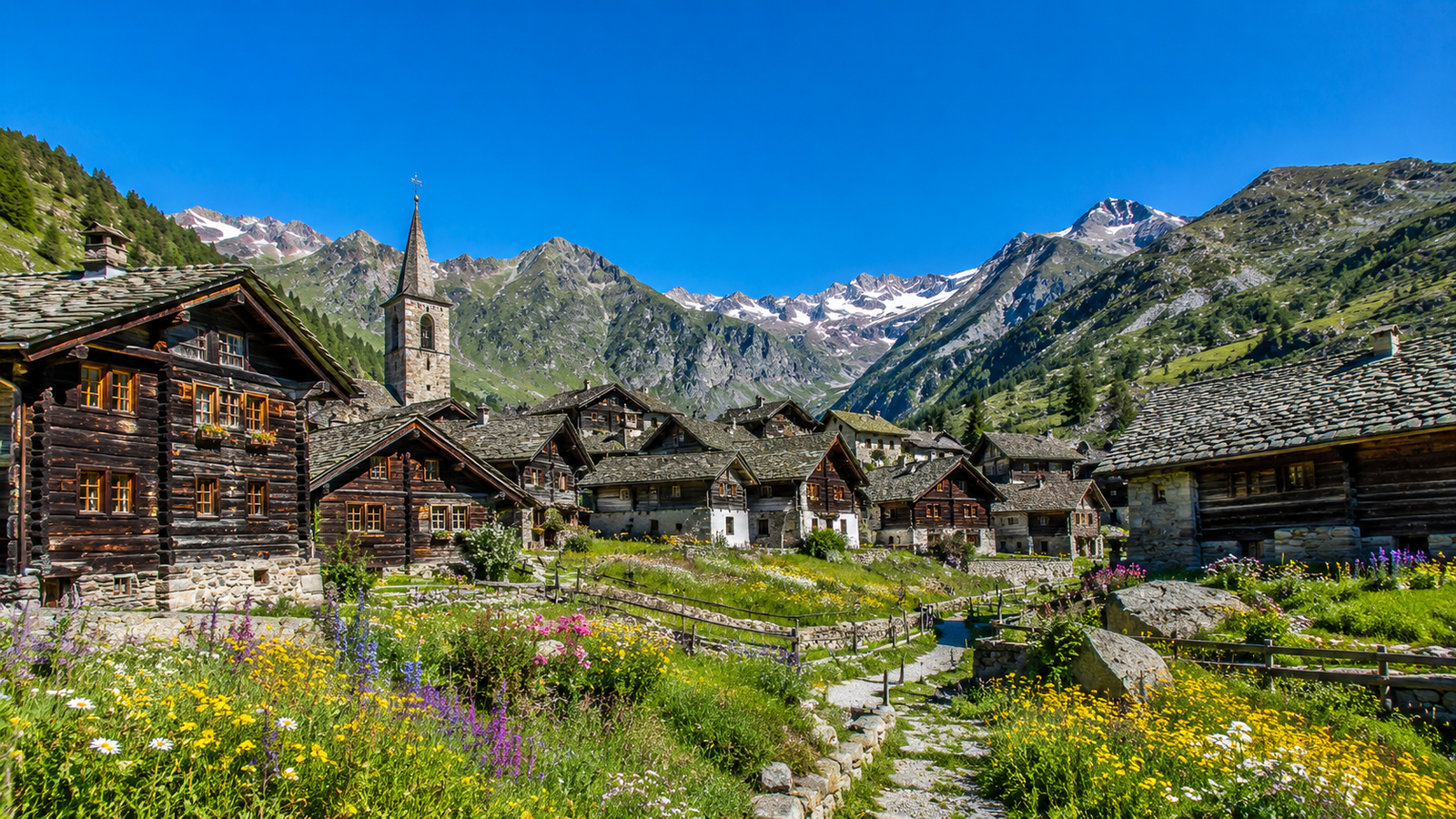
Bosco Gurin Heritage Village, Bosco Gurin, Switzerland
Bosco Gurin: Discover Switzerland’s Living Walser Heritage in the Alps of Ticino
High above the valleys of Ticino, where mountain peaks frame a landscape shaped by centuries of resilience, Bosco Gurin offers one of Switzerland’s most distinctive cultural experiences. Unlike many alpine villages known primarily for scenery or ski slopes, Bosco Gurin stands apart as a place where language, architecture, traditions, and everyday life continue to reflect a remarkable historical legacy.
Situated in the upper Maggia Valley at approximately 1,500 meters above sea level, Bosco Gurin is the highest permanently inhabited village in the Canton of Ticino. More importantly, it is the only remaining Walser settlement in the canton, preserving a unique cultural identity that traces its origins to medieval migrations from the Valais region. Today, visitors discover not only dramatic mountain scenery but also one of the most fascinating living heritage communities in Switzerland.
A Village Founded by Alpine Settlers
The story of Bosco Gurin begins during the 13th century when Walser settlers crossed high mountain passes in search of new land. These German-speaking communities, originally from the Upper Valais, established settlements throughout parts of the Alps.
Historical records and local heritage sources identify Bosco Gurin as a settlement founded by Walser colonists in 1253. The isolated location helped preserve traditions that disappeared elsewhere over time. While surrounding communities largely adopted Italian-speaking cultures, Bosco Gurin maintained its distinctive identity for centuries.
One of the most extraordinary aspects of the village is the survival of “Ggurijnartitsch,” a Walser German dialect still spoken by some residents today. This linguistic heritage represents a rare cultural treasure and serves as a living connection to the community’s medieval origins.
Architecture That Tells a Story
Walking through Bosco Gurin feels like entering an open-air museum.
Traditional Walser houses constructed from timber and stone dominate the village landscape. Weathered wooden buildings, elevated storage structures, and sturdy alpine homes reveal how generations adapted to life in a challenging mountain environment. Unlike reconstructed heritage attractions, Bosco Gurin remains a functioning community where historic architecture continues to serve practical purposes.
The village’s character is shaped by these distinctive buildings, many of which preserve construction techniques passed down through generations. The combination of stone foundations and timber upper levels reflects architectural traditions developed specifically for alpine conditions.
Every narrow lane, barn, and traditional dwelling contributes to an atmosphere rarely found in modern Europe. Rather than being frozen in time, Bosco Gurin demonstrates how heritage and contemporary village life can coexist.
Inside the Walser Museum
No visit to Bosco Gurin is complete without exploring the Walser Museum, one of the community’s most important cultural institutions.
Opened in 1938, the museum occupies one of the village’s oldest surviving houses. Scientific dating has linked the building to the year 1386, making it among the oldest preserved rural structures in Switzerland. The museum preserves the traditional layout of a Walser household and showcases everyday objects that reveal how people lived in the high Alps for centuries.
Visitors can view historical furniture, agricultural tools, household items, textiles, religious objects, and traditional clothing. Together, these collections tell the story of a mountain community that survived through farming, craftsmanship, and strong communal traditions.
The museum provides valuable context for understanding Bosco Gurin beyond its scenic beauty. It illustrates how geography, climate, and cultural identity shaped the lives of generations of Walser inhabitants.
Exploring the Walser Landscape
The surrounding mountains are an essential part of the Bosco Gurin experience.
Numerous hiking routes begin directly from the village and lead visitors into alpine meadows, forests, and panoramic viewpoints. The region offers opportunities to explore the landscapes that sustained Walser communities for centuries. Popular routes connect visitors with traditional alpine pastures, mountain lakes, and high-altitude viewpoints overlooking the Maggia Valley.
The Sentiero Walser, or Walser Trail, allows travelers to learn about local history while moving through the landscape. Interpretive information along the route highlights the relationship between the settlers and the environment that shaped their culture.
Families can also enjoy educational trails designed to introduce visitors to local nature and history in an engaging way. Throughout the warmer months, Bosco Gurin serves as a gateway to some of Ticino’s most peaceful alpine scenery.
Winter in Switzerland’s Highest Ticino Village
When snow arrives, Bosco Gurin transforms into a traditional alpine winter destination.
The village’s ski area caters largely to families and recreational skiers seeking a quieter alternative to Switzerland’s major resorts. Snow-covered wooden chalets and mountain landscapes create an atmosphere that feels intimate and authentic rather than commercialized.
Snowshoeing routes and winter hiking opportunities allow visitors to experience the region’s natural beauty beyond the ski slopes. The combination of cultural heritage and winter recreation gives Bosco Gurin a distinctive appeal throughout the colder months.
Even during winter, the village retains its historic character, with centuries-old buildings standing against a backdrop of snow-covered peaks.
Culture Preserved Through Community
What makes Bosco Gurin particularly remarkable is that its traditions are not simply displayed for tourists—they remain embedded within community life.
Local organizations continue to preserve Walser customs, language, architecture, and cultural practices. Heritage initiatives, museums, educational projects, and community events help ensure that the village’s identity survives in a rapidly changing world.
Bosco Gurin has become an important symbol of cultural diversity within Switzerland, demonstrating how regional identities contribute to the country’s broader national heritage.
The village also highlights the importance of safeguarding minority languages and traditions that might otherwise disappear.
Reaching Bosco Gurin
Despite its remote mountain setting, Bosco Gurin is accessible through Switzerland’s efficient transportation network.
Travelers can reach the village from Locarno using public transportation, typically involving a connection through Cevio before continuing into the upper Maggia Valley. Scenic mountain roads also provide access for visitors arriving by car.
The journey itself becomes part of the experience as landscapes gradually transition from southern Ticino valleys to high alpine terrain.
Why Bosco Gurin Remains Special
Many destinations claim authenticity, but Bosco Gurin genuinely delivers it.
This is not a recreated heritage village or a carefully staged tourist attraction. It is a living alpine community where medieval migration history, rare linguistic traditions, distinctive architecture, and mountain culture remain visible in everyday life.
Visitors come for different reasons. Some are drawn by the Walser story. Others arrive for hiking, photography, or winter recreation. Many simply seek a quieter side of Switzerland beyond famous cities and major resorts.
What they discover is a village that offers something increasingly rare in modern travel: a genuine connection to centuries of human history set within one of the most beautiful mountain landscapes in the Swiss Alps. Beneath the peaks of Ticino, Bosco Gurin continues to preserve a cultural legacy that remains as enduring as the mountains themselves.