Lake St. Moritz, St. Moritz, Switzerland
Lake St. Moritz: The Alpine Lake That Shaped Switzerland’s Legendary Resort Destination
There are few places in the Alps where nature and international prestige are as closely connected as they are at Lake St. Moritz. Situated in the heart of the Upper Engadin Valley in southeastern Switzerland, the lake is far more than a scenic backdrop to one of the world’s most famous mountain resorts. It is the defining landscape feature that helped transform St. Moritz from a small alpine settlement into a globally recognized destination for tourism, winter sports, and mountain recreation.
Throughout the year, Lake St. Moritz serves as the visual centerpiece of the Engadin. Surrounded by forests, snow-capped peaks, elegant hotels, and historic mountain railways, the lake offers visitors a unique blend of natural beauty and cultural significance. Whether viewed from a lakeside promenade in summer or across a frozen surface in winter, it remains one of Switzerland’s most recognizable alpine landscapes.
Where the Engadin Valley Meets the Water
Lake St. Moritz lies at an elevation of approximately 1,768 meters (5,801 feet) above sea level, making it one of the highest large lakes in Switzerland. It forms part of the chain of Engadin lakes that includes Lake Silvaplana, Lake Champfèr, and Lake Sils, all connected through the Inn River system.
Despite its international reputation, the lake itself is relatively compact, allowing visitors to appreciate its scenery from nearly every shoreline vantage point. The surrounding mountains create a dramatic amphitheater of granite peaks and forested slopes, while the open valley allows sunlight to illuminate the landscape throughout much of the year.
The lake’s position in the Upper Engadin contributes to one of the region’s most distinctive characteristics: an unusually high number of sunny days combined with a cool alpine climate. This combination has helped establish St. Moritz as a year-round destination rather than solely a winter resort.
The Lake Behind a Tourism Revolution
The story of modern alpine tourism cannot be told without mentioning St. Moritz. During the nineteenth century, the village gained recognition among European travelers seeking mountain air, mineral springs, and restorative holidays.
Lake St. Moritz quickly became central to that experience. Visitors arriving from major European cities were greeted by sparkling water framed by towering mountains, creating a setting unlike anything found in urban Europe. As rail connections improved and mountain tourism expanded, the lake became an internationally recognized symbol of Swiss alpine travel.
The region later played a pioneering role in winter tourism. St. Moritz hosted the Winter Olympic Games twice and helped popularize winter sports on a global scale. Throughout these developments, Lake St. Moritz remained at the center of local life and international attention.
Today, the lake continues to define the identity of the resort town, appearing in countless photographs, travel campaigns, and promotional materials associated with Switzerland.
A Summer Destination Beyond the Luxury Image
Although St. Moritz is often associated with winter sports and luxury travel, the warmer months reveal a completely different side of the lake.
During summer, the shoreline becomes a hub for walking, cycling, sailing, and outdoor recreation. A well-maintained path circles much of the lake, offering easy access for visitors seeking scenic strolls with mountain views. The route provides constantly changing perspectives of the surrounding landscape, from elegant lakeside hotels to quiet natural sections bordered by forests and meadows.
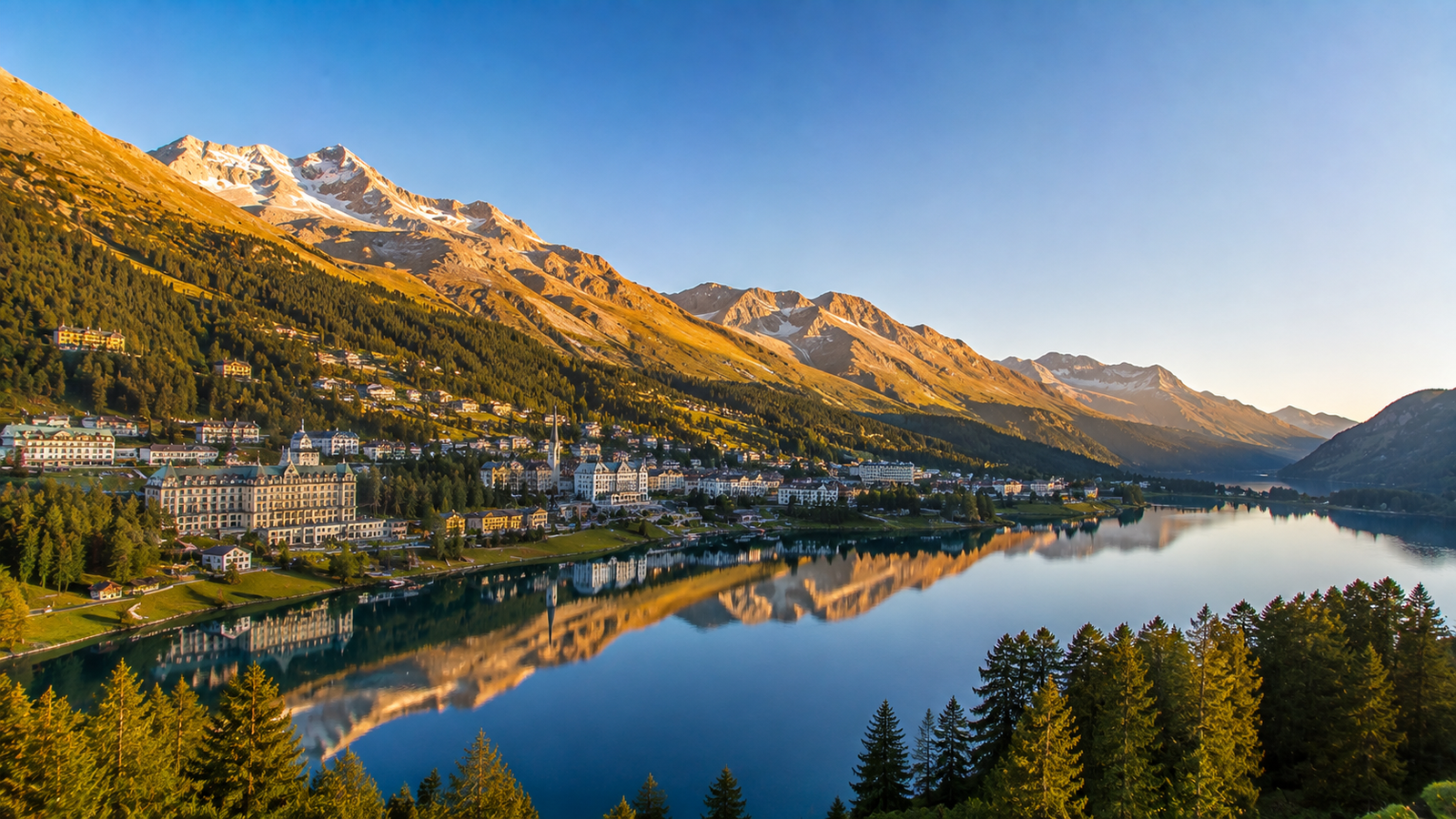
The lake is particularly popular among photographers during the early morning and evening hours. Calm conditions frequently create mirror-like reflections of the surrounding peaks, producing some of the most memorable alpine scenes in the Engadin.
Mountain trails extending from St. Moritz connect visitors with nearby viewpoints overlooking the lake. Routes toward Muottas Muragl, Corviglia, and other elevated locations provide sweeping panoramas that reveal the entire Engadin lake district.
For many travelers, summer at Lake St. Moritz is less about luxury and more about access to one of Switzerland’s most beautiful mountain landscapes.
When the Lake Becomes a Winter Arena
Few alpine lakes undergo as dramatic a seasonal transformation as Lake St. Moritz.
As temperatures drop during winter, the lake typically freezes and becomes a remarkable outdoor venue. Rather than remaining an inaccessible sheet of ice, it turns into a temporary extension of the town itself.
Various winter activities take place on the frozen surface, reflecting a tradition that has evolved over generations. Walking routes, recreational areas, and seasonal events bring life to the lake during the coldest months.
Among the most internationally known events associated with the frozen lake is White Turf, a series of horse races conducted on snow-covered ice. The event has become one of the most distinctive sporting spectacles in Switzerland, attracting visitors from around the world.
The frozen lake has also hosted polo matches and other winter competitions, demonstrating how the Engadin has creatively adapted its natural environment to support unique sporting traditions.
For first-time visitors, the sight of horse racing and winter activities taking place on a frozen alpine lake is often one of the most unforgettable experiences in Switzerland.
A Gateway to the Engadin Landscape
One of Lake St. Moritz’s greatest strengths is its location within a broader network of natural attractions.
To the southwest lie the larger lakes of Silvaplana and Sils, known for sailing, hiking, and expansive mountain scenery. To the north and east, valleys and mountain railways provide access to high-altitude viewpoints and alpine wilderness.
The lake also serves as an important starting point for exploring the region’s cultural heritage. Traditional Engadin villages, historic churches, local museums, and centuries-old architectural styles can all be found within a short distance.
Travelers who venture beyond the resort center often discover a landscape shaped as much by local traditions as by tourism. Stone houses decorated with sgraffito designs, alpine farms, and historic mountain settlements remain an essential part of the region’s identity.
Lake St. Moritz therefore functions not only as a destination in its own right but also as a gateway to one of Switzerland’s most culturally distinctive alpine regions.
The Light and Atmosphere of the Engadin
Artists, photographers, and writers have long been drawn to the Upper Engadin because of its exceptional light.
Lake St. Moritz plays a central role in this visual experience. Sunlight reflects from both water and snow, creating a brightness that can transform the appearance of the landscape throughout the day. Morning often brings soft colors and calm reflections, while afternoon light highlights the surrounding peaks and forests.
During autumn, golden larch forests create striking contrasts against the deep blue waters of the lake. Winter introduces an entirely different palette of white snow, crystalline ice, and brilliant blue skies. Spring gradually reveals fresh alpine vegetation, while summer showcases lush green meadows surrounding the shoreline.
Few destinations in Switzerland display such dramatic seasonal variety within a single landscape.
Experiencing Lake St. Moritz for the First Time
Many visitors arrive expecting a luxury resort and leave remembering the lake itself.
Its appeal extends far beyond hotels, shopping streets, or sporting events. The lake provides a sense of place that connects every aspect of the Engadin experience. It links history with modern tourism, nature with recreation, and alpine tradition with international culture.
Whether walking along its shoreline, viewing it from a mountain summit, photographing its reflections at sunrise, or witnessing its frozen transformation in winter, visitors encounter a landscape that has helped define Switzerland’s global image for more than a century.
Lake St. Moritz is not merely a body of water in the Alps. It is the geographic heart of one of Europe’s most celebrated mountain destinations and remains one of the most iconic natural landmarks in Switzerland.