Lake Constance, Kreuzlingen, Switzerland
Lake Constance: The International Lake Where Switzerland Meets Europe
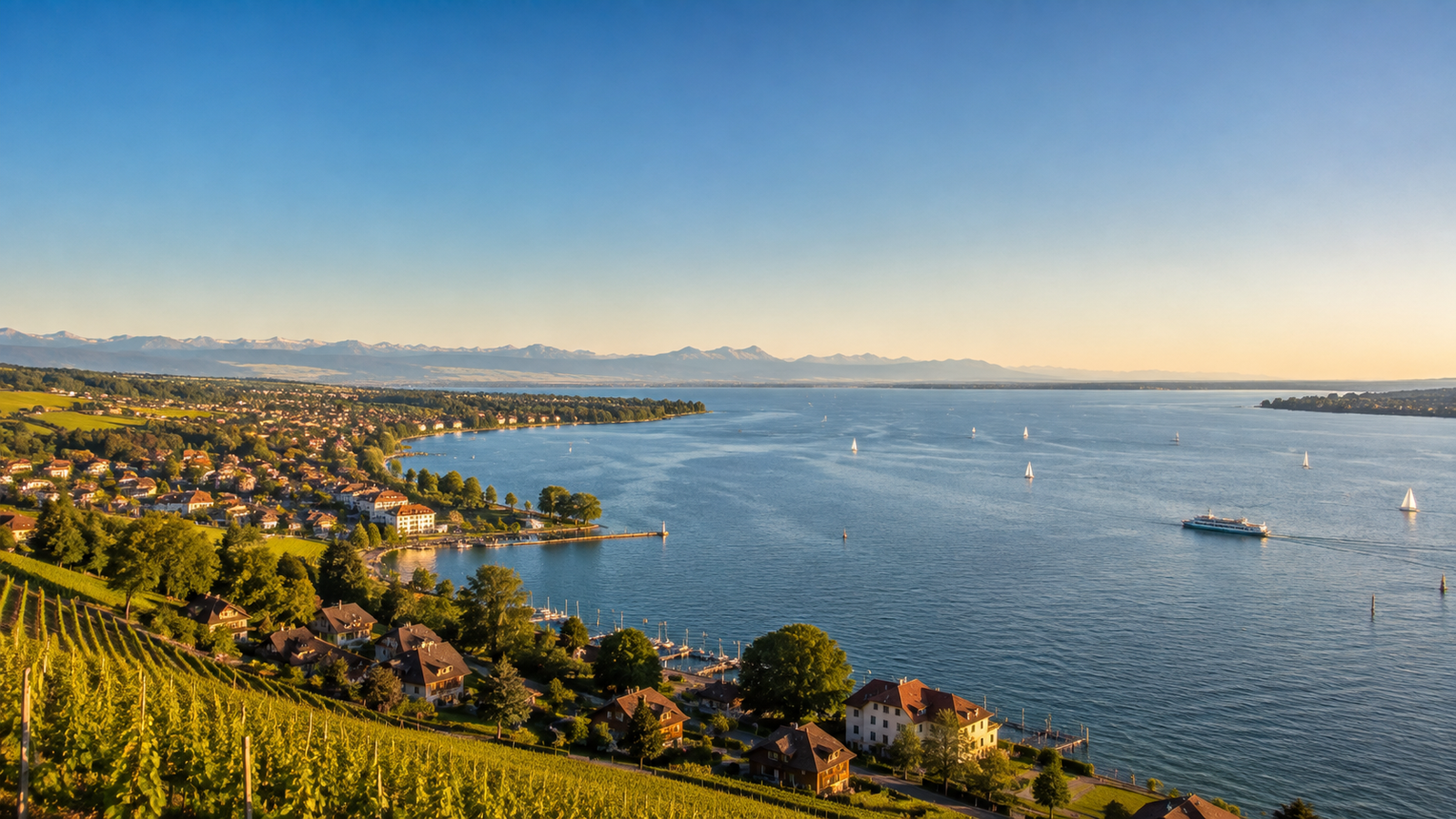
Standing on the Swiss shore of Lake Constance, it is possible to look across the water and see more than a beautiful landscape. On clear days, the horizon reveals the presence of neighboring countries, reminding visitors that this is not simply a Swiss lake but one of Europe’s most fascinating international regions.
Known as Bodensee in German, Lake Constance sits at the meeting point of Switzerland, Germany, and Austria. For centuries, the lake has connected communities through trade, transportation, culture, and daily life. Today, it remains one of the largest freshwater lakes in Central Europe and one of the most diverse travel destinations in the Alpine region.
Unlike Switzerland’s dramatic mountain lakes, Lake Constance offers a different experience. Here, broad open water, historic towns, vineyards, cycling routes, and cultural attractions define the landscape. The result is a destination where nature and cross-border heritage come together in a uniquely European setting.
Where Geography Creates a Shared Identity
Lake Constance occupies a strategic position in northeastern Switzerland, extending into southern Germany and western Austria. Fed primarily by the Rhine River, the lake forms a vast freshwater basin that has influenced regional development for thousands of years.
The Swiss shoreline lies mainly within the canton of Thurgau and parts of St. Gallen, where lakeside communities have long benefited from their connection to international trade routes. Unlike many borders in Europe, the lake has historically functioned as a link rather than a barrier, encouraging movement and cultural exchange among neighboring regions.
This international character remains one of the lake’s defining features. Travelers can explore multiple countries in a single day while experiencing a landscape united by the same body of water.
A Different Side of Switzerland
Visitors familiar with Switzerland’s Alpine scenery are often surprised by the atmosphere surrounding Lake Constance.
Instead of steep mountain valleys and towering peaks, the region is characterized by gently rolling hills, orchards, vineyards, lakeside promenades, and historic waterfront communities. The climate is relatively mild, supporting agriculture that has shaped local culture and cuisine for generations.
Fruit orchards are particularly prominent throughout the Swiss Bodensee region. Apples, pears, and other crops thrive in the fertile landscape surrounding the lake, contributing to the area’s agricultural importance.
The combination of open water and cultivated countryside creates a setting that feels distinctly different from destinations such as the Bernese Oberland or the high Alps, yet remains unmistakably Swiss.
Kreuzlingen: Switzerland’s Gateway to the Lake
Among the most important Swiss communities on Lake Constance is Kreuzlingen.
Located directly beside the German city of Konstanz, Kreuzlingen serves as a major access point to the lake and its attractions. The city offers extensive waterfront areas, parks, walking paths, and marinas that encourage visitors to spend time along the shoreline.
One of the most distinctive aspects of Kreuzlingen is its close relationship with neighboring Konstanz. The international border passes through the urban area, creating a unique environment where visitors can move between Switzerland and Germany while remaining within a single metropolitan region.
This cross-border atmosphere reflects the broader identity of Lake Constance as a place shaped by cooperation rather than separation.
Romanshorn and the Historic Lake Connection
Further east, Romanshorn has long played a significant role in transportation across the lake.
Its harbor remains one of the largest on the Swiss side of Lake Constance and serves as an important hub for passenger vessels connecting various destinations around the shoreline. The town’s maritime heritage is closely linked to the history of navigation on the lake, which has facilitated commerce and travel for centuries.
The waterfront area provides excellent opportunities for lakeside walks, cycling, and observing daily activity on the water. Ferries, pleasure boats, and sailing vessels continue to make the harbor one of the region’s most active transportation centers.
Romanshorn also highlights how deeply the lake is integrated into everyday life for local communities.
Exploring the Lake by Boat
Few experiences capture the character of Lake Constance better than a journey across its waters.
Passenger boats connect numerous towns and attractions throughout Switzerland, Germany, and Austria, allowing visitors to experience the lake as generations of residents have done before them.
From the deck of a vessel, travelers gain a broader perspective of the region’s geography. Church towers rise above historic towns, vineyards climb sunlit hillsides, and distant Alpine peaks appear along the southern horizon.
Unlike many mountain lakes where boating is primarily recreational, navigation on Lake Constance remains an important part of regional transportation. This practical function gives boat travel an authenticity that extends beyond sightseeing.
The constantly changing shoreline ensures that no two sections of the lake feel exactly alike.
A Paradise for Cyclists
Lake Constance is internationally known for cycling.
The Bodensee Cycle Path, one of Europe’s most popular long-distance cycling routes, circles much of the lake and passes through all three bordering countries. Along the Swiss shoreline, cyclists travel through lakeside parks, vineyard landscapes, orchards, and historic towns while enjoying frequent views of the water.
The route’s relatively gentle terrain makes it accessible to a wide range of riders. Families, leisure cyclists, and experienced touring enthusiasts all find suitable sections to explore.
Because the path connects numerous communities, cycling often becomes more than a sporting activity. It serves as a way to experience the cultural diversity and changing landscapes that define the region.
Vineyards, Gardens, and Lakeside Landscapes
While the lake itself attracts most visitors, the surrounding countryside offers equally rewarding experiences.
Vineyards thrive on sunny slopes overlooking the water, particularly in areas where local microclimates support wine production. Wine-growing traditions remain an important part of regional culture, contributing to both the landscape and local gastronomy.
Public gardens, lakeside parks, and nature reserves provide opportunities to experience the area’s biodiversity. Migratory birds frequently use Lake Constance as an important stopover point, making portions of the shoreline valuable habitats for wildlife.
The interplay between agriculture, conservation, and tourism has helped preserve much of the region’s natural appeal while supporting local communities.
A Region Shaped by History
The significance of Lake Constance extends well beyond its natural beauty.
Throughout history, the lake has served as a vital crossroads for trade, religion, and political development. Medieval towns around the shoreline preserve centuries of architectural heritage, while churches, castles, and historic districts reflect the region’s long and complex past.
The lake’s strategic location ensured its importance during different periods of European history, helping shape the cultural identities of communities that continue to thrive along its shores today.
Visitors interested in history often discover that the region’s greatest attraction is not a single landmark but the way centuries of human activity remain woven into the landscape.
Experiencing the Swiss Bodensee Region
Lake Constance appeals to travelers seeking a different perspective on Switzerland. Rather than focusing on mountain summits or high-altitude adventures, the region invites exploration through its towns, waterfronts, cultural heritage, and international connections.
A morning may begin with a lakeside walk in Kreuzlingen, continue with a boat journey across international waters, and end among vineyards overlooking the shoreline. Along the way, travelers encounter influences from multiple countries while remaining rooted in the distinctive character of Eastern Switzerland.
The lake’s enduring appeal comes from this remarkable balance. It is at once Swiss and international, natural and cultural, historic and contemporary. More than a border lake, Lake Constance is a shared landscape that demonstrates how geography can bring nations together while creating one of Europe’s most rewarding travel destinations.