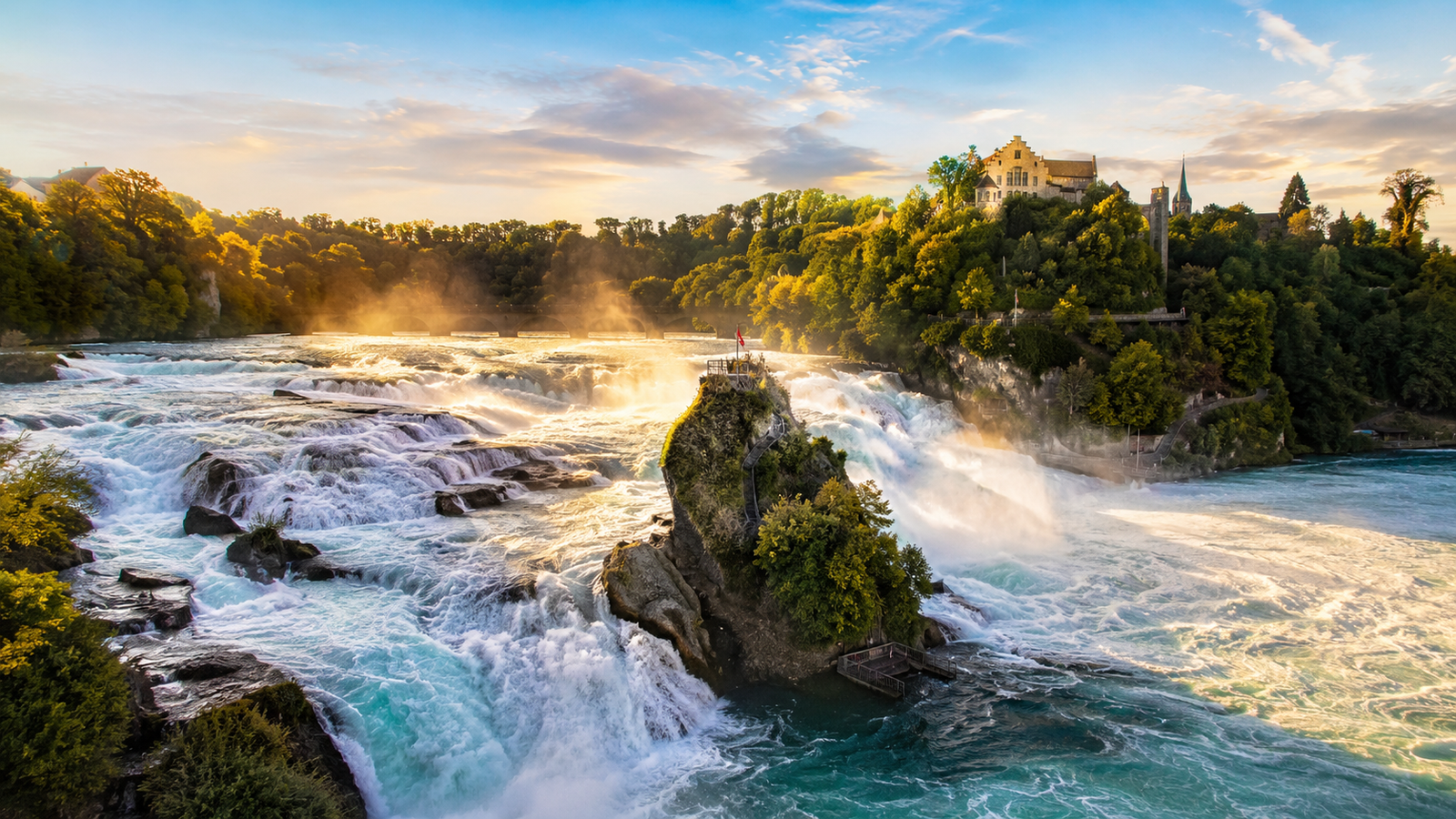
Rhine Falls (Rheinfall), Schaffhausen, Switzerland
Rhine Falls: Switzerland’s Thundering Natural Wonder on the Rhine River
Few natural landmarks in Switzerland create an impression as immediate and powerful as Rhine Falls. As the Rhine River surges over a broad rocky ledge near the town of Schaffhausen, the landscape transforms into a spectacle of rushing water, mist, and sound. Travelers often arrive expecting a scenic waterfall and leave having experienced one of Europe’s most memorable natural attractions.
Unlike waterfalls hidden deep within remote mountain valleys, Rhine Falls is remarkably accessible. Visitors can stand close enough to feel the spray, observe the force of the river from multiple viewpoints, and explore historic landmarks overlooking the cascade. The combination of natural beauty, cultural heritage, and visitor-friendly infrastructure has made Rhine Falls one of Switzerland’s most visited destinations.
What distinguishes the site is not merely its visual appeal but the way it allows visitors to engage directly with the landscape. Whether viewed from a riverside platform, a panoramic trail, or a boat on the water itself, the falls reveal a different perspective at every turn.
Where the Rhine Reveals Its Power
Rhine Falls lies along the High Rhine, the section of the Rhine River that flows westward from Lake Constance toward Basel. The waterfall is situated near the communities of Neuhausen am Rheinfall and Laufen-Uhwiesen in northern Switzerland, close to the German border.
The river narrows as it approaches a rocky formation that survived geological changes during the Ice Age. When the water reaches this natural obstacle, it plunges over the edge, creating the dramatic cascade visitors see today.
Surrounded by forested slopes, riverside paths, historic buildings, and observation platforms, the area combines natural scenery with cultural landmarks in a way rarely found at major waterfalls. The landscape remains attractive throughout the year, but the character of the falls changes with seasonal water levels and weather conditions.
A Landscape Shaped by Ancient Forces
The story of Rhine Falls stretches back thousands of years. During the last Ice Age, glaciers reshaped much of northern Switzerland. As ice retreated and river systems evolved, the Rhine gradually established its present course.
Different rock formations along the river eroded at varying rates. Harder rock layers resisted erosion while softer material wore away more quickly. These geological processes eventually created the natural drop that became Rhine Falls.
The prominent rock formations visible in the middle of the waterfall are reminders of this ancient geological history. These rocky outcrops have become some of the most recognizable features of the site and contribute significantly to its distinctive appearance.
Over the centuries, artists, writers, travelers, and scientists have been drawn to the falls. Long before modern tourism developed, visitors journeyed to the region to witness the remarkable force of the Rhine River.
First Impressions at the Waterfall
The experience of visiting Rhine Falls begins long before reaching the water’s edge. The sound of rushing water gradually grows louder as visitors approach, creating anticipation before the waterfall comes fully into view.
Once visible, the falls dominate the landscape. Water spreads across a wide section of the river before crashing over the rocky ledge below. Rising mist catches sunlight throughout the day, often creating dramatic visual effects above the river.
Observation platforms positioned near the waterfall provide exceptionally close views. From some locations, visitors can watch the water surge past only a short distance away. The combination of movement, sound, and scale creates a sensory experience that photographs alone rarely capture.
The falls appear different depending on weather conditions, river flow, and season. Bright summer days highlight the sparkling water, while overcast conditions can lend the site a dramatic atmosphere.
Castle Laufen and Historic Perspectives
One of the most significant landmarks overlooking Rhine Falls is Castle Laufen. Positioned above the waterfall on the southern bank, the historic structure provides panoramic views of the river and surrounding landscape.
Visitors can explore pathways and viewing terraces connected to the castle grounds. These routes lead to several observation points that offer striking perspectives of the falls from varying elevations.
The castle contributes historical depth to the destination. Its presence reflects centuries of human settlement and strategic importance along the Rhine River. Today, it serves as an integral part of the visitor experience, linking cultural heritage with natural scenery.
From the castle side, travelers gain a broader understanding of the waterfall’s scale and the geography that shaped it.
Getting Closer to the Water
One of the defining attractions at Rhine Falls is the opportunity to experience the waterfall from the river itself.
Boat excursions operate on the water near the falls, providing views unavailable from the shore. Depending on the route selected, visitors can travel across the river, approach the central rock formations, or simply enjoy panoramic sightseeing from the water.
The boat journeys reveal details that are difficult to appreciate from land. The immense force of the current, the scale of the surrounding cliffs, and the dramatic movement of water become even more apparent.
For many travelers, stepping aboard a boat transforms a sightseeing stop into an unforgettable adventure.
Experiences Beyond the Main Viewpoints
Although the waterfall is the primary attraction, the surrounding area offers additional opportunities for exploration.
Walking trails follow portions of the river and connect different viewpoints. These paths allow visitors to experience the landscape from multiple angles while enjoying forest scenery and riverside environments.
Photography remains one of the most popular activities. Early morning and late afternoon often provide attractive lighting conditions, while changing weather can create unique visual effects.
Families, nature enthusiasts, and casual travelers all find opportunities to enjoy the destination at their own pace. Some visitors spend only a few hours at the falls, while others combine the attraction with a broader exploration of the Schaffhausen region.
Seasonal Character of Rhine Falls
Rhine Falls remains open to visitors throughout the year, but each season offers a different atmosphere.
Spring often brings increased river flow as snowmelt from Alpine regions contributes to the Rhine’s volume. During this period, the waterfall can appear especially powerful.
Summer attracts large numbers of visitors who enjoy pleasant weather, extended daylight hours, and boat excursions on the river.
Autumn introduces colorful foliage along the riverbanks, adding warm tones to the landscape and creating excellent photography opportunities.
Winter offers a quieter experience. Frost, mist, and seasonal weather conditions can transform the scenery into a striking riverside panorama. While the environment changes dramatically, the falls remain an impressive sight.
Reaching Rhine Falls
Accessibility is one of the attraction’s greatest advantages.
Rhine Falls is well connected to Switzerland’s transportation network and can be reached conveniently by train, public transit, or car. Railway stations near the waterfall provide easy access for travelers arriving from Zurich, Schaffhausen, and other Swiss cities.
Well-marked walking routes guide visitors from transportation hubs to the main viewing areas. This convenience makes Rhine Falls a popular destination for day trips as well as longer regional itineraries.
Because the attraction is located in northern Switzerland, many international visitors include it as part of broader journeys through the country.
Why Rhine Falls Continues to Inspire
Switzerland is celebrated for alpine peaks, pristine lakes, and mountain railways, yet Rhine Falls demonstrates that some of the country’s most remarkable landscapes are found beyond the high mountains. The waterfall combines geological history, river dynamics, cultural heritage, and accessible adventure in a single destination.
Travelers return not only for the views but for the experience of witnessing one of nature’s most powerful displays at close range. The thunder of the water, the rising mist, the historic surroundings, and the ever-changing character of the river create lasting memories that remain long after the visit ends.