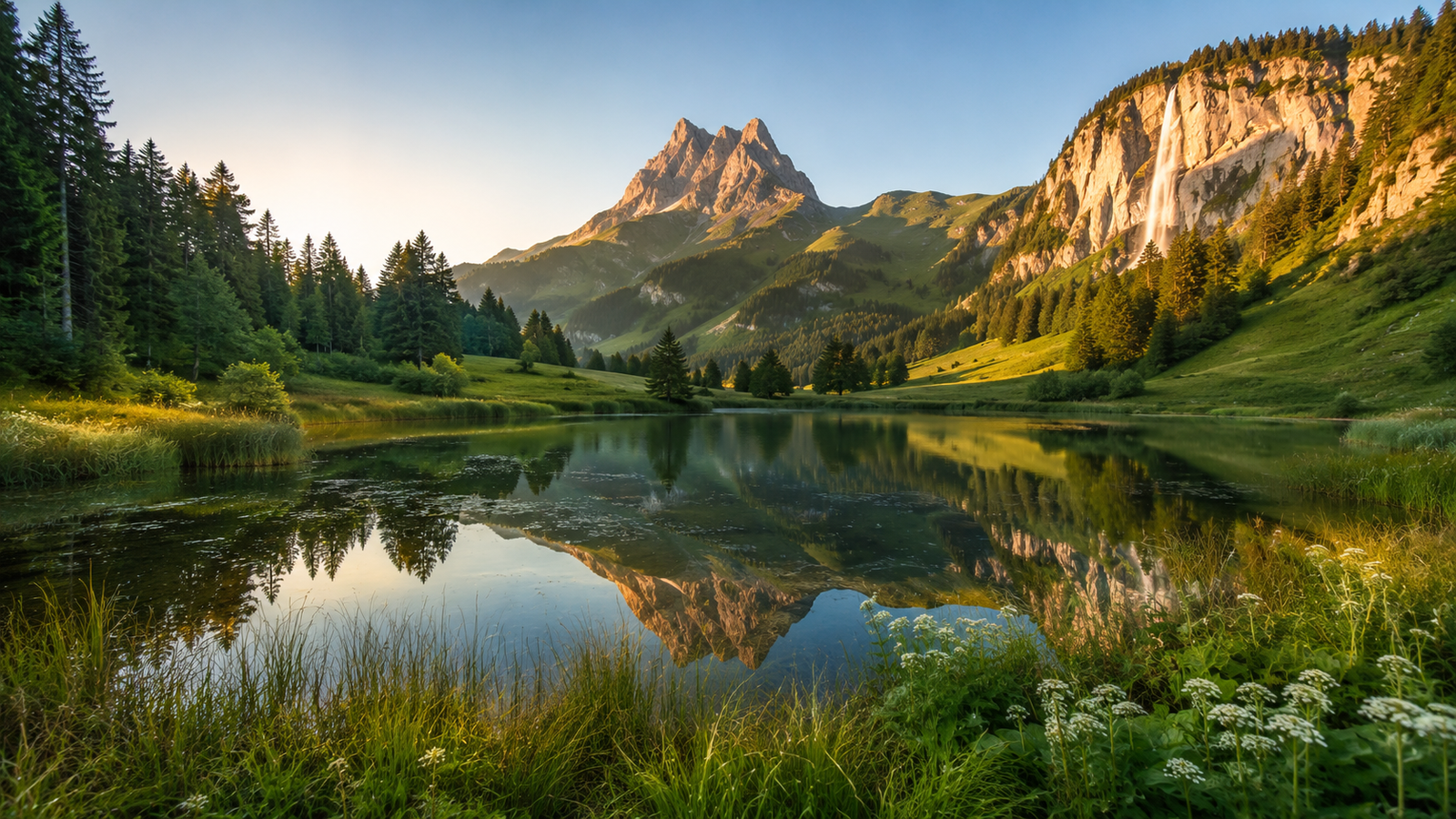
Lake Lauenen, Lauenen, Switzerland
Lake Lauenen: Discovering One of Switzerland’s Most Peaceful Alpine Nature Reserves
Not every famous Swiss lake owes its reputation to dramatic mountain reflections or bustling resort towns. Some are celebrated for something increasingly rare in modern travel: tranquility.
Lake Lauenen, known locally as Lauenensee, lies at the southern end of the Lauenen Valley in the Bernese Oberland, a short distance from Gstaad. Protected within the nationally significant Gelten-Iffigen nature reserve, the lake is surrounded by wetlands, forests, waterfalls, and Alpine peaks that create one of the most ecologically important landscapes in western Switzerland. At an elevation of approximately 1,381 meters, it offers visitors a chance to experience a quieter side of the Swiss Alps where conservation takes precedence over development.
While nearby Gstaad is internationally known for luxury tourism, Lake Lauenen presents a different perspective on the region—one centered on nature, hiking, wildlife, and the enduring appeal of an unspoiled mountain valley.
A Lake at the Heart of a Protected Landscape
The story of Lake Lauenen is inseparable from the environment that surrounds it.
Unlike many Alpine destinations where the lake itself serves as the sole attraction, Lauenensee forms part of a much larger protected ecosystem. The Gelten-Iffigen nature reserve encompasses extensive moorlands, wetlands, forests, streams, and mountain habitats that support a diverse range of plant and animal species. Rangers regularly oversee the reserve, helping protect its fragile ecosystems while educating visitors about responsible outdoor recreation.
The lake occupies a broad section of the valley floor where reeds, marsh vegetation, and Alpine meadows blend seamlessly into the surrounding mountain scenery. This mixture of habitats creates an environment that differs noticeably from the steep-sided glacier lakes often associated with Switzerland.
Instead of dramatic cliffs dropping directly into deep water, visitors encounter a softer landscape shaped by wetlands, open spaces, and flowing streams.
The Remarkable Moorland Ecosystem
One of Lake Lauenen’s most significant features is often overlooked by first-time visitors.
The surrounding moorlands are considered nationally important and form part of a rare Alpine wetland environment. Reeds, heather, marsh vegetation, and damp meadows create ideal conditions for birds and other wildlife. Switzerland Tourism highlights the lake as an important habitat for waterfowl, with species such as mallards and moorhens regularly observed around the shoreline. The area is recognized for hosting exceptionally high-altitude breeding grounds for these birds within the Alps.
Walking through the reserve reveals a constantly changing landscape. Wooden boardwalks, lakeside paths, and open meadows allow visitors to observe the natural environment without disturbing sensitive habitats.
The conservation status of the area helps preserve the sense of wildness that defines the valley.
Waterfalls Framing the Valley
Beyond the lake itself, some of the most impressive sights are found high on the surrounding mountainsides.
The Gelten Falls, fed by mountain streams descending from the Wildhorn region, plunge dramatically through a series of rocky steps above the valley. During periods of snowmelt and after heavy rainfall, visitors may also witness the seasonal Tungelschuss waterfall, which appears on nearby cliffs and adds another layer of spectacle to the landscape.
These waterfalls contribute significantly to the character of the reserve. Their distant roar often accompanies hikers as they walk around the lake, while the sight of white water cascading down dark rock faces enhances the feeling of being immersed in a genuine Alpine wilderness.
The combination of wetlands below and waterfalls above creates a remarkable diversity of scenery within a relatively compact area.
Hiking Through a Landscape of Quiet Beauty
Lake Lauenen is one of the Bernese Oberland’s most rewarding hiking destinations, not because of extreme elevation gains or challenging terrain, but because of the atmosphere it offers.
Several well-marked routes connect the village of Lauenen with the lake and surrounding nature reserve. One of the most popular options is the circular hike around Lauenensee, which allows visitors to experience the lake from multiple perspectives while passing through wetlands, forests, and open meadow landscapes.
The route from Lauenen village to the lake is particularly appealing because it gradually transitions from traditional Alpine settlement to protected wilderness. Historic wooden chalets, pastures, and forest trails eventually give way to open views across the lake and surrounding peaks.
For more ambitious hikers, the reserve serves as a gateway to longer mountain excursions toward the Wildhorn region and neighboring Alpine valleys.
Yet many visitors find that simply walking around the lake provides more than enough reward.
Rowboats, Reflections, and Slow Travel
Unlike heavily developed recreational lakes, Lauenensee encourages a slower pace.
During the summer season, visitors can rent rowing boats and explore the calm waters from a different perspective. The experience is intentionally simple. There are no motorized activities dominating the lake, allowing the natural sounds of birds, flowing water, and wind through the trees to remain the defining soundtrack.
Photographers are drawn to the reflections of surrounding peaks and forests, particularly during the early morning hours when the water is often at its calmest. The broad valley setting creates changing light conditions throughout the day, making every visit slightly different.
The lake’s modest size contributes to its charm. Rather than overwhelming visitors with scale, it invites observation and appreciation of small details.
A Place of Local Identity
Lake Lauenen occupies a special place in regional culture.
The lake has long been associated with ideas of peace, solitude, and natural beauty. Its reputation extends beyond tourism, becoming part of local identity in the Saanenland region. A well-known song by the Bernese band Span helped introduce the lake to a broader Swiss audience, reinforcing its status as a cherished destination celebrated for its atmosphere rather than its size.
Visitors often describe the area as possessing a distinctive sense of calm. Whether attributed to the quiet landscape, the protected environment, or the isolation of the valley, the feeling is one of the qualities most frequently associated with the lake.
This cultural connection helps explain why Lauenensee remains beloved by generations of Swiss visitors.
Reaching the Lake
Despite its secluded appearance, Lake Lauenen is relatively accessible.
The lake lies approximately four kilometers south of the village of Lauenen and can be reached on foot, by bicycle, or via seasonal PostBus services. During the warmer months, a road leads toward the lake, although parking capacity is intentionally limited to protect the sensitive environment. In winter, sections of the access road close, and visitors typically reach the area on foot through the snow-covered valley.
The journey itself forms part of the experience. Whether arriving by public transportation, hiking from the village, or cycling through the valley, visitors gradually leave behind the busier world and enter a landscape where nature remains the dominant presence.
Lake Lauenen rewards those willing to slow down. There are no dramatic tourist attractions demanding attention, no crowded promenades, and no need for a carefully planned itinerary. Instead, visitors find a protected Alpine environment where wetlands, waterfalls, forests, and calm waters exist in remarkable harmony. In a country famous for grand scenery, Lauenensee stands out for something simpler and perhaps more valuable: the opportunity to experience the Swiss Alps at their most peaceful.