Carl Jung and Switzerland: The Mind Behind the Legacy
Where Psychology Meets the Swiss Landscape
Few figures are as closely associated with the exploration of the human mind as Carl Gustav Jung. While his ideas traveled far beyond Switzerland and influenced psychology, literature, religion, art, and popular culture around the world, the landscapes and culture of his homeland played a profound role in shaping his thinking.
To understand Jung’s legacy, it helps to look beyond his books and theories. His story is also a Swiss story—one rooted in lakeside villages, mountain landscapes, intellectual curiosity, and a society that valued both tradition and independent thought.
More than sixty years after his death, visitors continue to travel to Switzerland to explore the places connected to one of the twentieth century’s most influential thinkers.
A Childhood Along the Rhine
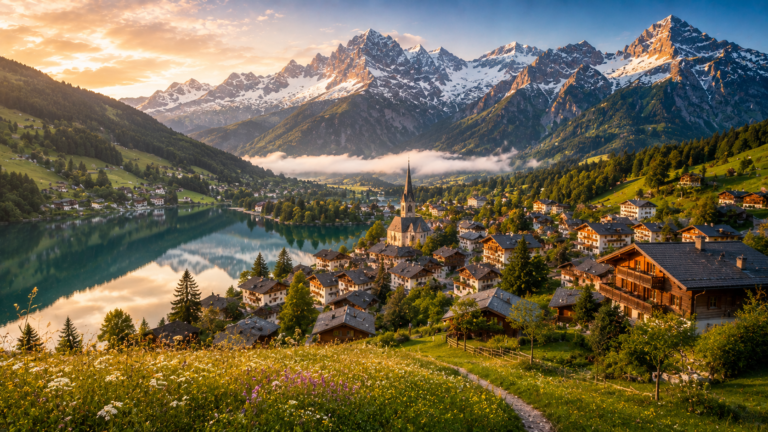
Carl Gustav Jung was born in 1875 in the village of Kesswil on the shores of Lake Constance. He spent much of his childhood in northern Switzerland, particularly in the region around Basel.
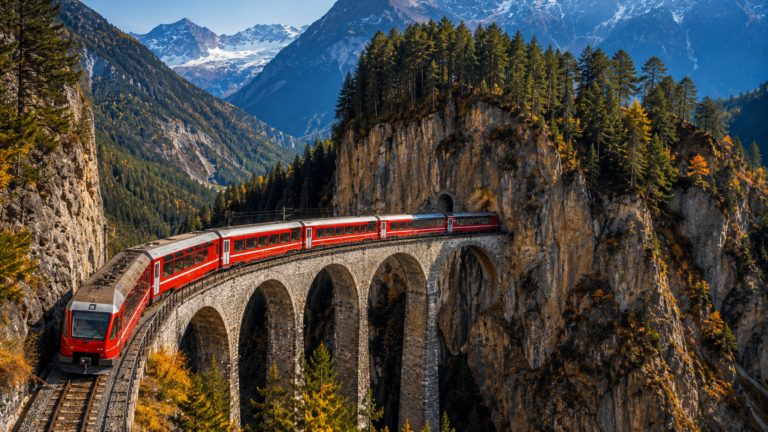
The Switzerland of Jung’s youth was undergoing rapid transformation. Railways were expanding, industries were growing, and modern ideas were reshaping society. Yet rural traditions, religious life, and local customs remained deeply woven into everyday existence.
These contrasts left a lasting impression on the young Jung. Throughout his life, he showed a fascination with the relationship between modern civilization and ancient traditions. Questions about spirituality, mythology, dreams, and human identity would later become central themes in his work.
His early experiences in Switzerland provided a foundation for the intellectual journey that followed.
The Road to Medicine and Psychiatry
Jung studied medicine at the University of Basel, one of Switzerland’s oldest academic institutions. During his studies, he became increasingly interested in psychiatry, a field that was still developing as a modern medical discipline.
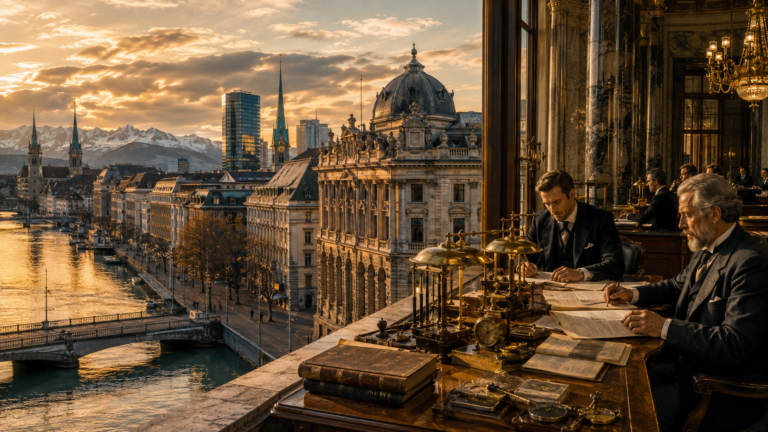
After graduation, he joined the renowned psychiatric hospital at Burghölzli Hospital near Zurich. Under the leadership of psychiatrist Eugen Bleuler, the institution became one of Europe’s most important centers for mental health research.
At Burghölzli, Jung conducted pioneering studies on word association, memory, and the unconscious mind. His research attracted international attention and established him as one of the most promising young psychiatrists of his generation.
The intellectual atmosphere of Zurich helped transform Jung from a medical doctor into a groundbreaking thinker whose ideas would eventually reach far beyond clinical practice.
A Meeting That Changed Modern Psychology
One of the defining moments in Jung’s career came through his relationship with Austrian neurologist Sigmund Freud.
The two men began corresponding in the early twentieth century and quickly developed a strong professional connection. Freud viewed Jung as a potential successor who could help expand the influence of psychoanalysis beyond Vienna.
For several years, they collaborated closely and exchanged ideas about dreams, symbolism, and the unconscious mind. However, significant differences gradually emerged.
Freud emphasized the role of sexuality in psychological development, while Jung believed the human psyche contained broader symbolic and spiritual dimensions. Their eventual separation became one of the most important turning points in the history of psychology.
The split allowed Jung to develop his own framework, which became known as analytical psychology.
The Swiss Roots of Jung’s Ideas
Many of Jung’s most famous concepts were shaped by observations that extended well beyond the walls of psychiatric clinics.
Living in Switzerland exposed him to a remarkable diversity of languages, cultures, and traditions within a relatively small geographic area. The coexistence of German, French, Italian, and Romansh influences fascinated him.
Jung became deeply interested in myths, folklore, religious traditions, alchemy, and cultural symbols. He believed that recurring patterns could be found across different societies and historical periods.
This research eventually led him to develop the concept of the collective unconscious—the idea that certain symbolic patterns and psychological structures are shared by humanity as a whole.
Whether one agrees with every aspect of Jung’s theories or not, their influence on modern discussions of identity, symbolism, dreams, and creativity remains substantial.
A Home on Lake Zurich
Perhaps no location is more closely associated with Jung than Küsnacht, the lakeside community where he lived for much of his adult life.
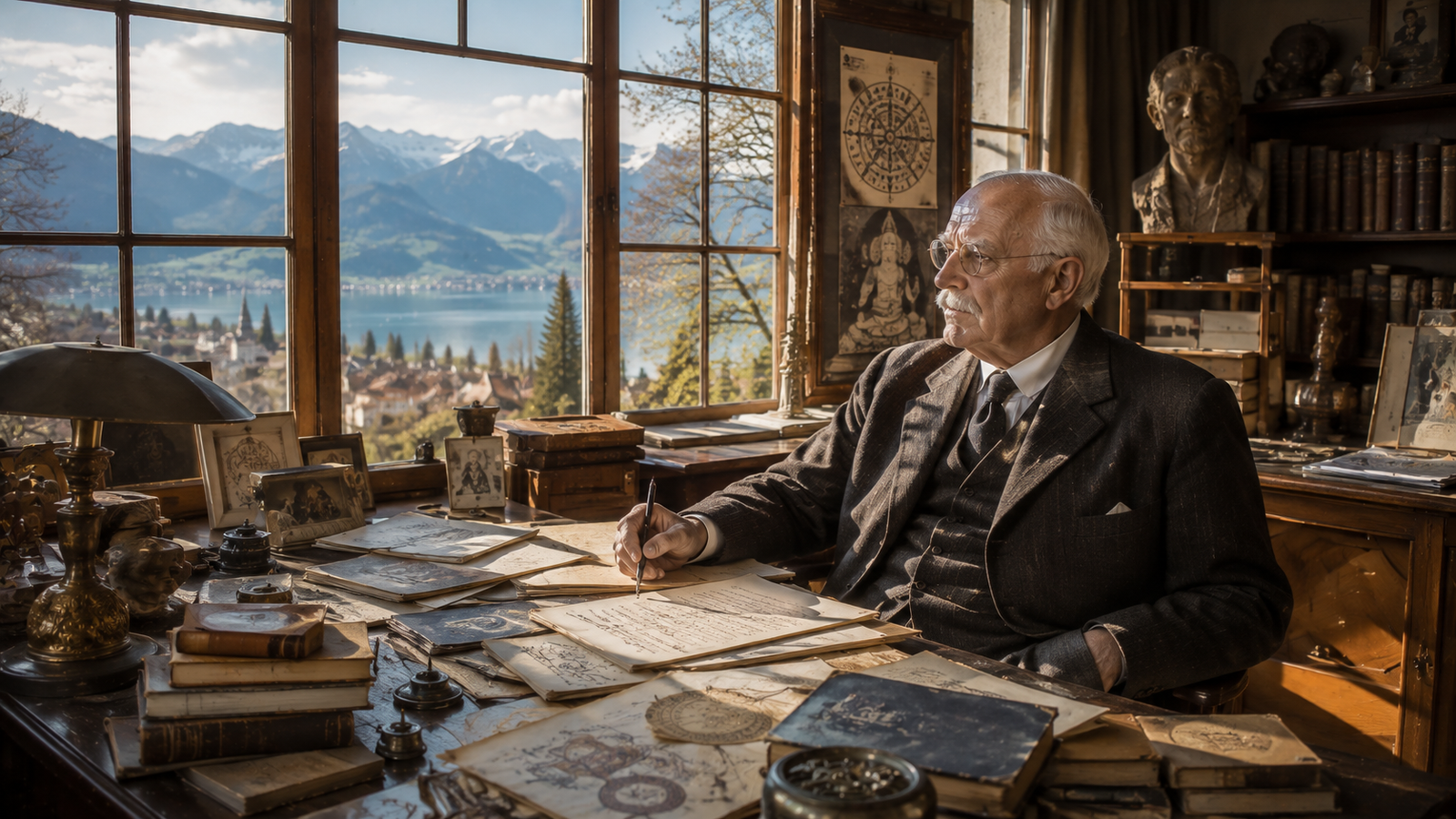
His house overlooked Lake Zurich, providing a peaceful setting for writing, reflection, and research. Here, Jung produced many of the works that would establish his international reputation.
The lake itself became a recurring presence in his life. Visitors often note how the surrounding scenery—calm waters, wooded hills, and distant mountains—reflects the contemplative atmosphere associated with his work.
Küsnacht remains an important destination for scholars, psychologists, and travelers interested in Jung’s legacy.
The Tower at Bollingen
While Jung’s home in Küsnacht served as an intellectual center, another place offered him solitude and personal reflection.
In the village of Bollingen Tower, on the shores of Lake Zurich, Jung built a stone retreat known as the Bollingen Tower.
Construction began in the 1920s, and Jung continued expanding the structure over several decades. Unlike his modern residence, the tower was intentionally simple. There was no electricity during much of its early history, and life there followed a slower rhythm.
Jung considered the tower a deeply personal space where he could think, write, and explore ideas away from public life.
Today, the tower occupies an almost mythical place within Jungian history. It symbolizes his lifelong search for self-understanding and personal transformation.
Beyond Psychology
Although Jung is primarily remembered as a psychologist, his influence extends into many other fields.
Writers, filmmakers, artists, historians, theologians, and educators have drawn inspiration from his ideas. Concepts such as archetypes, the shadow, individuation, and symbolic interpretation continue to appear in discussions of storytelling, personal development, and culture.
His work helped shape conversations about mythology and comparative religion long before such topics became widely studied across academic disciplines.
In Switzerland, Jung is often viewed not only as a scientific figure but also as an important cultural thinker whose ideas bridged the worlds of psychology, philosophy, and human experience.
Places That Keep the Legacy Alive
Visitors interested in Jung can still explore many locations connected to his life.
Basel offers insight into his early years and education. Zurich provides access to the institutions where his professional career developed. Küsnacht preserves connections to his family life and intellectual work. The shores of Lake Zurich reveal the landscapes that inspired much of his thinking.
Museums, archives, research centers, and educational organizations continue to preserve and study his contributions.
For travelers interested in culture, psychology, and intellectual history, these sites provide a unique perspective on Switzerland beyond its famous mountains and lakes.
A Lasting Presence in Swiss Cultural History
Carl Jung died in 1961, but his influence remains remarkably visible. His writings continue to be translated, debated, and explored by new generations around the world.
What makes his story particularly Swiss is the way it reflects characteristics often associated with the country itself: independence of thought, respect for tradition, openness to multiple perspectives, and a deep connection to landscape.
The villages, lakes, and mountains that surrounded Jung were more than scenery. They formed part of the environment that nurtured one of the most original minds of the modern era.
For anyone seeking to understand Switzerland’s cultural history, Carl Jung’s journey offers a fascinating window into how a small country helped shape ideas that continue to influence the world today.