
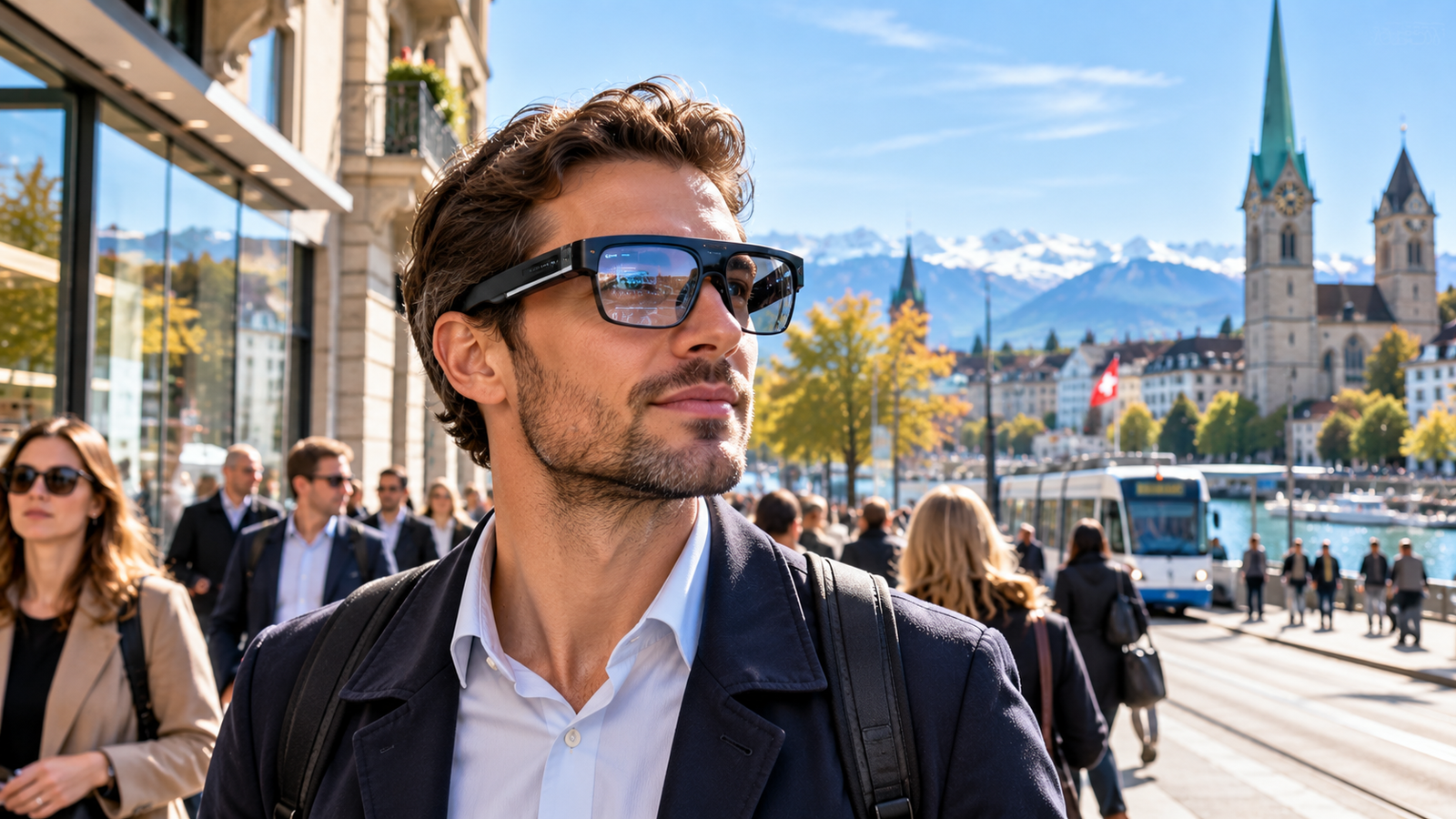
Smart Glasses Gain Ground in Switzerland as Wearable Tech Enters the Mainstream
A new wave of wearable technology is rapidly gaining traction in Switzerland, where smart glasses are emerging as one of the fastest-growing segments of the consumer electronics market.
Recent sales data from Swiss online retailer Galaxus indicate a sharp increase in demand for connected eyewear, reflecting a broader global shift toward devices that blend digital functions with everyday accessories. The trend suggests that smart glasses are moving beyond their status as niche technology products and beginning to attract a wider consumer audience.
According to Galaxus, sales of smart glasses during the first nine months of the year were more than four times higher than during the same period a year earlier. The retailer reported a 307% increase in sales and said several thousand units had been purchased between January and September. The figures provide one of the clearest indications yet that wearable technology is finding a stronger foothold in the Swiss market.
The devices combine traditional eyewear with technologies such as cameras, microphones, speakers, voice controls, and artificial intelligence features. While some models focus on communication and entertainment, others are designed to provide navigation assistance, language translation, real-time information, or accessibility functions.
The recent surge comes as major technology companies and electronics manufacturers continue investing heavily in wearable computing. Industry observers increasingly view smart glasses as a potential successor to some smartphone functions, allowing users to access information while keeping their hands free.
Several brands have emerged as leaders in the category. Galaxus reported that products from Ray-Ban, Xreal, RayNeo, Viture, and Oakley ranked among the most popular smart-glasses models purchased by Swiss consumers.
One notable feature of the Swiss sales data is the strong gender imbalance among buyers. According to the retailer, men account for approximately 87% of purchases, suggesting that adoption remains concentrated among technology enthusiasts and early adopters rather than the broader population.
Industry analysts note that many emerging consumer technologies initially attract a narrow demographic before reaching wider audiences. Smartphones, smartwatches, and fitness trackers followed similar adoption patterns before becoming mainstream products.
Beyond convenience and entertainment, advocates argue that smart glasses offer meaningful accessibility benefits. Modern models can assist individuals with visual impairments by providing spoken descriptions of their surroundings, while real-time speech transcription features can support users who are deaf or hard of hearing. These capabilities are increasingly powered by advances in artificial intelligence and machine learning.
The accessibility potential has attracted growing interest from healthcare researchers and technology developers. Wearable devices capable of interpreting surroundings and delivering contextual information may eventually support greater independence for people with disabilities.
However, the rapid spread of smart glasses has also generated concerns about privacy and surveillance.
Unlike smartphones, which are generally visible when recording, smart glasses can incorporate discreet cameras that make it more difficult for others to know when images or video are being captured. Privacy advocates argue that this creates new challenges for regulators and raises questions about consent in public spaces.
The debate has become increasingly visible in Switzerland. Lawmakers and local politicians have begun examining whether existing legal frameworks are sufficient to address technologies capable of recording audio, video, or biometric information while appearing almost indistinguishable from ordinary eyewear.
Among the proposals being discussed are requirements for visible recording indicators and stricter transparency rules regarding data collection. Supporters argue such measures would help protect personal privacy while allowing innovation to continue. Critics, however, warn that excessive regulation could slow technological development and create barriers for beneficial applications.
The issue has attracted particular attention in recreational settings. Several Swiss cantons have recently considered political initiatives related to smart-glasses use in swimming pools and similar public facilities. Supporters of restrictions argue that discreet recording capabilities could be misused, particularly in environments where people expect a greater degree of privacy.
The discussion reflects a broader challenge facing policymakers worldwide. As wearable devices become smaller, smarter, and more integrated into daily life, regulations originally developed for smartphones and traditional cameras may not fully address new technological realities.
Globally, manufacturers forecast that millions of smart-glasses units will be in use by the end of the year, underscoring the growing importance of the category within the consumer electronics industry. Switzerland’s recent sales figures suggest the country is participating in that broader trend rather than standing apart from it.
For retailers, the surge represents an opportunity to capitalize on growing consumer interest in AI-enabled products. For technology companies, it provides evidence that wearable computing may be approaching a new stage of adoption after years of experimentation and mixed commercial results.
Whether smart glasses ultimately become as common as smartphones remains uncertain. Yet the pace of growth seen in Switzerland suggests that consumers are increasingly willing to integrate connected devices into everyday life, particularly when those devices offer practical functions without dramatically changing existing habits.
As manufacturers continue improving battery life, artificial intelligence capabilities, and design aesthetics, the market is expected to evolve rapidly. At the same time, ongoing debates about privacy, transparency, and responsible use are likely to shape how the technology develops in Switzerland and beyond.
For now, the Swiss market offers a snapshot of a technology sector in transition—one where wearable computing is moving from concept to consumer reality, bringing both opportunities and challenges along the way.