Swiss Left Delivers Referendum Signatures in Bid to Protect Wage Safeguards
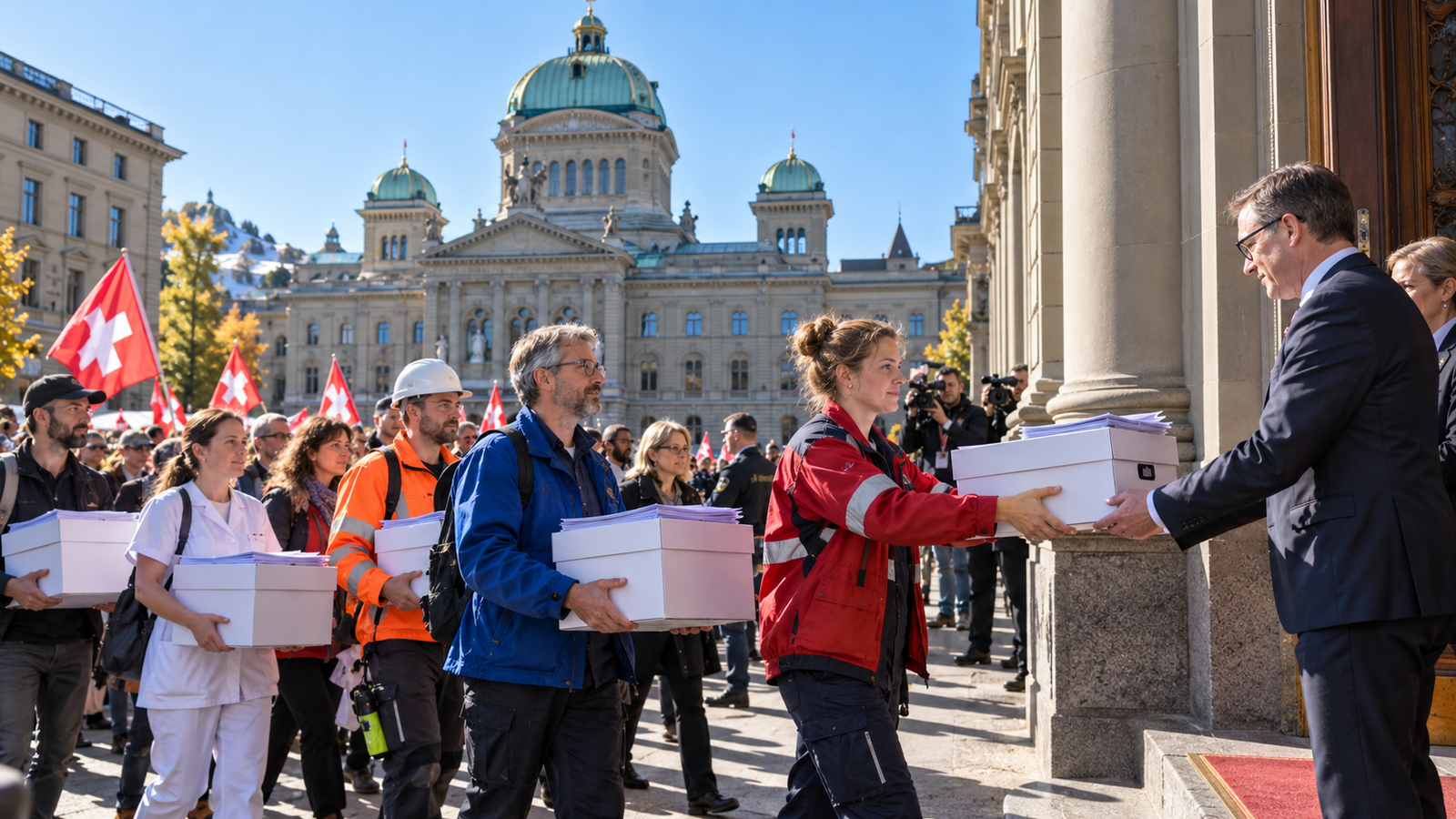
A coalition of Swiss trade unions and left-leaning political groups has formally submitted more than 100,000 signatures in support of a referendum campaign aimed at preserving labor protections they believe are at risk under a proposed package of agreements between Switzerland and the European Union.
The signature drive marks the latest chapter in a long-running debate over how Switzerland should manage its economic relationship with the EU while maintaining domestic policies designed to protect workers and wage levels. Under Switzerland’s system of direct democracy, collecting the required number of signatures can trigger a nationwide vote, giving citizens the final say on major political and economic issues.
Campaign organizers argue that existing wage-protection measures are a crucial safeguard in a country where average salaries remain significantly higher than those in neighboring EU member states. They contend that weakening these protections could increase pressure on wages in sectors exposed to cross-border labor competition, particularly in regions near France, Germany, Austria, and Italy.
The dispute centers on a broader package intended to modernize and stabilize Switzerland’s relationship with the European Union. The proposed framework covers multiple policy areas, including market access, transport, regulatory cooperation, and the movement of workers. Supporters of the agreements argue that maintaining close economic ties with the EU is essential for Switzerland’s long-term prosperity because the bloc remains the country’s largest trading partner.
Business organizations and many supporters of closer European cooperation have warned that uncertainty surrounding bilateral relations could create challenges for exporters, employers, and industries that depend on predictable access to European markets. They argue that updated agreements would provide legal clarity and help secure economic stability at a time of growing geopolitical and trade uncertainty.
However, labor organizations maintain that economic integration should not come at the expense of worker protections. Swiss unions have long defended measures designed to prevent wage undercutting, especially in sectors where foreign service providers or cross-border workers play a significant role. These protections were introduced alongside earlier agreements on the free movement of people and have remained a politically sensitive issue for more than two decades.
The latest campaign reflects broader concerns about balancing economic openness with social protections. Switzerland’s labor market relies heavily on international workers, yet political debates frequently focus on immigration, labor competition, and the impact of European integration on domestic employment conditions. Questions surrounding wages have often emerged as one of the most contentious aspects of negotiations between Bern and Brussels.
The referendum initiative also highlights the continuing importance of direct democracy in Swiss politics. Major national decisions frequently require public approval, and organized campaigns often use referendums to challenge legislation or government policy. The collection of more than 100,000 signatures demonstrates the ability of political movements and civil society groups to bring complex policy issues directly before voters. Similar mechanisms have recently been used in debates involving immigration, neutrality, public broadcasting, and environmental policy.
Supporters of the wage-protection campaign say their objective is not to block cooperation with Europe altogether but to ensure that Swiss labor standards remain intact. They argue that Switzerland’s high-wage economy is one of its key competitive advantages and that labor protections contribute to social stability and public support for international economic engagement.
Advocates of the broader EU package counter that the agreements include important economic benefits and could help prevent future disruptions in Switzerland’s access to European markets. They point to polling that has indicated substantial public support for strengthening relations with the EU, although concerns about wages and immigration remain among the most frequently cited objections.
The signature submission represents only one stage of a potentially lengthy political process. Authorities must first verify the signatures before any referendum can move forward. If the initiative qualifies, voters could eventually be asked to decide whether the proposed arrangements adequately protect Swiss workers while preserving the country’s economic interests.
The outcome is likely to be closely watched by labor groups, businesses, policymakers, and European officials. Switzerland’s relationship with the EU has long been shaped by a series of bilateral agreements rather than full membership, making each new negotiation a significant political event. Decisions made in the coming months could influence not only labor policy but also the future direction of Swiss-European relations.
As the debate intensifies, wage protection is expected to remain at the center of public discussion. For many voters, the question will be whether Switzerland can maintain close economic ties with its largest trading partner while preserving the labor safeguards that have become a defining feature of its employment system. The answer may ultimately be determined at the ballot box.