
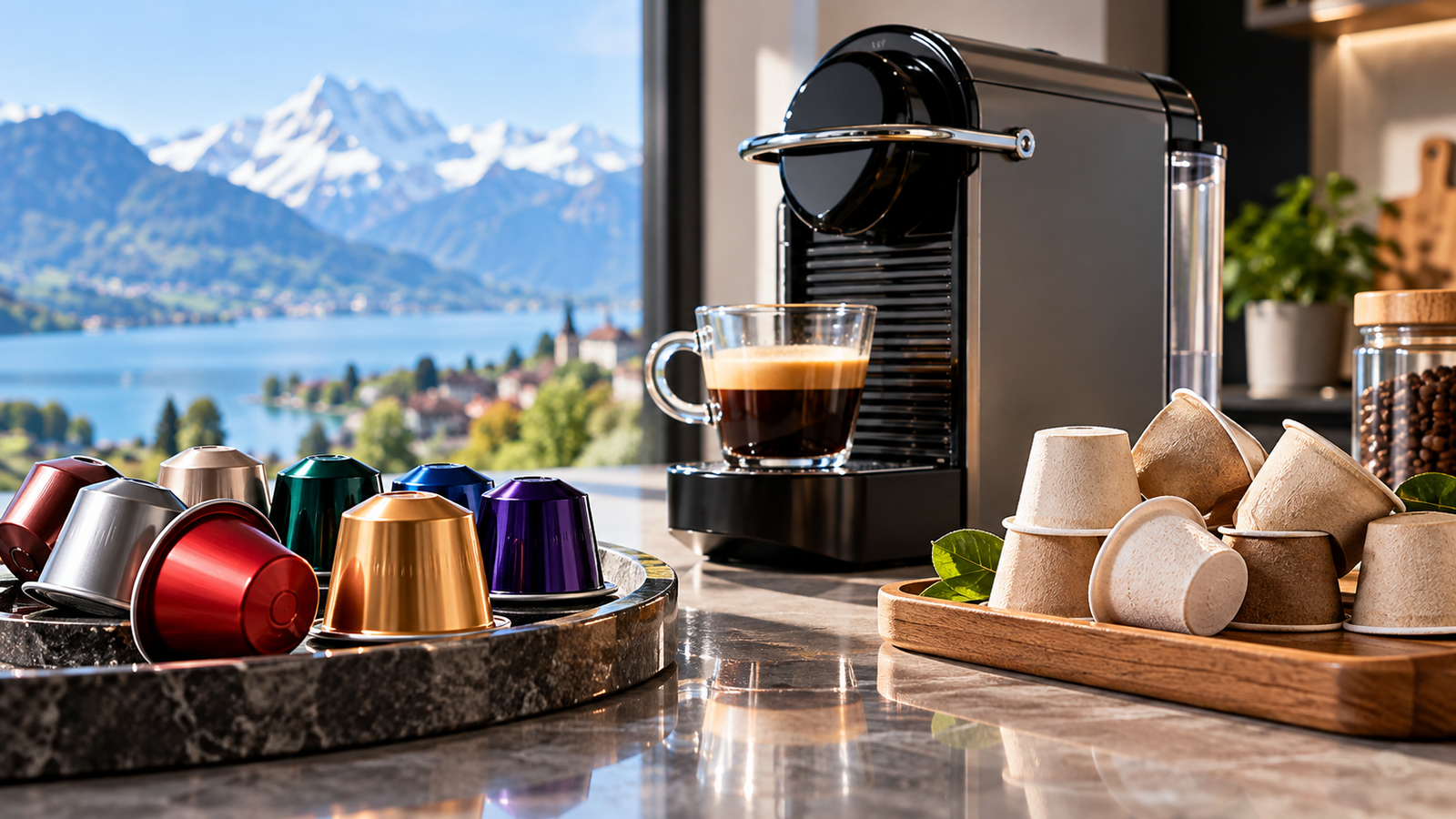
Nespresso Ends Paper Capsule Trial and Refocuses on Aluminum Coffee Pods
Nespresso is withdrawing its compostable paper coffee capsules from the market, marking a significant shift in the company’s packaging strategy after a multi-year effort to offer consumers an alternative to traditional aluminum pods.
The decision affects a product line that was introduced as a pilot project in several European countries and promoted as a home-compostable option for coffee drinkers seeking more environmentally conscious choices. The move comes after the company reviewed customer feedback and product performance following the launch of the paper-based capsules.
The coffee brand, owned by Swiss food giant Nestlé, said lessons learned from the trial ultimately led the company to conclude that aluminum remains the most effective material for protecting coffee quality and preserving flavor over time. According to company representatives, consumer feedback highlighted challenges related to product shelf life and overall user experience.
The paper capsules were introduced only a few years ago as part of Nespresso’s efforts to broaden its packaging options and address growing consumer interest in sustainability. The capsules were tested across 14 European markets and represented one of the company’s most visible packaging innovations in recent years.
At the time of their launch, Nespresso promoted the paper-based capsules as a breakthrough product capable of delivering the company’s signature coffee experience while offering home compostability. The capsules were made primarily from paper pulp and carried certification for home composting in several markets. The company emphasized that the design aimed to balance environmental considerations with flavor preservation.
However, maintaining coffee freshness proved to be a key challenge. Company materials previously stated that unopened paper capsules could preserve coffee quality for several months, while consumers were encouraged to use opened packages within a relatively short period after opening. Aluminum capsules, by comparison, provide longer protection against exposure to air, moisture, and light—factors that directly affect coffee aroma and taste.
The withdrawal of the paper capsule range underscores the difficulty faced by food and beverage companies when attempting to replace established packaging materials with alternatives that meet both sustainability goals and product performance expectations.
Packaging plays a particularly important role in the premium coffee market, where freshness is closely tied to consumer perception and brand reputation. For single-serve coffee systems, maintaining consistent flavor quality throughout storage and distribution is considered a critical requirement.
Although the paper capsule initiative is ending, Nespresso says it remains committed to sustainability efforts. The company continues to position aluminum as a recyclable packaging material and has invested heavily in capsule collection and recycling programs in numerous countries.
According to company information, aluminum’s ability to be recycled repeatedly without significant loss of quality remains a central part of Nespresso’s environmental strategy. The company has also pointed to recycling rates achieved in some markets, including Switzerland, where it has worked to expand collection networks and improve recovery systems.
Industry observers note that the decision reflects a broader challenge confronting manufacturers across the consumer goods sector. Businesses face increasing pressure to reduce packaging waste and lower environmental impacts while maintaining product quality, convenience, and affordability.
The coffee industry has become a particularly active testing ground for new packaging technologies. Companies have experimented with compostable materials, biodegradable plastics, paper-based containers, and alternative recycling systems as consumers demand more sustainable options. Yet many innovations encounter practical hurdles involving durability, storage conditions, transportation requirements, and customer acceptance.
For Nespresso, the paper capsule project offered valuable insights despite its discontinuation. Company statements suggest that customer responses played a significant role in the final decision, indicating that sustainability initiatives must align closely with everyday consumer expectations to achieve long-term success.
Remaining inventories of the paper capsules are expected to stay available in some Swiss boutiques for a limited period while stocks last. Production of the range has ended, and Nespresso is expected to concentrate its home coffee offering on aluminum capsules moving forward.
The development closes a notable chapter in Nespresso’s packaging experimentation and highlights the ongoing balancing act facing global consumer brands. As sustainability standards continue to evolve and consumer expectations rise, companies are likely to keep exploring new materials and technologies. For now, however, Nespresso has concluded that aluminum remains the preferred solution for delivering the coffee quality and consistency on which the brand has built its reputation.