
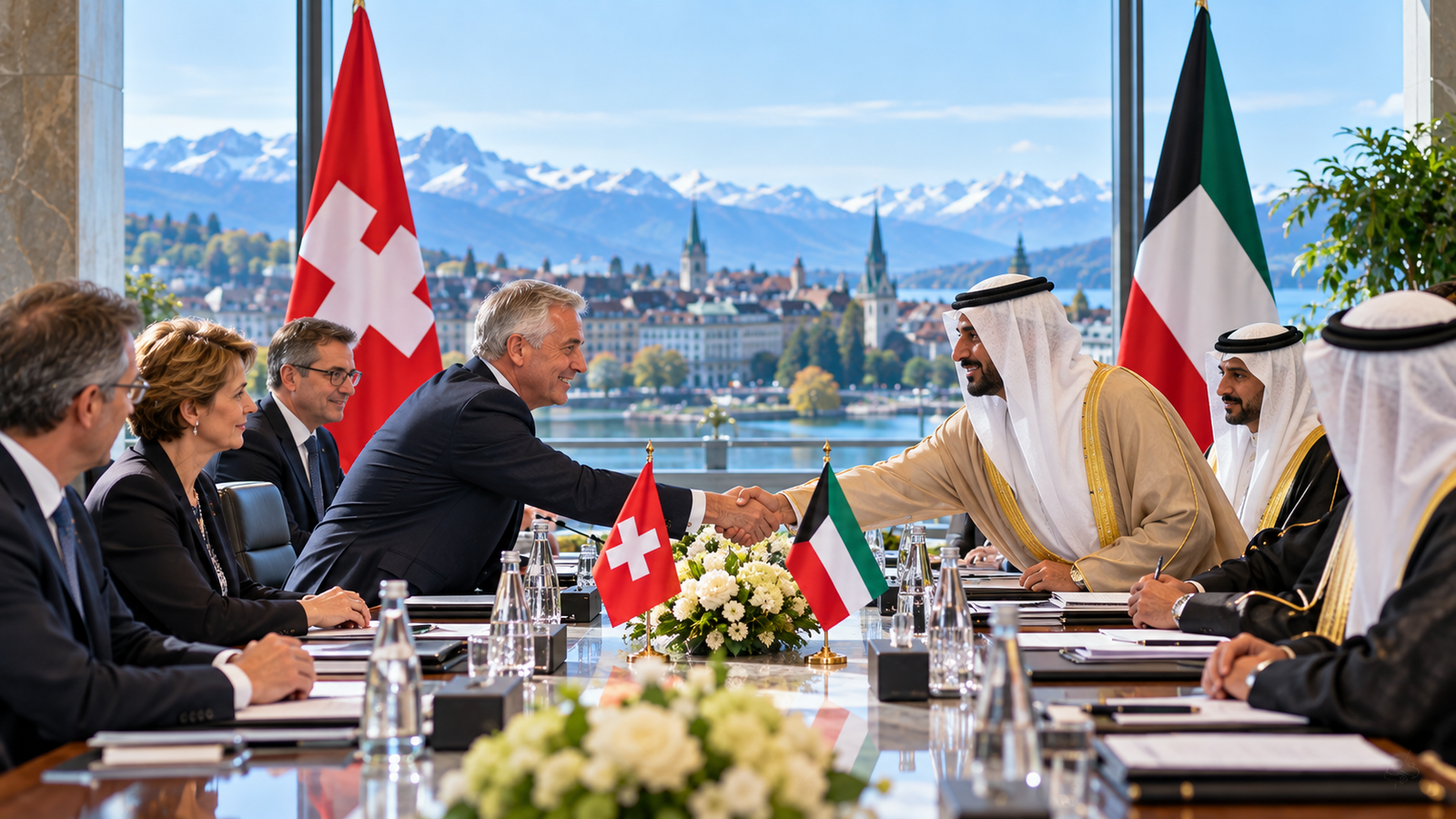
Switzerland and Kuwait Move to Deepen Economic Cooperation Through New Trade Talks
Switzerland and Kuwait are seeking to expand their economic relationship as officials from both countries signal renewed interest in strengthening trade, investment, and commercial cooperation amid evolving global economic conditions.
The latest discussions between Swiss and Kuwaiti representatives highlight a shared desire to build closer economic ties and identify new opportunities for collaboration across a range of sectors. The effort comes as countries worldwide look to diversify international partnerships, strengthen supply chains, and encourage cross-border investment in an increasingly competitive global marketplace.
While Switzerland and Kuwait have maintained diplomatic and commercial relations for decades, policymakers on both sides believe there is room for greater economic engagement. Officials involved in the talks pointed to the complementary nature of the two economies, with Switzerland offering strengths in advanced manufacturing, pharmaceuticals, financial services, technology, and innovation, while Kuwait continues to play an important role in the Gulf region through its energy sector, investment activity, and broader economic development initiatives.
The discussions reflect a broader trend of increasing economic engagement between Switzerland and countries in the Gulf region. Gulf economies have spent recent years pursuing diversification strategies designed to reduce dependence on hydrocarbon revenues and encourage investment in knowledge-based industries, infrastructure, technology, and sustainable economic growth. These priorities align with areas where Swiss companies possess significant expertise and international competitiveness.
For Switzerland, strengthening commercial ties with Gulf partners offers access to rapidly developing markets and growing investment opportunities. Swiss businesses have traditionally maintained a strong international presence, with exports playing a crucial role in the country’s economic performance. Sectors such as pharmaceuticals, medical technology, precision instruments, machinery, and financial services continue to drive Swiss trade relationships around the world.
Economic cooperation between Switzerland and Kuwait could potentially extend beyond traditional trade flows. Officials have indicated interest in expanding collaboration in innovation, investment, research, and sustainable development. Such initiatives reflect a growing emphasis among governments on building long-term economic partnerships rather than focusing solely on the exchange of goods.
The renewed focus on bilateral relations also comes at a time when governments are reassessing international trade networks in response to geopolitical uncertainty and changing global economic conditions. Policymakers increasingly view diversified trade partnerships as an important tool for improving economic resilience and reducing exposure to regional disruptions.
Switzerland’s longstanding approach to foreign economic policy has emphasized open markets, international cooperation, and stable diplomatic relationships. The country maintains extensive economic links across Europe, Asia, the Americas, and the Middle East, supported by a broad network of bilateral agreements and international partnerships. Swiss authorities frequently promote trade as a mechanism for economic growth, innovation, and job creation.
Kuwait, meanwhile, remains one of the Gulf region’s significant economic players due to its substantial energy resources and strategic geographic position. The country has increasingly sought to attract foreign investment and encourage private-sector development as part of wider efforts to modernize and diversify its economy. Strengthening commercial relations with advanced industrial economies such as Switzerland forms part of that broader objective.
Business leaders are expected to monitor the outcome of the discussions closely. Enhanced economic cooperation could create new opportunities for companies operating in sectors including finance, healthcare, technology, logistics, clean energy, infrastructure, and advanced manufacturing. Greater engagement could also facilitate increased investment flows and support partnerships between institutions in both countries.
Trade experts note that economic relationships often evolve gradually through a combination of government dialogue, private-sector engagement, and targeted cooperation projects. While no major new trade agreement has been announced, the commitment expressed by officials signals a willingness to explore practical measures that could encourage stronger commercial activity in the years ahead.
The Middle East has become an increasingly important region for many European economies seeking growth opportunities beyond their traditional markets. Gulf states continue to invest heavily in economic transformation programs, creating demand for expertise in engineering, digital technology, healthcare, education, and sustainability. Swiss companies have established strong international reputations in many of these fields, making them potential partners in future development initiatives.
Observers also point to the importance of political stability and diplomatic engagement in supporting economic growth. Continued dialogue between Switzerland and Kuwait may help strengthen institutional relationships while creating a framework for future commercial cooperation. Such efforts can provide businesses with greater confidence when evaluating long-term investment opportunities.
Although specific projects resulting from the latest discussions have yet to be detailed publicly, the message from both sides has been clear: economic cooperation remains a priority. By seeking closer trade and investment links, Switzerland and Kuwait are positioning themselves to benefit from new opportunities in an increasingly interconnected global economy.
The coming months will likely reveal whether the renewed political commitment translates into concrete business initiatives, expanded investment activity, or broader commercial partnerships. For now, the talks represent another step toward deepening economic engagement between two countries looking to strengthen their presence in international trade and investment networks.