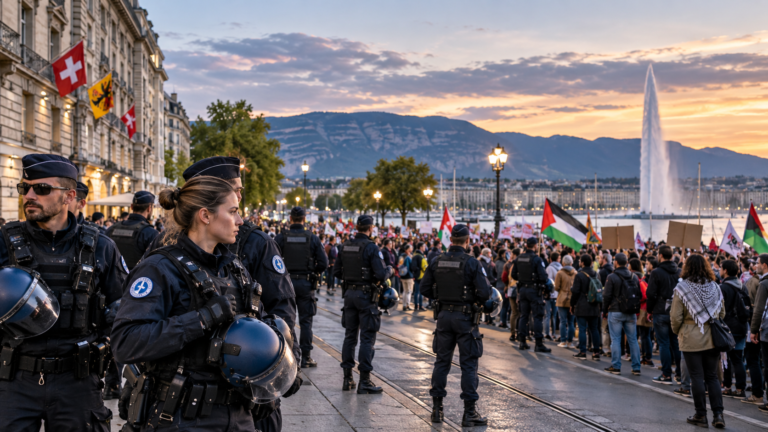
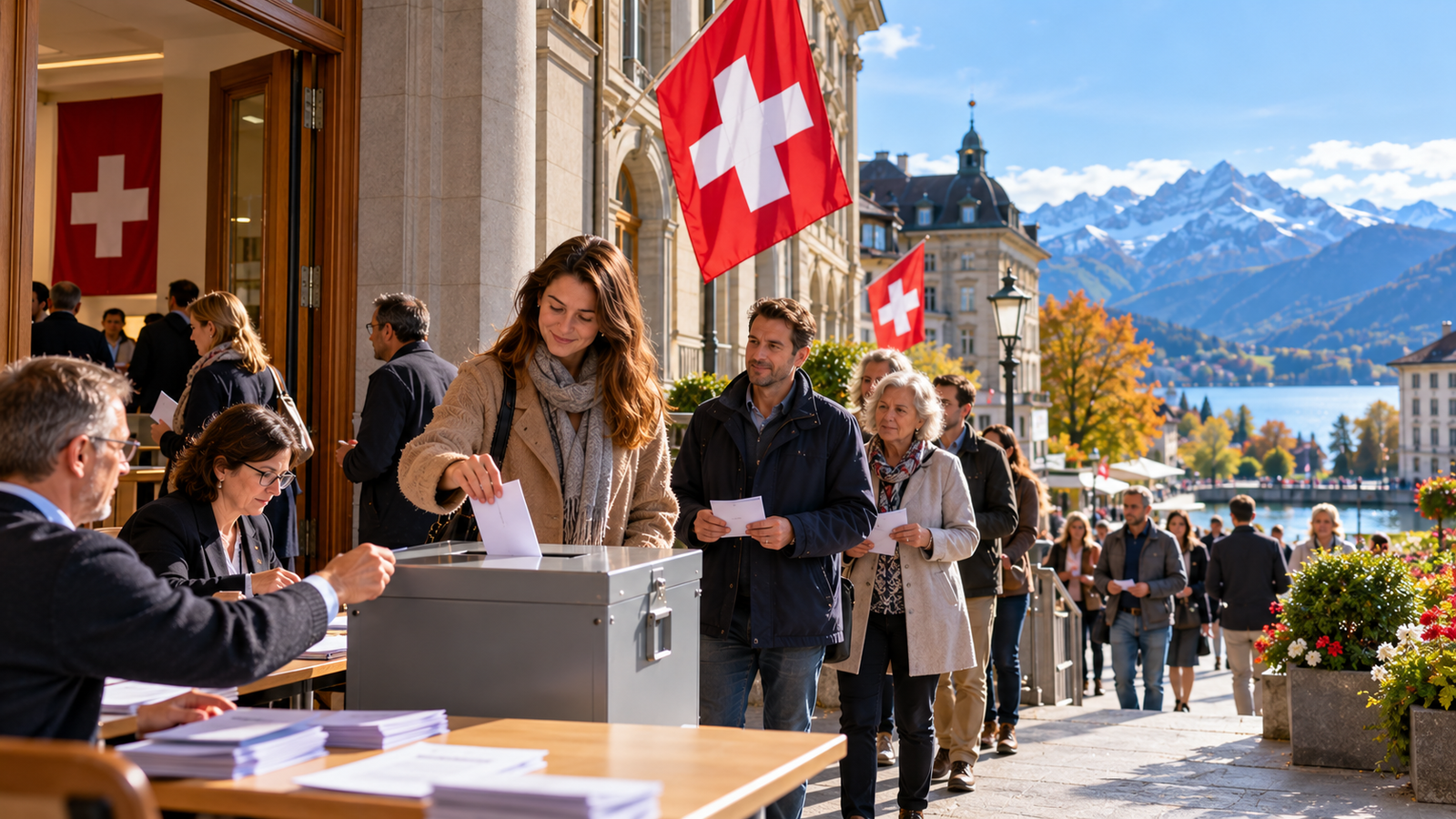
Swiss Voters Deliver Decisive Rejection of Neutrality Initiative
Swiss voters have delivered a resounding defeat to a proposal that sought to redefine and tighten the country’s neutrality policy, rejecting a constitutional initiative that would have imposed stricter limits on Switzerland’s foreign-policy options and international cooperation.
Final results from the nationwide vote held on September 27 showed that nearly 70% of voters opposed the measure, while every canton voted against it. The proposal failed to secure either a popular majority or the required majority of cantons, resulting in one of the clearest referendum defeats of the year.
The initiative, known as the “Preservation of Swiss Neutrality” proposal, was backed by supporters who argued that Switzerland should formally strengthen its traditional non-aligned status by writing a stricter definition of neutrality into the federal constitution. The proposal would have limited cooperation with military alliances and significantly restricted Switzerland’s ability to adopt sanctions against countries engaged in armed conflicts, except in narrowly defined circumstances.
Instead, voters chose to maintain the existing framework under which Swiss neutrality remains a cornerstone of national policy while allowing the federal government flexibility in responding to international crises and security challenges. The outcome is widely viewed as an endorsement of the current approach pursued by the Federal Council and Parliament.
The referendum attracted significant attention because neutrality remains one of the most important and recognizable elements of Swiss political identity. Switzerland has maintained a long tradition of neutrality, which is internationally recognized and deeply rooted in the country’s political culture. However, debates over how neutrality should be interpreted have intensified in recent years, particularly following Russia’s invasion of Ukraine and Switzerland’s decision to adopt many European Union sanctions against Moscow.
Supporters of the initiative contended that recent foreign-policy decisions risked weakening Switzerland’s neutral status. They argued that neutrality should be more clearly defined to prevent future governments from taking actions that could be interpreted as aligning the country with military or geopolitical blocs. Opponents, including the federal government, maintained that the proposal would unnecessarily constrain Switzerland’s diplomatic flexibility and limit its ability to respond to changing international circumstances.
The scale of the defeat surprised few political observers. Polling conducted before the vote consistently indicated that a large majority of voters intended to reject the proposal. Surveys published in the weeks leading up to referendum day showed opposition well above 60%, with resistance increasing as the campaign progressed.
Official results confirmed those expectations. Nationwide, 70.15% of voters rejected the initiative, while only 29.85% supported it. Every canton voted against the proposal, highlighting broad opposition across linguistic and regional divisions. Although support was comparatively stronger in parts of Italian-speaking Switzerland, it remained insufficient to alter the overall outcome. Voter participation exceeded 47%.
The result also carries political significance for the Swiss People’s Party (SVP/UDC), which strongly supported the initiative. Several Swiss newspapers characterized the outcome as a major setback for advocates of stricter neutrality and for former Federal Councillor Christoph Blocher, a prominent supporter and financial backer of the campaign. Commentators across multiple regions described the result as a decisive rejection of the proposal rather than a narrowly contested defeat.
Media reactions following the vote emphasized the unusually clear nature of the outcome. Editorials in newspapers from Switzerland’s German-, French-, and Italian-speaking regions generally interpreted the result as confirmation that voters preferred a pragmatic understanding of neutrality rather than a more rigid constitutional framework. Several publications noted that the referendum effectively settled a debate that had dominated political discussion for months.
The vote occurred against a broader backdrop of recent referendum setbacks for initiatives supported by the Swiss People’s Party. Earlier in 2026, voters also rejected a proposal aimed at limiting the country’s population growth. Political analysts note that while the party remains one of Switzerland’s most influential political forces, recent referendum outcomes demonstrate that broad public support is not guaranteed for every major campaign issue.
Beyond domestic politics, the neutrality referendum was closely watched internationally because of its potential implications for Swiss foreign policy. Had the initiative passed, Switzerland’s room to cooperate with partners on security matters and sanctions policy would likely have narrowed considerably. Government officials argued during the campaign that maintaining flexibility was important for protecting Swiss interests in an increasingly complex international environment.
The outcome means that Switzerland’s existing neutrality doctrine remains unchanged. The Federal Council retains its current authority to determine how neutrality is applied in practice, including decisions relating to sanctions, diplomacy, and international cooperation. Supporters of the status quo argue that this allows Switzerland to adapt to emerging global challenges while preserving the core principles that have long defined its international role.
With the referendum now concluded, attention is expected to shift toward other policy debates facing the country, including relations with the European Union, economic competitiveness, and security cooperation. Yet the result also sends a clear message about how Swiss voters currently view neutrality: not as a fixed constitutional formula, but as a principle that can continue to evolve through democratic decision-making and government policy.