Eight Months After Crans-Montana Tragedy, Burn Survivors Face Long Recovery Journey
More than eight months after the devastating fire that struck the Swiss mountain resort of Crans-Montana, medical specialists say many survivors remain engaged in an intensive rehabilitation process that could continue for months or even years as they work to rebuild their lives.
Doctors, rehabilitation experts and representatives of Switzerland’s accident insurance system gathered this week in Sion to provide an update on the progress of patients injured in the disaster. While significant advances have been made since the early weeks of emergency treatment, healthcare professionals emphasized that recovery from severe burn injuries extends far beyond hospital care and requires long-term physical, psychological and social support.
The January 1 fire at the Le Constellation bar in Crans-Montana became one of Switzerland’s deadliest peacetime disasters in recent memory. The blaze claimed 41 lives and injured 115 people, triggering a nationwide response involving hospitals, emergency services, rehabilitation centers and support organizations.
According to specialists overseeing rehabilitation efforts, 42 patients have been treated through specialized recovery programs since the beginning of the year. Ten individuals are still receiving care at rehabilitation facilities in Sion, in the canton of Valais, and Bellikon, in the canton of Aargau. These centers have become a key part of Switzerland’s response to the tragedy, helping patients transition from emergency treatment toward long-term recovery.
Medical professionals involved in the process described rehabilitation as a continuous chain of care rather than a separate phase that begins after hospitalization. Specialists noted that planning for recovery starts almost immediately after a patient’s condition stabilizes, particularly in cases involving extensive burns, mobility limitations and long-term physical complications.
The extraordinary number of patients placed unprecedented pressure on rehabilitation services. Officials said the clinics involved normally care for between 20 and 30 severe burn patients during an entire year. Following the Crans-Montana disaster, facilities had to rapidly reorganize staffing, treatment schedules and resources to accommodate the sudden influx of victims.
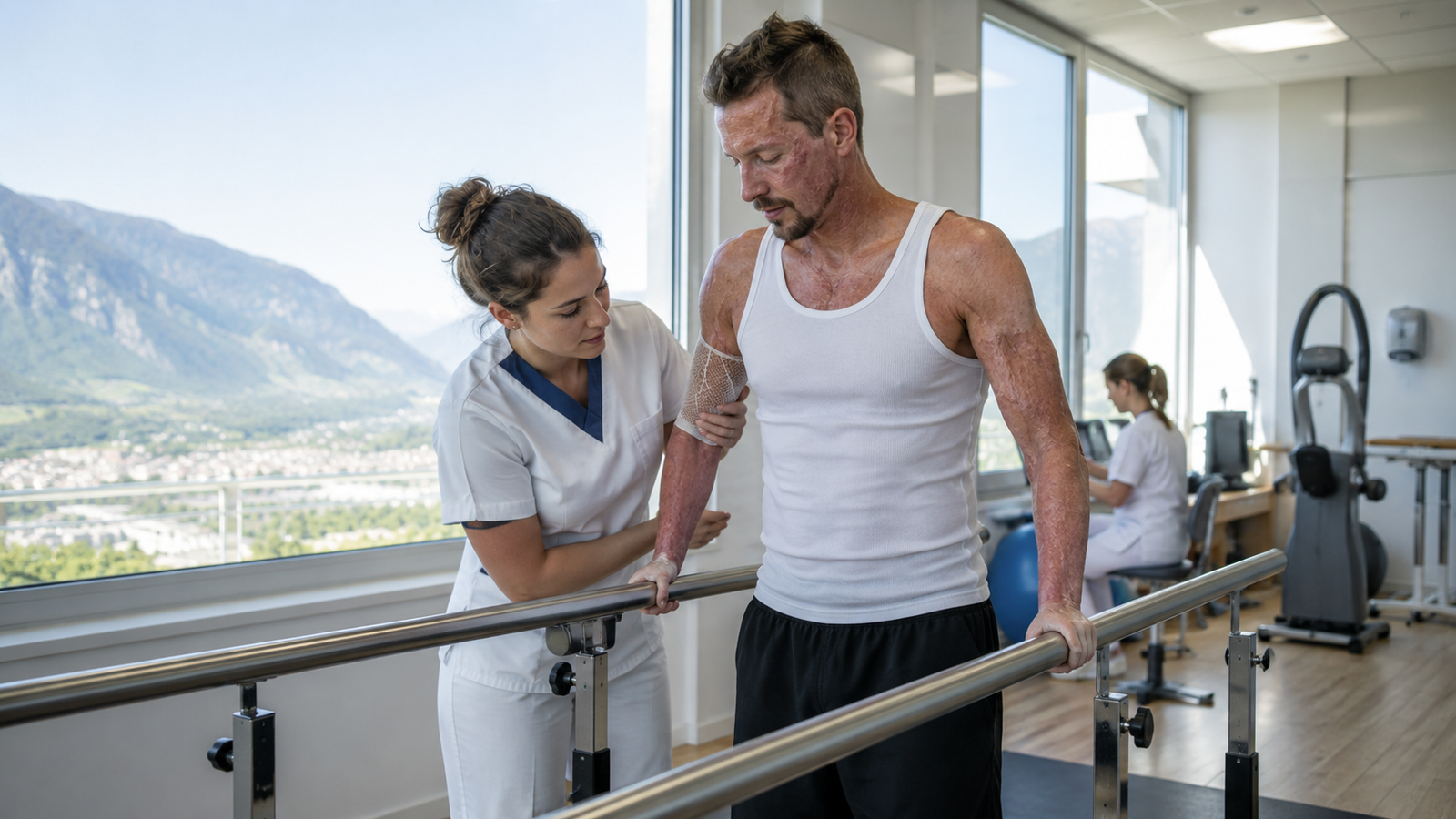
Healthcare providers say burn rehabilitation presents challenges unlike many other forms of trauma recovery. Patients frequently require extensive physiotherapy to restore mobility, particularly when scar tissue affects joints and muscle function. Long-term monitoring is often necessary to manage skin healing, pain, mobility issues and complications that can emerge months after the initial injury.
Equally important is the psychological dimension of recovery. Experts have repeatedly highlighted the emotional consequences experienced by survivors of major fires, including trauma, grief and anxiety. For many patients, the rehabilitation process involves not only physical healing but also adapting to life after a catastrophic event that altered families, careers and personal futures.
Swiss rehabilitation specialists stressed that successful recovery depends on cooperation among multiple disciplines. Physicians, physiotherapists, occupational therapists, psychologists, nurses and social workers all contribute to individualized treatment plans designed to help patients regain independence and reintegrate into daily life.
The broader response to the tragedy has extended well beyond the healthcare system. Since January, Swiss authorities, charitable organizations and local governments have established financial assistance programs and support initiatives for victims and their families. Public fundraising efforts and dedicated foundations have also been created to provide long-term assistance to those affected.
Meanwhile, investigations into the causes and circumstances surrounding the fire have continued throughout the year. Prosecutors have pursued multiple lines of inquiry while examining questions related to safety procedures, inspections and responsibility for the disaster. The legal process remains separate from the medical recovery effort but continues to draw significant public attention as families seek answers.
The recovery update also highlights the scale of the challenge facing survivors of severe burn injuries. Medical literature consistently shows that rehabilitation often extends well beyond the period of hospitalization. Patients may require multiple procedures, long-term therapy and ongoing support before returning to education, employment or other aspects of everyday life.
Officials involved in the rehabilitation program said one of the principal goals remains helping patients regain as much independence as possible. That objective includes restoring physical function, supporting psychological well-being and enabling individuals to resume their roles within families, workplaces and communities whenever circumstances allow.
For many survivors, substantial progress has already been achieved since the first days following the disaster. Yet healthcare providers acknowledge that the journey remains unfinished. While some patients have returned home and resumed parts of their daily routines, others continue to face lengthy treatment plans and ongoing rehabilitation needs.
As Switzerland approaches the first anniversary of the tragedy, the focus of public attention may gradually shift away from emergency response. For survivors, however, recovery remains a daily reality. Medical teams say their work will continue for as long as necessary, supporting patients through a process measured not in weeks but in months and, in some cases, years.