
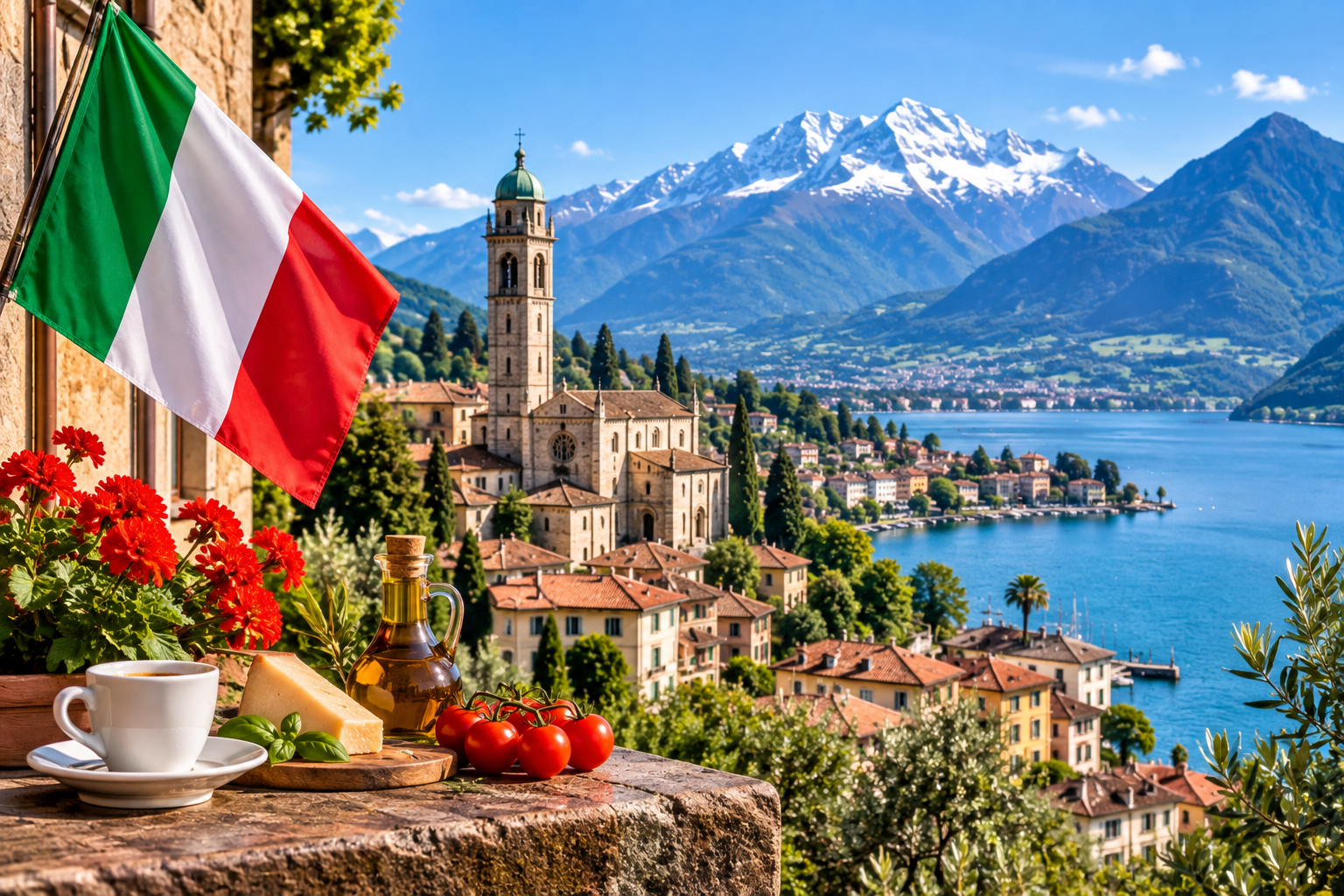
Italian Language
Italian is one of Switzerland’s four national languages and represents an important part of the country’s cultural diversity. Spoken by around 8% of the population, Italian is the primary language of the canton of Ticino and several southern valleys of Graubünden, including Bregaglia, Calanca, Mesolcina, and Poschiavo. Switzerland’s Federal Constitution recognizes Italian alongside German, French, and Romansh, reflecting the nation’s long-standing commitment to multilingualism and cultural inclusion.
Swiss Italian has developed its own identity over centuries. While it is closely related to the Italian spoken in neighboring Italy, it includes regional expressions and influences from Switzerland’s other national languages. In daily life, many communities also use local Lombard dialects, adding further richness to the linguistic landscape. Italian is used in schools, government institutions, media, literature, and business throughout the Italian-speaking regions of the country.
Beyond language, Italian-speaking Switzerland is known for its distinctive culture, Mediterranean atmosphere, architecture, and traditions. The region serves as a bridge between northern and southern Europe, contributing to Switzerland’s unique blend of cultures. Recognizing the importance of this linguistic heritage, Swiss federal laws support the preservation and promotion of Italian language and culture, particularly in Ticino and the Italian-speaking areas of Graubünden.
Today, Italian remains a vibrant part of Swiss society. Together with German, French, and Romansh, it helps shape a multilingual nation where different languages and cultures coexist while sharing a common Swiss identity.

One Comment
Comments are closed.