
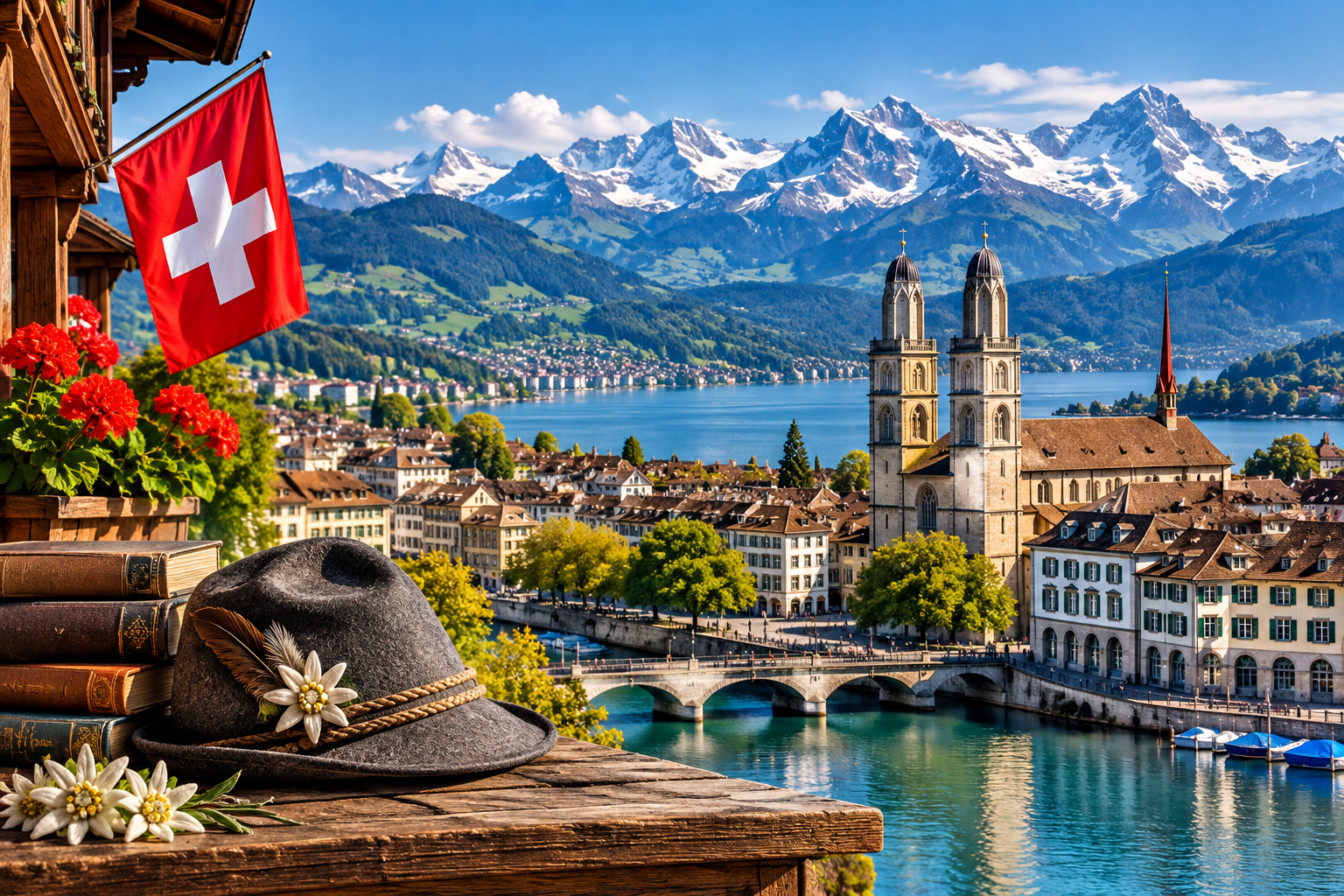
German Language
German is the most widely spoken language in Switzerland and plays a central role in the country’s cultural, social, and economic life. More than 60% of Switzerland’s population uses German or Swiss German as its main language, making it the largest language community in the country. Switzerland officially recognizes four national languages—German, French, Italian, and Romansh—and this multilingual tradition is protected by law and deeply connected to Swiss identity.
What makes the German language in Switzerland unique is the widespread use of Swiss German (Schweizerdeutsch). Rather than a single dialect, Swiss German is a collection of Alemannic dialects spoken in everyday life across German-speaking regions. People use Swiss German in conversations, schools, workplaces, media, and daily communication, while Standard German is commonly used in writing, official documents, books, and national publications.
German-speaking Switzerland includes major cities such as Zurich, Bern, Basel, Lucerne, and St. Gallen. The language reflects centuries of history and has helped shape the country’s traditions, literature, education system, and business environment. Switzerland’s federal authorities also publish official information in multiple languages to ensure equal access for all linguistic communities.
Today, German remains a vital part of Switzerland’s multicultural character. Together with French, Italian, and Romansh, it contributes to the unique diversity that makes Switzerland one of Europe’s most distinctive and multilingual nations.

One Comment
Comments are closed.