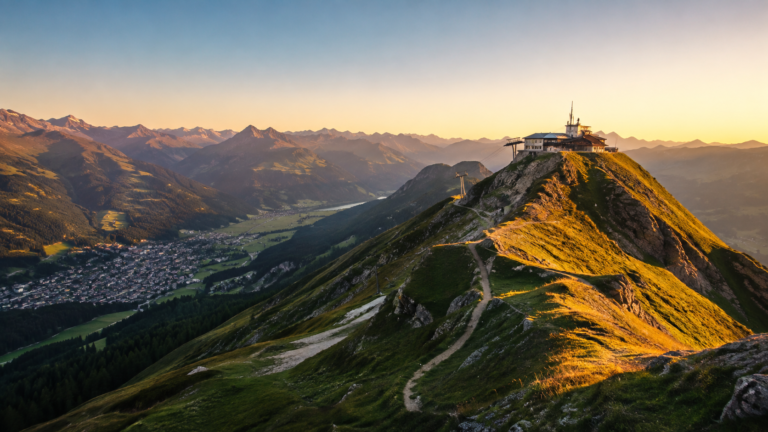

Best Hiking Destinations in Switzerland: Trails That Reveal the Soul of the Alps
Switzerland is often described as a paradise for hikers, but the phrase barely captures the diversity hidden within the country’s landscapes. Over a relatively small area, hikers can travel from glacier-carved valleys and high Alpine passes to vineyard-covered hillsides, turquoise lakeshores, and remote mountain plateaus where centuries-old traditions still shape daily life.
The country maintains one of the world’s most extensive and well-marked hiking networks, with tens of thousands of kilometers of trails crossing every major region. Yet Switzerland’s greatest hiking destinations are not defined simply by altitude or difficulty. They are places where geography, culture, wildlife, and scenery combine to create unforgettable journeys.
The Bernese Oberland remains the destination that many travelers imagine when dreaming about Swiss hiking. Dominated by the famous peaks of the Eiger, Mönch, and Jungfrau, the region offers an extraordinary variety of trails suitable for both casual walkers and experienced mountain hikers.
The valley of Lauterbrunnen is particularly remarkable. Surrounded by towering cliffs and dozens of waterfalls, it serves as a gateway to some of Switzerland’s most iconic hiking routes. Trails connecting Mürren, Wengen, and Kleine Scheidegg reveal constantly changing views of glaciers, forests, and dramatic mountain faces. The landscape feels almost theatrical, with every bend presenting another Alpine panorama.
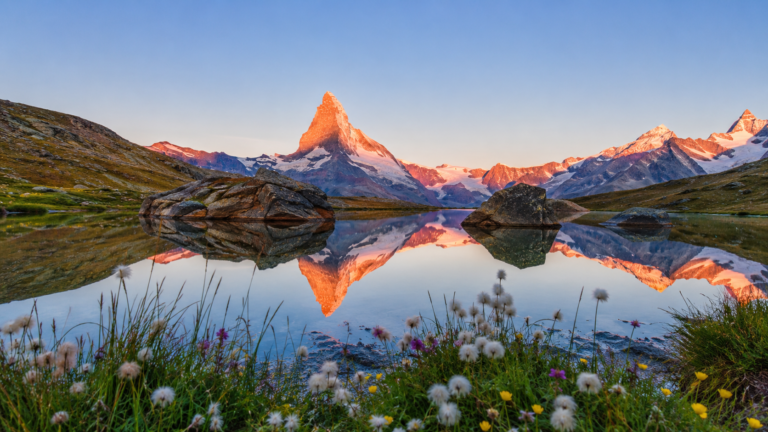
Further south, Zermatt provides a very different mountain experience. Here, the unmistakable silhouette of the Matterhorn dominates the horizon, creating one of the most recognizable hiking settings anywhere in the world.
The extensive trail network around Zermatt ranges from easy panoramic walks to challenging high-altitude routes. Areas such as Sunnegga, Gornergrat, and Rothorn offer exceptional viewpoints over glaciers and some of the highest peaks in the Alps. What makes the region especially appealing is the combination of rugged mountain scenery and efficient transportation infrastructure, allowing hikers to access high elevations without undertaking strenuous ascents.
For those seeking a landscape shaped by ice, few destinations can rival the Aletsch Arena.
Home to the Great Aletsch Glacier, the largest glacier in the Alps, this UNESCO World Heritage region presents a hiking environment unlike any other in Switzerland. Trails along the glacier’s edge provide striking views of a vast river of ice flowing through the mountains. The scale of the glacier becomes apparent only when viewed from panoramic viewpoints such as Moosfluh, Bettmerhorn, and Eggishorn.
Beyond its visual appeal, the region offers insight into ongoing environmental changes as Alpine glaciers respond to a warming climate. Hiking here combines natural beauty with an opportunity to witness one of Europe’s most significant geological landscapes.
In eastern Switzerland, the Engadin Valley offers a different interpretation of Alpine hiking.
Known for its high-altitude sunshine, crystal-clear lakes, and expansive mountain scenery, the Engadin attracts hikers seeking both solitude and variety. Trails wind through larch forests, open meadows, and remote valleys surrounded by peaks that often exceed 3,000 meters.
The area surrounding St. Moritz provides access to numerous day hikes, while nearby Val Roseg and Val Fex showcase quieter landscapes rich in natural beauty. The region’s unique cultural identity, shaped by Romansh traditions and centuries of Alpine life, adds depth to every journey.
One of Switzerland’s most distinctive hiking experiences can be found in the canton of Graubünden along the Swiss National Park.
Established in 1914, it is the country’s only national park and one of Europe’s oldest protected wilderness areas. Unlike many heavily developed mountain destinations, the park follows a strict conservation philosophy that allows natural processes to unfold with minimal human intervention.
Hikers exploring the park encounter untouched forests, mountain streams, and opportunities to observe wildlife such as ibex, chamois, marmots, and golden eagles. Trails emphasize environmental awareness and provide a rare glimpse of Alpine ecosystems functioning largely free from modern development.
Water often plays an important role in Switzerland’s most memorable hikes, and nowhere is this more evident than at Oeschinensee.
Located above Kandersteg, Oeschinen Lake is one of the country’s most celebrated natural landmarks. Surrounded by steep mountain walls and fed by streams descending from glaciers, the lake displays remarkable shades of blue throughout the year.
Hiking routes around the lake range from family-friendly walks to more demanding mountain trails. The combination of clear water, Alpine meadows, and dramatic peaks creates a landscape that feels almost unreal in its perfection.
Not every exceptional hiking destination is defined by high mountains.
The Lavaux Vineyard Terraces along Lake Geneva offer one of Switzerland’s most culturally significant walking experiences. Stretching across sunlit hillsides between Lausanne and Montreux, this UNESCO World Heritage landscape combines centuries-old winemaking traditions with panoramic lake views.
Trails weave through terraced vineyards overlooking the water and distant Alpine peaks. The experience contrasts sharply with high-mountain hiking yet remains equally rewarding, particularly during spring and autumn when the vineyards display their most vibrant colors.
In central Switzerland, the region surrounding Lake Lucerne demonstrates how geography and history often intersect on the trail.
Hikes on Mount Rigi and Mount Pilatus combine sweeping views with historical significance. For generations, these mountains have attracted travelers drawn by their accessibility and scenery. Trails reveal constantly changing perspectives over lakes, forests, and mountain ridges while remaining accessible to a wide range of hikers.
The area is particularly attractive for travelers seeking scenic hiking without venturing into highly remote terrain.
One destination that consistently surprises visitors is the Alpstein region in northeastern Switzerland.
Though less internationally famous than the Bernese Oberland or Zermatt, Alpstein contains some of the country’s most dramatic mountain scenery. Jagged limestone peaks rise above emerald valleys, while trails lead to destinations such as Seealpsee, one of Switzerland’s most photogenic Alpine lakes.
The region combines challenging routes with traditional mountain culture, making it a favorite among Swiss hikers who value authenticity and natural beauty.
Long-distance hikers often gravitate toward the Via Alpina, one of Switzerland’s most ambitious trekking routes.
Crossing multiple cantons and numerous mountain passes, the trail offers a comprehensive journey through the Swiss Alps. Rather than focusing on a single destination, the route showcases the diversity of the country’s landscapes, connecting villages, valleys, lakes, and high mountain environments over hundreds of kilometers.
The Via Alpina demonstrates that Switzerland’s hiking appeal lies not only in individual landmarks but also in the remarkable continuity of its trail network.
What ultimately distinguishes Switzerland from many other hiking destinations is the seamless relationship between nature and accessibility. Mountain railways, cable cars, buses, and trains connect even remote regions, allowing hikers to spend more time exploring and less time navigating logistics.
Equally important is the country’s commitment to trail maintenance and environmental stewardship. Well-marked routes, conservation initiatives, and sustainable tourism practices help preserve the landscapes that attract millions of outdoor enthusiasts each year.
The finest hiking destinations in Switzerland are not simply places to walk. They are landscapes that reveal the character of the country itself—its mountains, cultures, history, and relationship with nature. Whether following a glacier’s edge, crossing a high Alpine pass, wandering through vineyards above Lake Geneva, or standing beside a secluded mountain lake, hikers discover a nation where every trail tells a different story of the Alps.