Olympic Museum, Lausanne, Switzerland
Inside Lausanne’s Olympic Museum: Where the History, Spirit, and Legacy of the Games Come to Life
Long before athletes step onto podiums or crowds fill stadiums, the Olympic Games begin with an idea. That idea—uniting people through sport—finds its most comprehensive expression in Lausanne, Switzerland, at the Olympic Museum.
Perched above the shores of Lake Geneva in the city known as the Olympic Capital, the museum offers far more than a collection of sports memorabilia. It is a cultural institution that explores the history, values, achievements, and global influence of the Olympic Movement. Founded by the International Olympic Committee (IOC) and opened in 1993, the museum has become one of Lausanne’s most visited attractions and the world’s leading center for Olympic heritage.
For visitors interested in sports, history, culture, design, or international events, the Olympic Museum provides a fascinating look at how the Games evolved from an ancient Greek tradition into one of the largest global gatherings in modern society.
Why Lausanne Became the Home of Olympic Heritage
The museum’s location is no coincidence. Lausanne has served as the headquarters of the International Olympic Committee since 1915, a relationship that transformed the city into the administrative heart of the Olympic Movement.
The concept of an Olympic museum dates back to Baron Pierre de Coubertin, the founder of the modern Olympic Games. He envisioned a place where Olympic history, education, and cultural understanding could be preserved for future generations. Although he did not live to see the project completed, his vision eventually became reality when the Olympic Museum opened in Lausanne in 1993.
A major renovation completed in 2013 transformed the museum into a modern multimedia attraction while preserving its educational mission. Today, visitors encounter interactive exhibits, digital installations, historical artifacts, and artistic displays that present the Olympic story from multiple perspectives.
An Architectural Landmark on Lake Geneva
One of the museum’s greatest strengths is its setting.
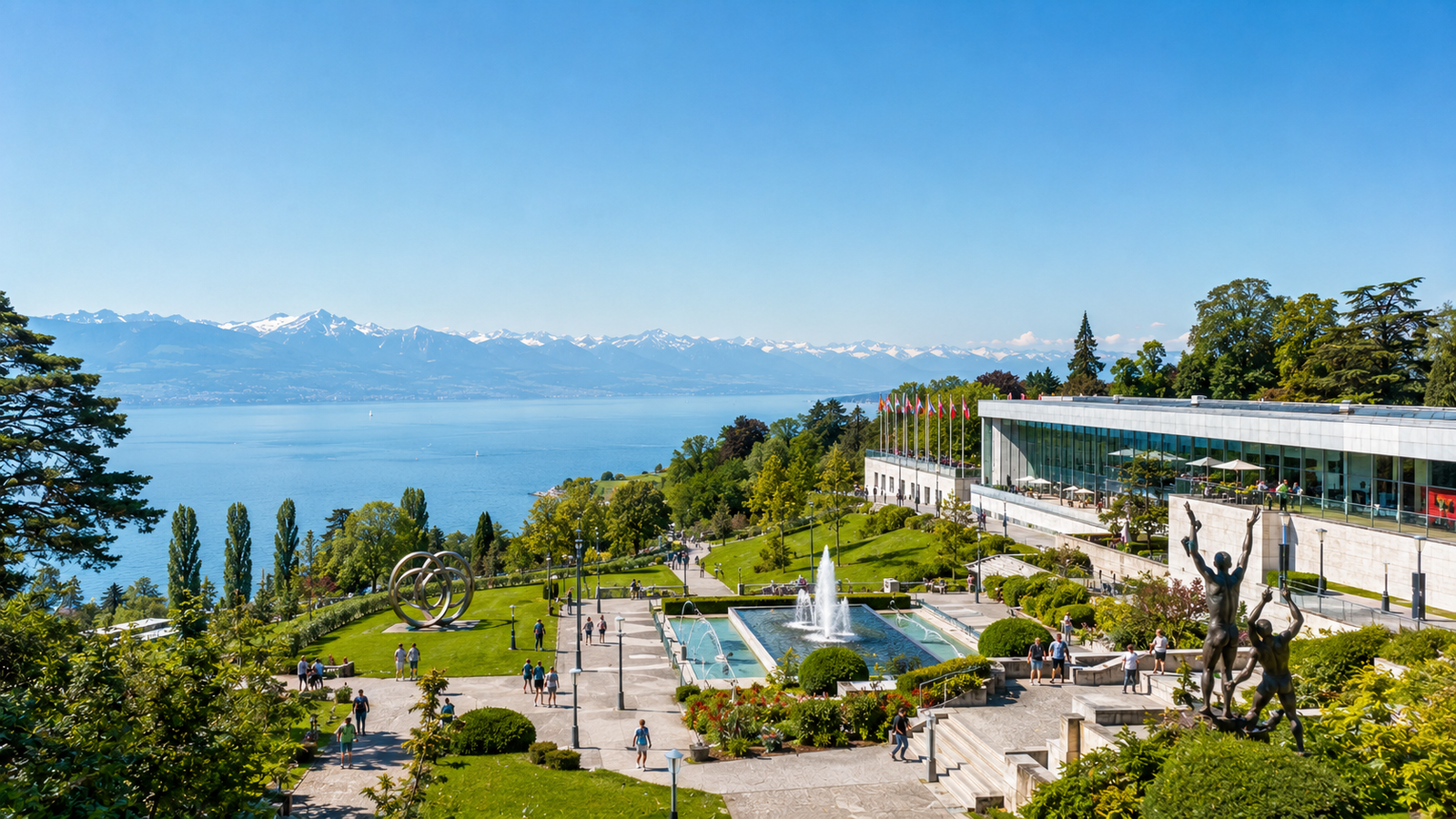
Located in Lausanne’s Ouchy district, the building overlooks Lake Geneva with panoramic views extending toward the Alps. The combination of contemporary architecture, landscaped gardens, and waterfront scenery creates an atmosphere that feels both inspiring and welcoming.
Before entering the galleries, visitors pass through Olympic Park, an open-air space featuring sculptures, artistic installations, fountains, and monuments linked to sport and Olympic ideals. The park itself has become a destination, offering photo opportunities and a relaxing environment overlooking the lake.
The location reflects an important Olympic principle: the connection between sport, culture, and society.
Exploring the Permanent Exhibition
The museum’s permanent exhibition guides visitors through the past, present, and future of the Olympic Games.
The journey begins with the origins of athletic competition in ancient Olympia. Through multimedia displays and historical interpretation, visitors learn how the ancient Games were organized and how they influenced the revival of Olympic competition in the nineteenth century.
The narrative then shifts to Pierre de Coubertin and the creation of the modern Olympic Movement. Historical documents, photographs, and interactive presentations reveal how the Games evolved into an international event that now attracts athletes and spectators from across the globe.
One of the most captivating sections explores Olympic symbols. The famous rings, ceremonial torches, medals, mascots, and opening ceremonies are presented not merely as visual icons but as elements of a broader cultural tradition that connects different generations and host cities.
A Collection Unlike Any Other
The Olympic Museum houses the world’s largest and most comprehensive collection of Olympic heritage. Its galleries contain thousands of objects connected to athletes, competitions, and memorable moments from Olympic history.
Visitors encounter competition equipment, uniforms, torches, medals, photographs, audiovisual archives, and personal items donated by Olympians from around the world. These objects transform abstract sporting achievements into tangible stories.
A pair of skates, a racing bicycle, a swimming suit, or a track shoe can reveal the dedication, innovation, and personal sacrifices behind athletic success.
Rather than displaying artifacts as static museum pieces, the institution integrates them into immersive exhibits that help visitors understand the human stories behind the Games.
Interactive Experiences for All Ages
Unlike traditional museums that rely heavily on text panels, the Olympic Museum embraces technology and visitor participation.
Large multimedia displays, interactive screens, audiovisual presentations, and immersive installations allow guests to experience the excitement of competition in dynamic ways.
Children and families often find the museum especially engaging because many exhibits encourage exploration and participation rather than passive observation. Visitors can compare athletic performances, discover the evolution of sports technology, and learn about Olympic disciplines through hands-on experiences.
The result is a museum that appeals equally to dedicated sports fans and visitors with little prior knowledge of Olympic history.
Beyond Competition: The Values of Olympism
Perhaps the museum’s most distinctive feature is its focus on ideas rather than results.
Olympic champions certainly receive attention, but the institution places equal emphasis on the values associated with Olympism: excellence, friendship, respect, education, and international cooperation.
Throughout the galleries, visitors encounter stories that highlight perseverance, inclusion, cultural exchange, and the role sport can play in society. These themes help explain why the Olympic Movement has remained influential for more than a century.
The museum therefore functions not only as a sports museum but also as a place of reflection on global culture and human achievement.
The Olympic Park and Outdoor Attractions
Many travelers are surprised to discover that part of the experience exists outside the museum building.
Olympic Park features sculptures, sports-themed artworks, and installations spread across landscaped grounds overlooking Lake Geneva. Visitors can walk through the gardens, admire contemporary artworks, and enjoy views of the lake and distant mountains.
Several outdoor exhibits have become recognizable landmarks in Lausanne and reinforce the connection between athletic achievement and artistic expression.
The park also offers a quieter atmosphere than the exhibition halls, allowing visitors to absorb the significance of the site while enjoying one of Lausanne’s most attractive waterfront settings.
Planning a Visit
The Olympic Museum is located at Quai d’Ouchy in Lausanne and is easily accessible by public transportation. Metro, bus, and pedestrian routes connect the museum with the city center and railway station.
Many travelers combine their visit with a walk along the Lake Geneva waterfront, exploration of the Ouchy district, or visits to other cultural attractions in Lausanne.
A typical museum visit lasts around one and a half to three hours depending on the visitor’s level of interest and the temporary exhibitions available at the time. The museum also features a restaurant, boutique, and outdoor spaces that encourage guests to extend their stay.
Whether you arrive as a sports enthusiast or a curious traveler, the experience offers a deeper understanding of the ideals and stories that have shaped generations of Olympic athletes.
Standing above Lake Geneva, surrounded by memories of record-breaking performances and remarkable human achievements, visitors quickly realize that the Olympic Museum is not simply about sporting victories. It is about the enduring pursuit of excellence and the universal language that allows sport to connect people across cultures, nations, and generations.