
Aare Gorge, Meiringen, Switzerland
Aare Gorge: Walking Through One of Switzerland’s Most Dramatic River-Carved Landscapes
The power of water is often difficult to comprehend until it leaves a visible mark on the landscape. At Aare Gorge, known in German as Aareschlucht, that power is impossible to ignore.
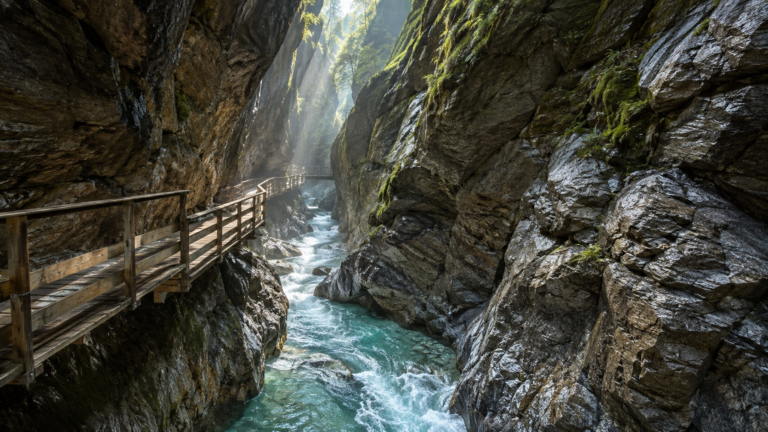
Hidden within the Hasli Valley near Meiringen in the Bernese Oberland, this remarkable natural attraction reveals what thousands of years of erosion can accomplish. Here, the Aare River has cut a narrow passage through solid limestone rock, creating a dramatic canyon where towering cliff walls rise above rushing glacial water. In some sections, the gorge narrows so dramatically that daylight filters down only in thin shafts between the rock faces.
For visitors exploring central Switzerland, Aare Gorge offers an experience that combines geology, scenery, accessibility, and adventure in a way few natural attractions can match.
A Landscape Shaped by Ice and Water
The story of Aare Gorge begins long before modern Switzerland emerged.
The gorge was formed after the last Ice Age, when meltwater from retreating glaciers began carving a path through the limestone ridge separating parts of the Hasli Valley. Over countless centuries, the force of the Aare River gradually deepened and widened the channel, sculpting the dramatic canyon visible today.
The result is a natural corridor stretching for approximately 1.4 kilometers through the rock. Along its route, visitors encounter constantly changing perspectives. Some areas open into wider sections where sunlight illuminates the water below, while other passages become so narrow that the gorge feels almost cave-like.
The contrast between the immense stone walls and the energetic river creates one of the most visually striking landscapes in the Bernese Oberland.
Entering a Different World
One of the most memorable aspects of Aare Gorge is how suddenly the environment changes.
The surrounding countryside features forests, alpine meadows, and mountain views typical of the region. Yet upon entering the gorge, visitors find themselves immersed in a dramatically different setting.
The temperature often feels cooler inside the canyon, particularly during warm summer months. The sound of rushing water echoes continuously between the rock walls, creating a natural soundtrack that accompanies every step.
Wooden boardwalks and carefully constructed pathways allow visitors to travel safely through sections that would otherwise be inaccessible. These walkways hug the cliff faces, cross above the river, and pass through tunnels carved into the rock, providing close-up views of the canyon’s geological features.
Rather than simply observing nature from a distance, visitors become part of the landscape itself.
The Colors of the Aare River
The river is the defining feature of the gorge, and its appearance changes throughout the year.
Fed largely by glacial and mountain waters, the Aare often displays striking shades of turquoise, blue-green, or milky emerald depending on seasonal conditions, weather, and sediment levels.
During periods of increased snowmelt, the river can become especially powerful, surging through narrow sections of the canyon with impressive force. In calmer conditions, visitors can better appreciate the clarity and color of the water as it winds beneath the walkways.
Photographers frequently find that the interplay between water, light, and rock creates endless opportunities for dramatic images.
No two visits feel exactly the same because the river is constantly changing.
Engineering That Opens Nature to Everyone
Aare Gorge is remarkable not only for its natural beauty but also for how accessible it has become.
Since the late nineteenth century, pathways have allowed visitors to enter and explore sections of the canyon that were once virtually inaccessible. Modern walkways and tunnels make it possible for travelers of varying ages and fitness levels to experience the gorge without undertaking a strenuous mountain hike.
The route generally follows the river through the narrowest and most scenic sections before emerging at the opposite end of the canyon. Visitors can then return by walking back through the gorge or using transportation options available in the surrounding area.
This accessibility has helped make Aare Gorge one of the Bernese Oberland’s most popular natural attractions while preserving its wild character.
Nature Beyond the Canyon Walls
Although the gorge itself receives most of the attention, the surrounding landscape deserves equal appreciation.
The Hasli Valley is framed by mountain peaks, forests, waterfalls, and traditional Swiss villages. Nearby Meiringen serves as a convenient base for exploring the region and offers access to additional attractions within the Bernese Oberland.
The area’s geological diversity makes it particularly interesting for visitors who enjoy learning about how alpine landscapes formed. Layers of limestone, evidence of glacial activity, and the ongoing work of erosion are visible throughout the region.
For travelers interested in nature, Aare Gorge often becomes part of a broader exploration of Switzerland’s mountain environments.
A Family-Friendly Adventure
Many dramatic natural attractions require significant physical effort to reach. Aare Gorge is different.
The well-maintained pathways make it suitable for a wide range of visitors, including families with children. Young travelers are often fascinated by the tunnels, narrow passages, and roaring river below, while adults appreciate the geological significance and spectacular scenery.
Educational displays along the route help explain how the gorge formed and highlight features that might otherwise go unnoticed.
Because the experience combines learning with exploration, it appeals to both casual tourists and travelers with a deeper interest in natural history.
When to Visit
The character of Aare Gorge changes with the seasons.
Spring brings increased water flow as snow begins to melt in the surrounding mountains. The river often appears especially energetic during this period.
Summer offers comfortable conditions for walking and is typically the busiest season for visitors. The cooler temperatures inside the gorge can provide welcome relief during warm days.
Autumn introduces colorful foliage to the surrounding forests, creating beautiful contrasts against the gray limestone walls and turquoise river.
Even when weather conditions vary, the gorge maintains its dramatic atmosphere because its appeal is rooted in geology and moving water rather than seasonal displays alone.
Why Aare Gorge Remains One of Switzerland’s Most Memorable Natural Attractions
Switzerland is famous for mountain panoramas, alpine lakes, and high peaks, yet Aare Gorge demonstrates that some of the country’s most impressive landscapes exist at a much smaller scale.
Here, visitors do not need to climb a summit to witness the forces that shaped the Alps. Instead, they walk directly through the evidence. Every curve in the canyon, every polished rock surface, and every surge of water tells a story of geological change spanning thousands of years.
Standing on a boardwalk suspended above the rushing Aare River, surrounded by towering limestone walls, travelers gain a rare perspective on the power of nature. The experience is immersive, accessible, and unforgettable—a reminder that Switzerland’s natural wonders are found not only on its highest peaks but also deep within the landscapes carved beneath them.